Have You Wondered About 72Sold? It’s Not Licensed as a Real Estate Brokerage in Colorado

Perhaps, like me, you have wondered about 72Sold, which runs commercials every night on local TV stations, giving the impression that it is a Colorado real estate brokerage, and directing you to www.72Sold.com, which gives the same impression.

In researching this company, the first thing I did was to look on REcolorado.com, the Denver MLS, to see how many listings they have sold. The answer was none, because 72Sold is not a member of the MLS and is not even licensed in Colorado to sell real estate.

So what’s the story? First I asked Marcia Waters, director of the Colorado Division of Real Estate, who confirmed that 72Sold is not licensed in Colorado, and said the division has not received any complaints about them — which makes sense, since one can only file a complaint against a licensed brokerage.

My suspicions about 72Sold were raised further as I scanned the company’s website, which contains numerous testimonials and the following graphic, which has no identification of, or links to, the “five independent studies” cited in it:

To learn more, I posed as a potential seller and requested a valuation on 72Sold’s website, which uses such terminology as “a better way to sell your home.” That sure sounds like a brokerage, doesn’t it?

Registering my name and a home address on their website resulted in a call from a woman who said she was from 72Sold but who, under questioning, said she was actually with Your Castle Realty, a non-Realtor brokerage. So as not to blow my cover, I used the excuse that I only wanted to work with a Realtor, and she offered to have an agent from Keller Williams call me.

Susan Thayer, co-owner with her husband of Keller Williams Action Realty in Castle Rock, was the agent who called me next. I revealed to her that I was actually a Realtor myself writing this real estate column. I explained that posing as a seller on 72Sold’s website was the only way I could find out what was really behind all those TV commercials.

Susan was quite open and helpful and sent me links with background information, including an Inman News article about 72Sold’s partnership with Keller Williams and its many franchises.

Like 72Sold’s website, the Inman story conflated the roles of a lead generating company and a real estate brokerage, reporting, for example, that 72Sold had grown from 10 agents to 426 agents (as of August 2022), when in fact they only have licensed agents in Arizona, where they are a licensed brokerage.  Everywhere else, as I understand it, they have what should be called “referral partners” instead of agents.

What 72Sold does is invest 80% of its referral fee income (according to the Inman story) into more TV advertising in those markets where it has referral partners, and some of that expense is apparently shared by those referral partners, although I didn’t garner any specific numbers.

What 72Sold offers through its referral partners is a strategy of combining a 7-day coming soon period with a Friday-to-Sunday active period during which buyers’ agents may show the home for 15 minutes on Saturday, according to the Inman article. The idea is to create a buyer frenzy and “fear of loss.” With the slowing of the market, that strategy has softened. It sounds great to sellers, however, making the leads generated well worth 72Sold’s referral fee.

Click on the thumbnail below to watch a video from 72Sold’s home page. Judge for yourself whether they are posing as a brokerage in Colorado, where you just watched their TV ad.

PS: It is a violation of the Realtor Code of Ethics for a member to misrepresent himself or his level of success, but neither Greg Hague nor his Arizona brokerage is a member of the National Association of Realtors, and therefore neither is bound to the Code of Ethics.

Understanding Indoor Air Quality and How It’s Managed in Super-Insulated Homes

As we all work to make our homes more airtight, we also have to be conscious of our families’ need for fresh air — oxygen above all! If our homes were completely airtight, we not only would risk suffocation, we would also be more susceptible to the toxic gases and fumes emitted by our paint, our carpeting, our gas appliances, and more.

The outgassing from our carpet and other building materials are known as “volatile organic compounds” or VOCs.

An appliance which you’ll be hearing more about as homes become better insulated and therefore more airtight is displayed schematically in the third column. It’s called an Energy Recovery Ventilator (ERV) or a Heat Recovery Ventilator (HRV).

Before I explain this appliance’s operation, let me tell you what it replaces: the exhaust fans in your bathrooms and above your kitchen stove. Those exhaust fans simply pump air out of your house, which causes fresh air to be sucked into your house via the gaps around your doors and windows and multiple other gaps you are not aware of.

That air which enters your home is not preconditioned in any way. It is whatever the temperature is outdoors, and in midwinter it could make your furnace work harder heating the cold air which naturally enters your home, whether or not those exhaust fans are operating.

Thus, the primary job of the ERV or HRV is to use the heat from the air being exhausted from your home to preheat the air that is entering your home without having those two sources of air mix with each other.  This is done through a heat exchanger. In the above diagram, the heat exchanger is in the middle of the device. The unit runs at low speed, taking the stale air from your bathrooms and kitchen (typically), through a metallic heat exchanger which then adds that heat to the air which is passing through the adjoining passageway from the outdoors into your living spaces. That fresh air replenishes the oxygen in your home. The picture below is of a typical HRV installation. Both images are sourced from homes.winnipegfreepress.com.

What I have described above is the function of the HRV, which only handles the transfer of heat from one air source to the other. The ERV also performs the transfer of humidity. Thus, if the cold air outside your house is very dry (typical of Denver’s climate), the ERV will transfer some of the moisture from the indoor air to the incoming air.

Neither the ERV nor the HRV measure or react to the presence of toxic gases in your home. That’s the added value of a third device, the CERV or Conditioning Energy Recovery Ventilator. If you’re concerned about indoor air quality, this is the device you’ll want to consider installing in your home.

Whereas the ERV and HRV may operate on an as-needed basis, the CERV is intended to run 24/7, constantly monitoring the level of CO2 and VOCs in your indoor air as it is drawn through the unit. If the levels of these or other pollutants are high, the unit’s fan will run faster. A recent update of the unit has the addition of a virus-killing UV light.

Also, a CERV contains a heat pump, so it can actually perform the function of a furnace, preheating the air which is drawn from outdoors (or recirculated within the house), not merely transferring the room temperature heat from the exhausted air to the incoming air.

I have written in the past about the Geos Community in Arvada. None of the homes in that community use natural gas. Instead, the townhomes are heated and cooled by a combination of a heat pump/mini-split system and a CERV which provides additional heating or cooling. The detached homes at Geos also have CERVs to complement the ground source heat pumps which provide the primary year-round heating and cooling of the homes. 

Learn more about CERVs at www.BuildEquinox.com. The local vendor is Todd Collins of AE Building Systems, 720-287-4290.

How to Recognize Scam Emails, Texts and Phone Calls

Senior citizens in particular are targets for scammers.  It’s easy to be taken in by a scam email or phone call, so here are some tips on how to recognize them.  I’m not an expert on this topic, but I’m speaking from my own experience. I have never been a victim of a scam because I’m careful. I’m sharing with you the care I take to avoid scammers.

If you do end up speaking with or exchanging emails with a scammer, remember this above all else: If it sounds too good to be true, it’s a scam.  If they ask for any personally identifying information, it’s a scam.  If they ask for money, it’s a scam. Better yet, though, it’s important to recognize the emails so you don’t open them and scammers’ phone numbers so you don’t answer them.  If they say they are from your bank, etc., hang up and call your bank.

Scam emails: The main danger with emails occurs when you open an attachment or click on a link that contains a virus.  Never click on a link or attachment you are not expecting. For attachments, look at the file name. If the suffix is “.htm” or “.html” it’s a website, not an attachment, and it will capture your information and suck you in. Word files (“.doc” or “.docx”) can also contain hidden links in them that capture your information or plant a virus on your computer. An Acrobat file (“.PDF”) might be safe, but I wouldn’t open one I’m not expecting from a trusted person. If the PDF asks you to enter something like a password or email address before opening, you know it’s a scam or virus, so don’t do it!

Look at the email address of the sender, but more importantly, float your cursor over the address to see what the sender’s real email address is, because it could be different.  That’s a red flag.  Look at the suffix on the email address. If it’s not “.com” or “.net” or “.org” or “.edu” or “.gov” it might be for a foreign country – another red flag.  If it says the attachment is a voicemail, or an invoice, or a “payment advice,” that attachment is probably a website and it’s a scam.  If you have opened an email and the whole message is one link because wherever you float the cursor you see the finger pointer instead of the arrow pointer, that’s a red flag.  Close the email and delete it! If there are links in an email, float your cursor over the link without clicking on it, and see if it’s the same. For example, the link might look legitimate, such a “microsoft.com,” but when you float over it you see some other address, perhaps ending in a country code (“.uk” or “.ru” etc.) that’s a red flag. Close and delete the message! If you do visit a website, float over any link within that website for the same reason.

Phone calls and text messages: It’s best to let unknown calls from unknown numbers go into voicemail. Usually a scammer won’t leave a voicemail, so don’t think you missed anything important.  Look at the phone number.  Never answer a call from an “unknown” number or a number from another country or a number from “United States” instead of a specific city. If you answer the phone and the person uses your legal first name instead of your nickname, and if they ask how you are today instead of just saying hello, they’re either a solicitor or a scammer. You don’t need to be polite. No need to say goodbye, just hang up. 

On text messages, use the same advice as above. Don’t click on a link. You can ignore text messages. If it’s a real person, they’ll call you if you don’t respond. Above any text message will be an icon for the sender. Touch it, then the word “Info” to learn more about who the sender may be.

I hope this has been helpful. If so, of it not, let me know!

David Dlugasch Is Golden Real Estate’s 2022 Top Producer

Congratulations to David Dlugasch, our top-producing Broker Associate for 2022! Last year he sold $5,625,700 worth of his own listings and represented buyers in the purchase of $5,278,900 worth of listings.

Since joining Golden Real Estate in October 2014, David has closed 47 listings and assisted buyers in closing on another 39 listings. He moved to Arvada from Crested Butte, where he owned his own brokerage, choosing to join Golden Real Estate because he was regular online reader of this very column. Thanks, David, for being one of our hardest working and most consistently productive broker associates.

David lives with his wife, Carol, in the Candelas subdivision in northern Arvada.

Here’s a Guide to the Tax Credits and Rebates Available for Making Your Home More Energy Efficient

Inspired by a recent article in The Washington Post, I’m able to provide you with a simplified guide to the improvements you can make to your home that might earn you a tax credit or other benefit under the Inflation Reduction Act (IRA).

If you are wealthy, some of those IRA benefits may not be available to you, so check with your tax advisor. Even if you don’t qualify for the tax credits or rebates, almost all of the following investments will produce savings down the road as well as being “the right thing to do.”

Heat pumps to replace your HVAC system and water heater are the first and greatest improvement you can make. Unlike gas and resistance-based electric devices, heat pumps move heat, they don’t generate heat. And a heat pump HVAC system uses far less electricity that a baseboard or other electric HVAC system does. The IRA provides for up to $2,000 tax credit for heat pump purchases, with extra benefits for low- and middle-income homeowners. I haven’t used this company yet myself, but you might contact Sensible Heating and Cooling, 720-876-7166, www.SensibleHeat.net, one of those rare vendors who will talk you into a heat pump HVAC system over a traditional one.

Many heat pump systems, including water heaters, are “hybrid,” meaning they have backup gas or electric resistance functions that kick in or can be activated when the heat pump can’t produce the needed heat. For example, a water heater in heat pump mode has a slower recovery than in conventional electric mode, so if you have a big family (or a teenager) you may find that you run out of hot water quickly and it takes longer than you want to reheat the water in the tank. In electric mode, you’ll get the quick hot water recovery you’re used to.

A heat pump HVAC system will probably work just fine without backup so long as you don’t turn down the thermostat too much overnight. Our office is heated solely by heat pump, and we leave it on 70 degrees 24/7, and it’s still way more affordable than the gas forced air furnace it replaced.

Xcel Energy charges commercial customers about $50 per month (that’s $600 per year!) just to have a gas meter before you burn any gas, which contributes greatly to making gas forced air more expensive than heat pump heating. Note: you need to have the gas meter removed, not just stop using gas, to save that $50 per month. Even in a residential application where the monthly meter fee is less, consider replacing all your natural gas appliances (including your fireplace and grill) so you can have the gas meter removed and save that facility charge plus those other gas-related fees that have exploded of late. There are great electric fireplaces on the market, and Rita & I love our electric grill!

Here’s food for thought: If you get rid of gas in your home and have only electric cars in your garage, you’ll never have to worry about your family being killed by carbon monoxide poisoning. In addition to spending less on home energy and fuel for your car(s), the IRA will reward you for every aspect of that conversion! And with enough solar panels on your roof, your home energy bill will be under $10 per month (to remain on the electrical grid), and you’ll pay nothing to fuel your transportation!

Induction stoves to replace gas ranges not only save you money (including an $840 rebate if you qualify based on income) but can improve you family’s health. Despite right-wing raging about this topic, it has been proven statistically that gas cooking has increased asthma cases in children and some adults. (Click here to read a study on this topic.) The rebate is available on non-induction electric stoves, but induction cooking costs less to operate and heats food and water faster. You can dip your toe in this technology by buying a single countertop induction burner for $50 to $70, as I did. You’ll be amazed. Click here to read an article about how chefs have come to prefer induction cooking. As they say, “try it, you’ll like it!”

Electric cars that cost under $55,000 and trucks or SUVs under $80,000 that are assembled in North America qualify for a federal tax credit of up to $7,500 and a Colorado tax credit of $2,000 (without those federal restrictions, which include an income cap of $150,000 single or $300,000 filing jointly). Even the Tesla Model Y’s base price is now below those price limits.

What’s new with the IRA is that you can get a federal tax credit of $4,000 or 30% of the purchase price (whichever is less) of a used EV that is at least 2 years old, has a purchase price under $25,000, and is purchased from a dealer. I have always advised that a used EV is your best buy, because a used EV is as good as a new EV since it has none of those components of a gas-powered car (such as transmission or engine) which may be about to fail. Google “used electric cars” and you’ll see many for sale by dealers. I just ran that search and found 72 EVs under $25,000 on autolist.com alone!

The IRA increased the tax credit on solar panels to 30% for the next 10 years, and, given the steady reduction in the cost of solar over the past two decades, this investment is a no-brainer, assuming you have a roof that’s not shaded by trees. (Ground mounted solar panels is an option if you have a large unshaded backyard area. Otherwise, consider buying solar panels in a “solar garden.”) Xcel Energy allows you to install enough panels to provide up to twice your average usage over the last 12 months, which is great, because that could provide all the electricity you will need for a not-yet-purchased EV or not-yet-electrified heating system.

My advice is to purchase your solar photovoltaic system outright, not lease it or sign up for a Power Purchase Agreement (PPA). When it comes to selling your house, anything other than a system that is seller-owned could complicate the sale. I’m a repeat customer of Golden Solar (303-955-6332), but also like Buglet Solar (303-903-9119). What these companies have in common, and which I think is important, is that they are local family-owned businesses, which I much prefer over a national firm such a Tesla or Sunrun Solar.

One situation in which a Power Purchase Agreement or lease works better is if the customer is a tax-exempt non-profit (which can’t benefit from tax credits).  Golden Solar put a solar array on the roof of a Golden museum doing a PPA that Golden Solar financed, taking the tax credit for it.  The museum pays no more than they were paying Xcel Energy to Golden Solar but will own the system after a few years. If you know of a non-profit that would like to go solar, have them contact Don at Golden Solar.

Improving your home’s insulation should always be the first step in saving money on energy. The IRA provides a 30% tax credit, up to $1,200 annually, for such improvements, specifying $600 for windows and $500 for doors. The gold standard in windows and doors is Alpen High-Performance Products, a Louisville CO company, which made the triple-pane windows we purchased for our South Golden Road office — expensive but worth it in terms of comfort and energy savings. Contact Todd Collins of AE Building Systems, 720-287-4290.

Whole-house energy efficiency retrofits are eligible for a rebate under the IRA, based on proven reduction in your home’s energy costs. Speak with someone from a company like Helio Home, Inc.  (720-460-1260) which covers most aspects of reducing home energy use covered by the IRA, from solar to insulation to appliances. The IRA also provides a $150 rebate on a home energy audit, which is an essential first-step to figuring out the best and most cost-effective efficiency improvements you can make. You can learn more about energy audits at www.REenergizeCO.com.

Buy a new washer and dryer! The new top-loading high-efficiency washers are the best, speaking from personal experience. The washer automatically reduces water consumption based on the size of the load; and a heat-pump electric dryer saves on electricity.

Landscaping, done right, can save on energy and water. Think shade trees and xeriscaping, or installing buffalo grass, which requires little watering or mowing. Call Darwin at Maple Leaf Landscaping, Inc. (720-290-8292), a client of mine, to discuss the possibilities at your house.

If your house doesn’t already have one, a whole-house fan is a great energy saver, allowing you to flush hot daytime air out of your house before activating the A/C when you come home. It can also allow you to leave the A/C off overnight by bringing in cool nighttime air on a quiet, low-speed setting. Whole-house fans cost between $500 and $2,000 installed. They don’t earn their own IRA benefit, but would contribute to the benefit you earn with the whole-house retrofit mentioned above. I am a happy repeat customer of Colorado Home Cooling, now part of Colorado Home Services, 303-986-5764.

Not mentioned in that Washington Post article was daylighting of your home, which is one of my favorite ways to reduce electricity consumption by drawing sunlight into dark interior spaces. I installed Velux sun tunnels in two of my past homes, including in a windowless garage, and in our former office on South Golden Road. For that, I used Mark Lundquist, owner of Design Skylights (303-674-7147).

As Usual, This Year’s CES Show in Las Vegas Featured Some Exciting New Home Technologies and Products

Formerly called the Consumer Electronics Show, CES 2023 made headlines in January for its focus on electric vehicles and EV technology, but it also featured many home-related technologies and products which made headlines at Realtor Magazine. Here are their Top 10 innovations displayed at the show.

First was LG’s ArtCool Gallery, a wall A/C unit disguised as a framed photograph or artwork provided by the user. In 2022, I showed a Willow Springs listing which had this kind of wall unit in various rooms of that home. Below is a picture from that listing. The picture next to the window is the A/C unit. When running, the picture tilts out from the wall an inch or two to allow for air flow. As with a mini-split wall unit, two tubes carrying fluid connect it to a heat pump next to the house. One heat pump serves the units in several rooms, although each has its own remote-like thermostat. Curiously the listing agent didn’t state on the MLS that this was a heat pump system — a big selling point!

I don’t think the units in that listing were from LG, because the LG website shows the availability and price of theirs as “TBD.” Such units are clearly driven by a heat pump, but nowhere on LG’s website could I find the words “heat pump.” Rather, the website refers to a “dual inverter unit.” I find this peculiar because heat pumps are now all the rage. The website also did not mention the substantial tax credits and rebates now available for heat pump installations under the Inflation Reduction Act (IRA).

Second was Kohler’s “Sprig Shower” device, coming this spring, which infuses a shower’s water stream with scents and oils. Kohler will initially offer six different scent pods, including lavender, chamomile and eucalyptus. The unit will cost $119, and a 6-pack of single-use pods will cost $21.

If you’re looking for an interesting alternative to stainless steel, you might be interested in LG’s new MoodUp Refrigerator, which can display 190,000 different color combinations on the LED screens on the front of the fridge.

Meanwhile, Samsung is bringing to market this spring its “Bespoke” refrigerator which has no handles. Both doors open by touching them.

For $6,500, you can replace your home’s front door with Masonite’s “M-Pwr Smart Door,” which incorporates a downlight and two side lights which turn on when you approach it, plus both a smart lock and Ring video doorbell. It is connected to your home’s electricity, but includes a battery backup so you can still get in if there’s a power failure.

For $11-17,000, you can replace your staid old bathtub with Kohler’s “Stillness Infinity Experience,” which brings a “Zen-like, multi-sensory experience, combining water, lighting, mist, essential oils and soothing sounds.” Water cascades over the top into a wooden moat, from which it is filtered and pumped back into the tub.  I’ll pass on this product!

Is pushing buttons or using a key difficult or too much effort for you?  For $189.99, you can buy Lockly’s “Flex Touch” fingerprint deadbolt, shown here.

Do you have a Roomba robotic vacuum and wish there was a robot that could mow your lawn and clear snow from your driveway, walkway and sidewalk? Well, your ship has come in! It’s the Yarbo 3-in-1 Intelligent Yard Robot, below, which has attachments for those two tasks and many others, which are demonstrated at www.Yarbo.com.

Completing Realtor Magazine’s Top 10 products for CES were touchless window shades from Eve which respond to voice commands; a 2-wheeled family robot from Enabot; and the “M3 OLED Smart TV” from LG, which is totally wireless except for the power cord.

Here’s a link to the Realtor Magazine article, which has links to all 10 items.

Do you have a favorite new product that has made your life better, more interesting, or more sustainable? Tell me about it (my email is jim@goldenrealestate.com), and maybe I’ll feature it in a future column. And let me know if you purchase one of the products featured above!

Canadian Company Develops Recycled Rubber Roofing

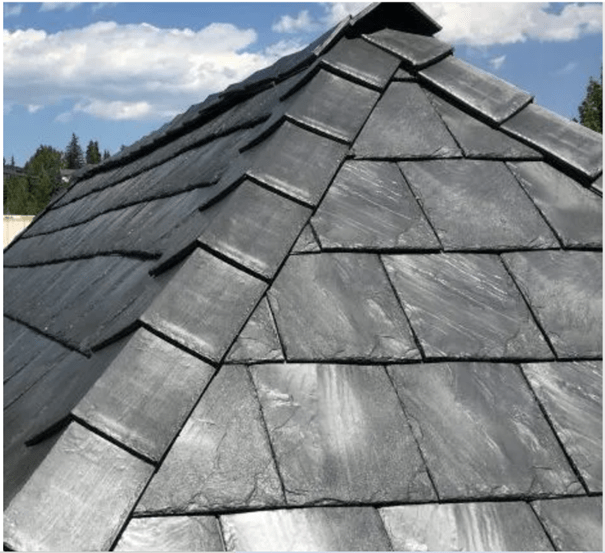
The picture above is of Euroshield® roofing made from recycled tires. It is manufactured by G.E.M., a company in Calgary, Alberta. Henry Kamphuis founded the company in 1999 to solve the problem of old tires clogging up landfills and dumpsites. Several years later, after much research and trial-and-error, he came up with a green roofing system that is 95% made from the rubber in old tires. It takes over 400 such tires to provide the rubber for a typical roof.

The roofing tiles are connected by a tongue-and-groove design and can be made to look like slate tiles, shown above, or wood shakes.

The roofing is sold and installed in the Denver metro area by Johnson Construction Company LLC, which you can reach at 303-719-7663, or via their website, www.RoofsByJohnson.com. The cost of a Euroshield roof is more than twice that of a conventional composition shingle roof, but it comes with a 50-year warranty against damage from up to 2” hail with no pro-rating and no deductible. The company installed a Euroshield roof in Golden’s Amberwick subdivision after a 2017 hail storm. Those roofs survived two subsequent hail storms without any visible damage.

Fannie Mae Requires Appraisers to Use a Measurement Model for Square Footage Not Used by Realtors

How we measure the gross living area of a home is important, but there is little consistency. Different websites may use different numbers for the same home, primarily because they tend to have only one field for square footage.

Below, I’ll write about Fannie Mae’s new rules for measuring homes, but it’s up to each real estate website operator which number it uses for square footage. For example, the web page that we create for each Golden Real Estate listing has only one square footage field, so I choose to display finished square footage. The MLS has fields to distinguish between finished, unfinished, basement, above-grade, and total square feet, as shown below, and all those fields are uploaded to every consumer website, but I haven’t found any consumer website which displays all those fields.

Zillow is an example of a website which features only the total square footage in each listing, even if half that area is unfinished basement space. It doesn’t show the breakdown of finished vs. unfinished space or basement vs. above-grade space unless you click on a link titled “See more facts and features.”

Trulia, which is owned by Zillow, has a link “See all” which lists “finished area” if you scroll down far enough, but that’s all. I find this ironic, because both Trulia and Zillow provide a ton of information not found on the MLS, yet they downplay or omit the most important detail of all — the breakdown of square footage.

Redfin, which, like Trulia and Zillow, gets the full feed from our MLS, also features only the total square feet and has no link that I could find which displays a breakdown. And, like both Trulia and Zillow, Redfin prominently features “price per square foot,” but that figure is based on the total square feet, which can be really misleading.

Golden Real Estate’s website, like those three, gets its active listings from the MLS, but our display is managed by the MLS, and all listings on our website use the finished square footage number, which is, I believe, the most useful single number to use. But, once again, there’s only one field for displaying square footage.

The MLS has its own consumer-facing website, www.REcolorado.com, where you can search for listings. On that site, the total square footage is featured, but scroll down and you see this very thorough breakdown of square footage:

On other websites, you’d only see 3,166 square feet and $271/sq. ft. for the listing in this example.

The numbers  displayed on the MLS are entered by the listing agent. Our sole obligation in providing them is to indicate the source. It could be from public records, or it could be from a prior appraisal. We could also measure it ourselves, but that is really unlikely. The only requirement is that we disclose the source. The safest choice is public records, but those numbers could be wrong.

Fun fact: Square footage of a home, by whatever standard, is measured from the outside of the exterior walls, not the inside.

Lenders, of course, want to know that the square footage is accurate and consistent, so recently Fannie Mae mandated that all appraisers follow the ANSI (American National Standards Institute) standard, which can result in appraisals which come up with different numbers than in the MLS listing on which the buyer relied.

The ANSI standards don’t allow for space with ceiling heights under 7’ to be included in the gross living area, and the square footage of staircases can only be counted on the level from which the staircase descends. Also, if even part of a level is below grade, the entire level has to be counted as “basement,” which directly conflicts with MLS rules which say the lower level of a bi-level or tri-level home (which is at least partially below grade) can be counted as above-grade square footage.

Complicating matters, appraisers must measure properties using the ANSI standards, but they have no choice but to rely on MLS measurements for the comps they cite in an appraisal, which were surely not done to ANSI standards. The technical term for this is “apples and oranges…”

There are three different square footage numbers for every MLS listing, and here is a quick tutorial on REcolorado’s rules for measuring square footage.

Above-Grade square footage used to be called “Main” square footage. As the new name suggests, it does not include basement square footage.  But that begs the question, “what is a basement?”  In a split-level home, the lower level, which is often below grade, is included in the “above-grade” square footage, since there is frequently a basement below that level. In a “raised ranch” home, the lower level is included in “above-grade” square footage for the same reason. (A “raised ranch” is defined as a home where you have to climb a flight of stairs to get to the “main” level. The “main” level is defined as the level containing the kitchen.) 

Finished square footage includes all the finished square feet, whether in the basement or above-grade. If the basement is unfinished (or there is no basement), this number will be the same as the “Above Grade” number.

Total square footage is what the name suggests, whether finished or unfinished.

All three of these numbers will be different when a listing has a partially finished basement.

The Real Estate Market Is Showing Signs of Revival

Here at Golden Real Estate, we have some anecdotal evidence of a resurgence in the real estate market, which was moribund in December.

On Saturday, Jan. 7th, I held a 2-hour open house at my listing on Bates Avenue. My previous open house at that listing had drawn not a single visitor, so I was quite surprised to have ten sets of visitors that day. All of them were actual buyers, not lookie-loos.

I immediately decided to hold it open the following day, Jan. 8th, and once again it was my most visited open house in recent memory.

I had four prospective buyers from those open houses and this Monday that home went under contract.

A second example of this resurgence came when broker associate David Dlugasch listed a 1960 brick ranch with walkout basement in south Golden/Pleasantview. (It was featured in last week’s ad.) It drew 22 agent showings on the first three days, and it went under contract on Sunday at full price — $798,000, which I frankly thought was a reach.

Although anecdotal, these experiences give me hope for a continued market resurgence in 2023.

For Sale: Golden Real Estate’s Former Office Building on South Golden Road

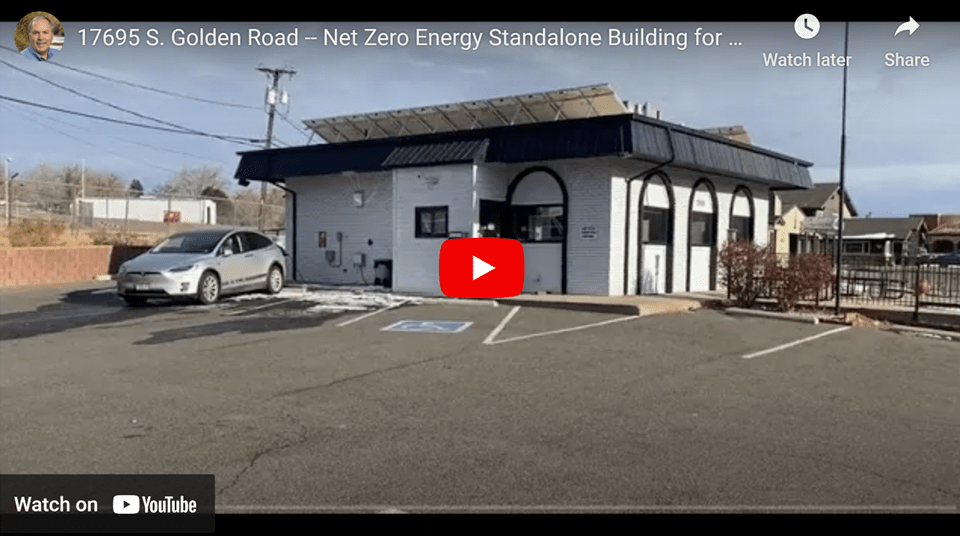
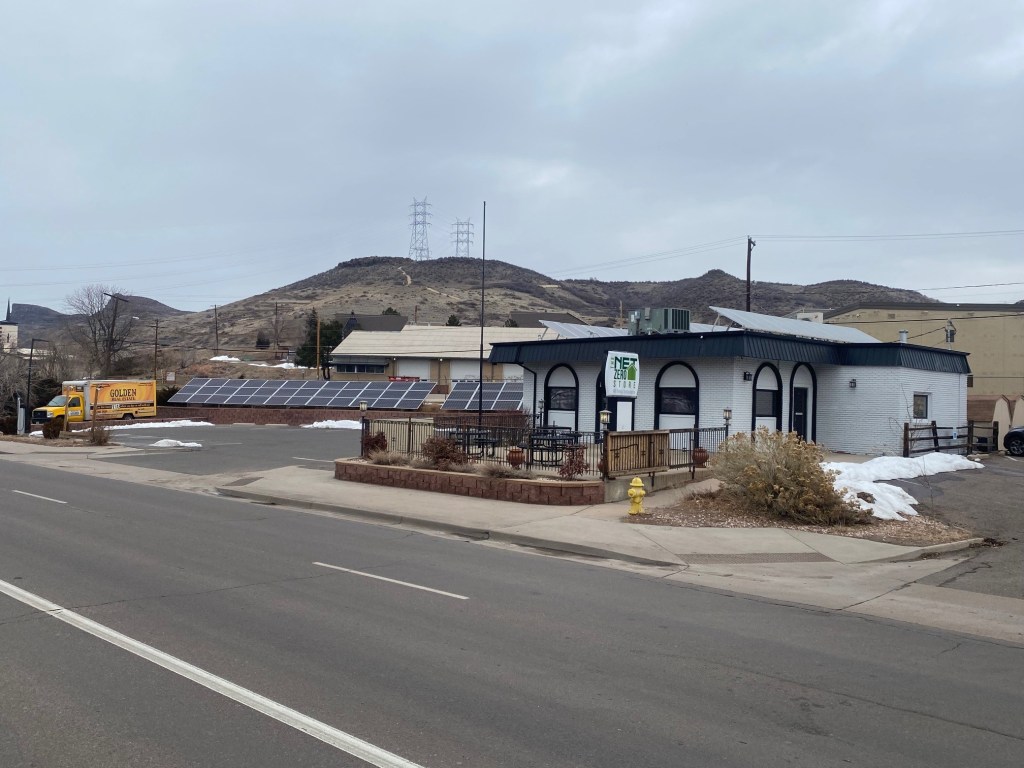
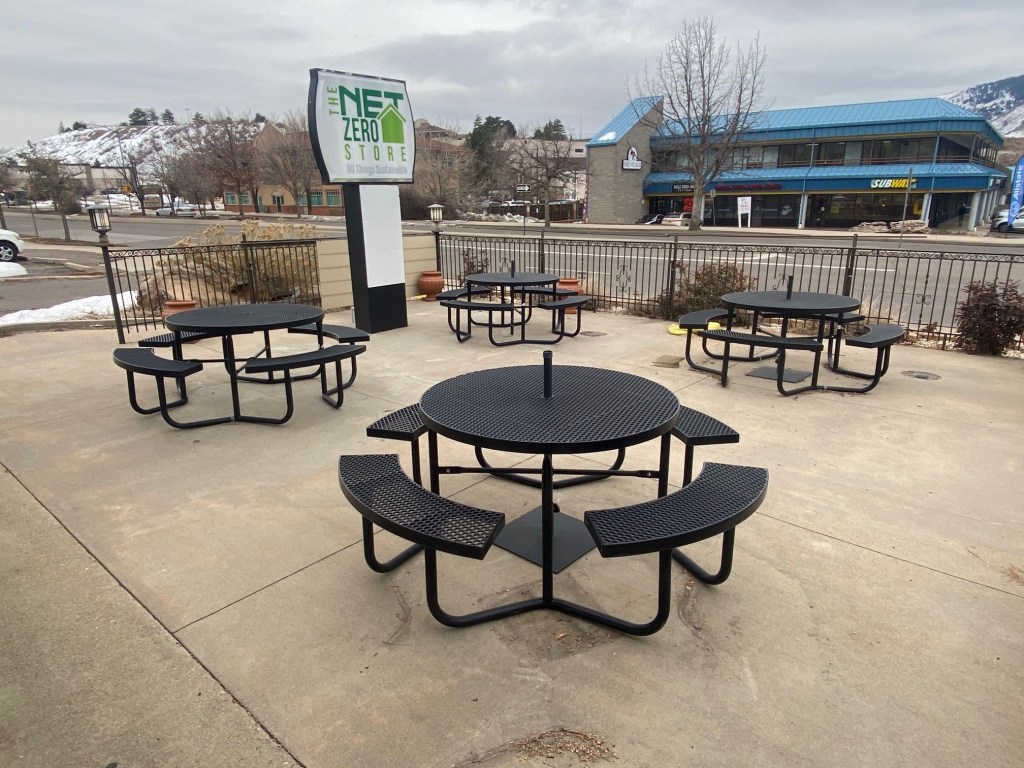
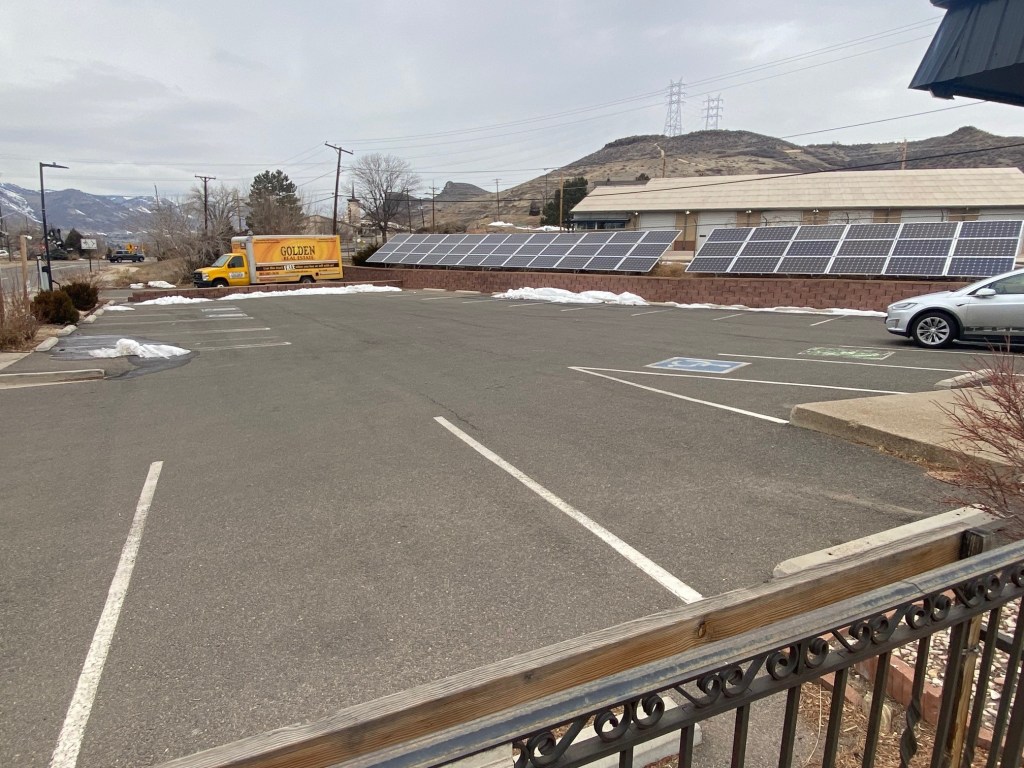
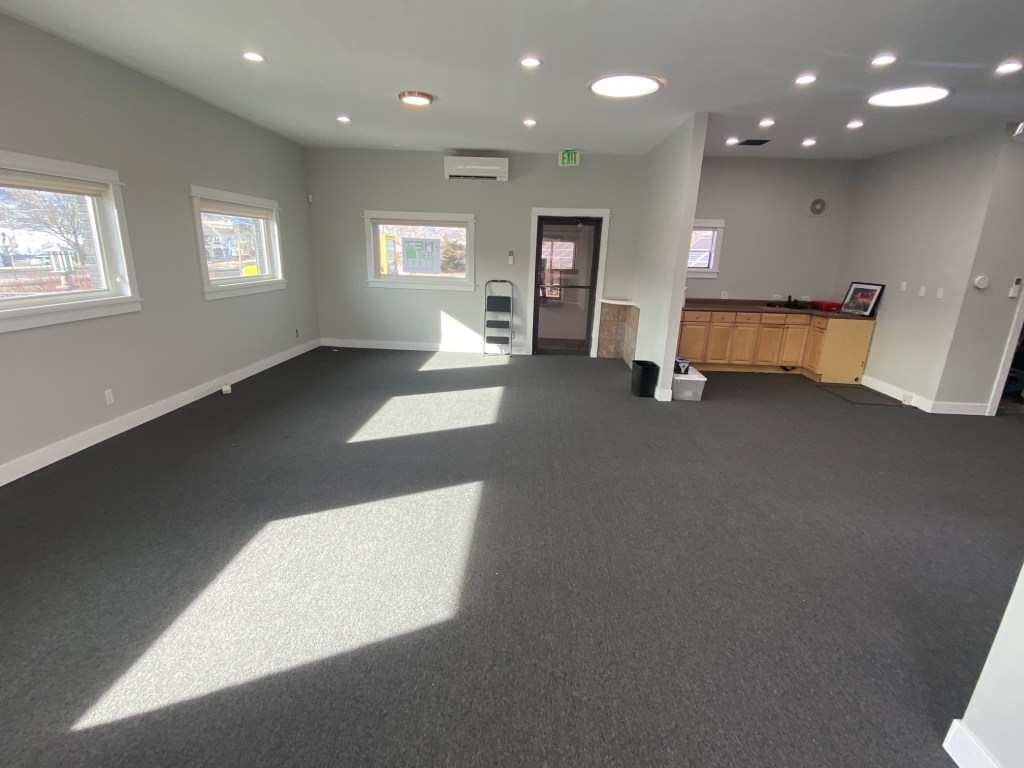
Currently vacant, this unique 1,318-square-foot office building at 17695 S. Golden Road (originally a restaurant) is powered by 20 kilowatts of solar power, which more than meets the energy needs of the building in addition to charging up to three electric vehicles at three Level 2 charging stations. The monthly bill from Xcel Energy is only $12.56.  There is no natural gas service, because the building is heated and cooled by a state-of-the-art heat pump/mini-split system powered by those solar panels. This is a true “net zero energy” building and was planned to be “The Net Zero Store,” but we decided to stick to real estate and sell the building. For a showing, call Jim Smith at 303-525-1851. You can take a narrated video tour and view interior and exterior photos at www.SouthGoldenBuilding.online.

Note the 5 kilowatts of solar panels on the building roof.

View of parking lots and 15 kilowatts of ground-mounted solar panels.

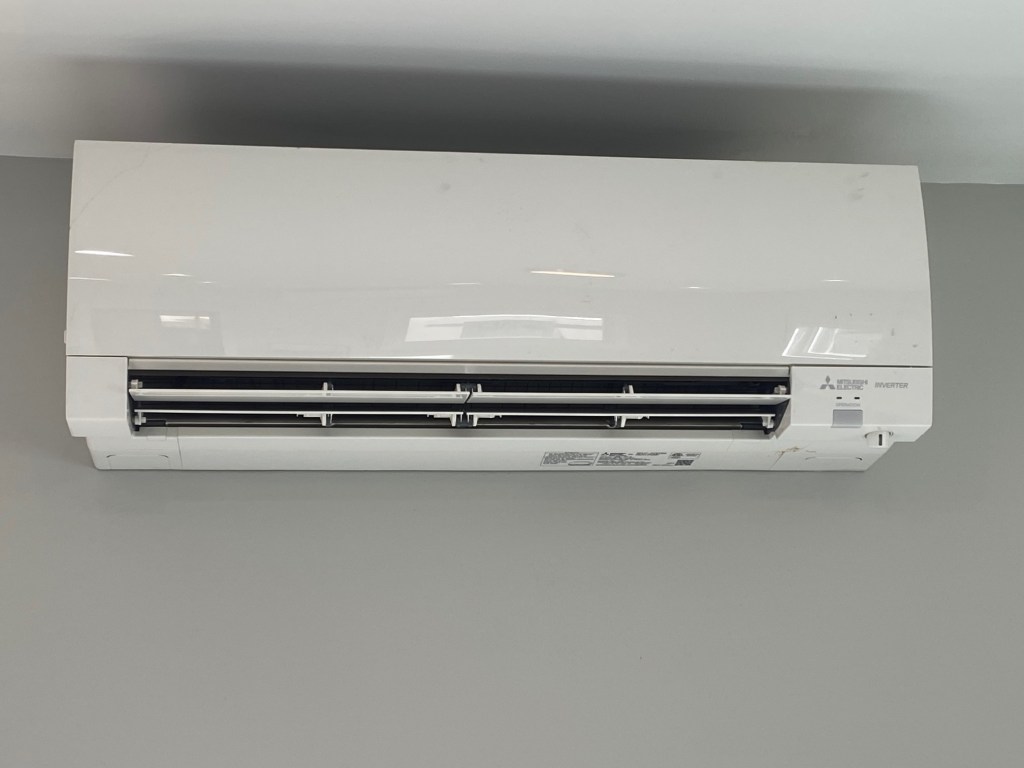
One of three wall-mounted mini-splits driven by a heat pump on roof, provides both heating and cooling at no cost thanks to solar panels.

Four Velux sun tunnels (similar to Solatube brand) provide natural light

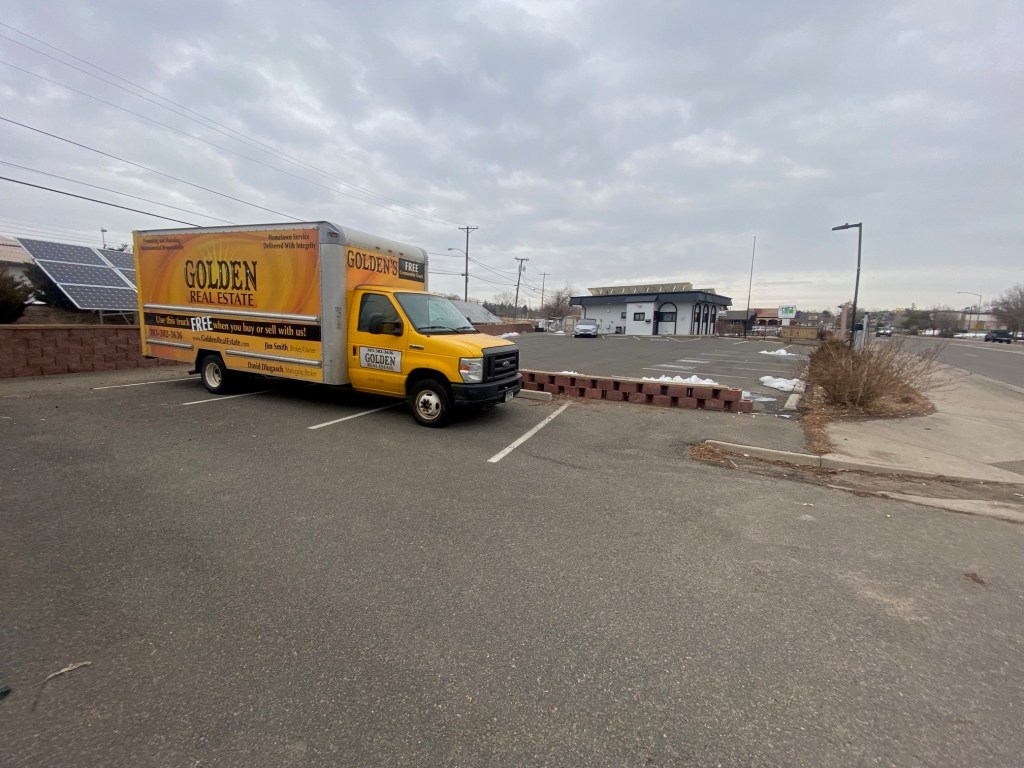
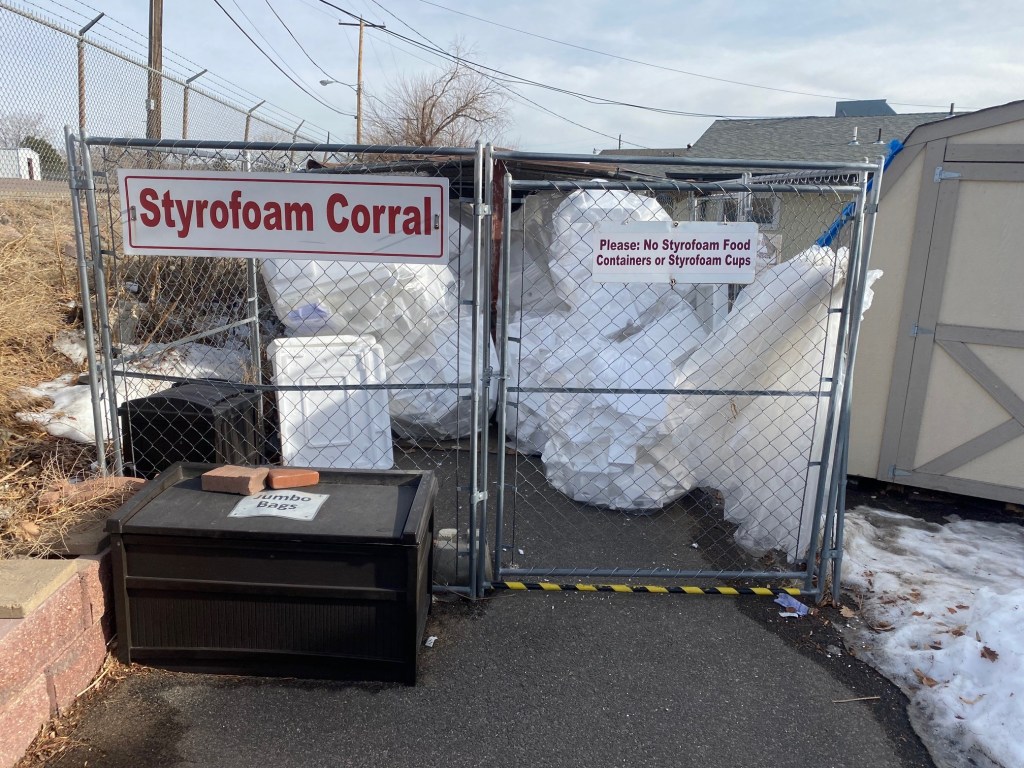
Golden Real Estate wants to rent back this secondary parking lot plus the two sheds and Styrofoam Corral behind the building for $200/month.

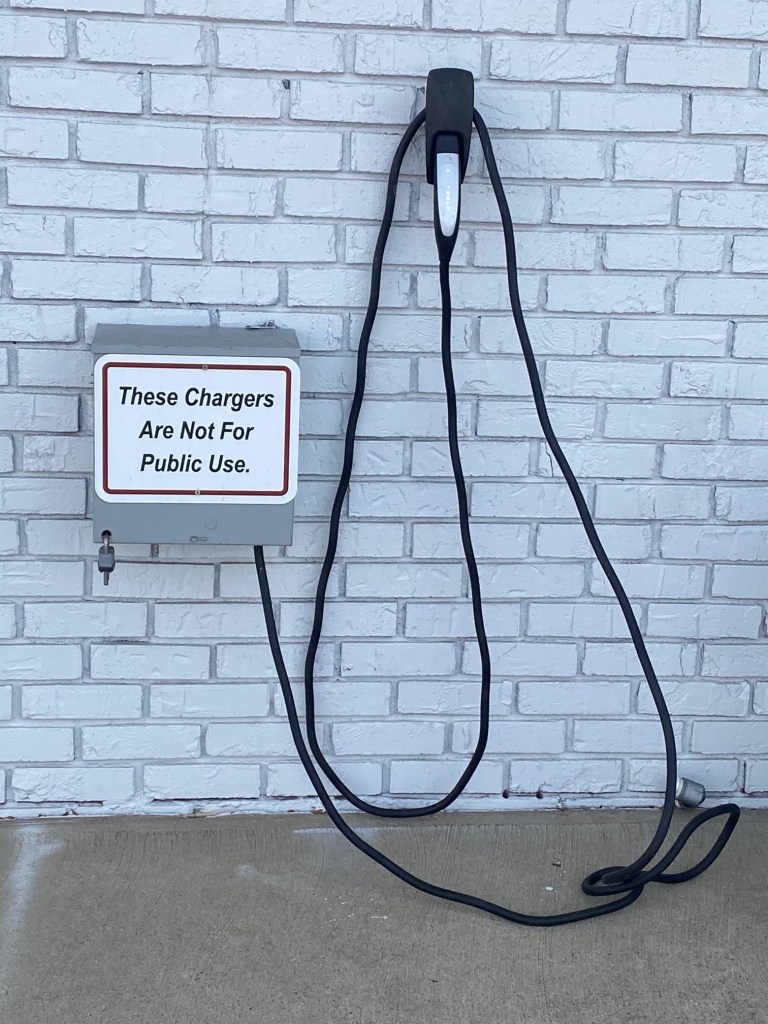
Two ChargePoint charging stations earn average $50/month at no cost to building owner because of solar power.

This Tesla charging station earns $75/month from an Uber driver.