I came across a website that gives a great description of heat pumps, how they work, and why they are more efficient. Here’s the link for it.
Most Americans are accustomed to heating systems that generate heat using fossil fuels, wood, or electricity. But heat pumps don’t create heat, they move heat. Here’s how the process is explained on that website:
Heat pumps function similarly to refrigerators or air conditioners, which take warm air from one space and send it to another. In the winter, a heat pump transfers heat from the outdoors inside and, in the summer, it reverses this process.
There are two main types of heat pumps, and both can function as space heaters or coolers and as water heaters.
A ground-source (or “geothermal”) heat pump sends a mixture of water, antifreeze, and/or a refrigerant through a network of pipes buried below the frost line. As the liquid passes through the pipes, it absorbs the earth’s approximately 55-degree heat. The liquid is then drawn up into a compressor, which heats it further, creating a vapor. The heat pump then distributes the warm air through ducts or tubes throughout your home. In the summer, the heat pump reverses the process, taking warmth out of the house and transferring it to the earth.
An air-source heat pump extracts heat from the air rather than from the ground. It functions the same way, but because air temperature, unlike earth temperature, can get very cold, it has more work to do bringing up the temperature. As with a ground-source heat pump, a reversing valve inside the heat pump allows the same unit to function as an air conditioner in the summer. At right is an air source heat pump that was retrofitted into a ducted forced air heating/cooling system of one of my current listings in Golden.
In recent columns, I have promoted the idea of eliminating natural gas and converting one’s home to all-electric, using heat pumps for heating & cooling and installing a heat pump water heater. I have also promoted induction cooktops as an alternative to gas or standard electric cooktops.
One reader asked me to provide information on the cost of making the conversion to all-electric, so I have done some research and can also speak from personal experience.
First, I asked Bill Lucas-Brown of Helio Home Inc., who installed the heat pump mini-split system at Golden Real Estate’s former office on South Golden Road as well as in our storefront in downtown Golden.
I asked Bill for a rough estimate of the cost of making a typical 2,000 sq. ft. home all-electric, and he responded with the following numbers and comments.
Note that rebates and tax incentives are available from the state, feds, utilities, and local municipalities that typically range from 15 to 30 percent off total cost. The following are costs without those rebates. Click here to view Helio Home’s web page about the rebates and tax credits available under the Inflation Reduction Act.
Air source heat pump for heating and cooling your home, $22,000
Heat pump water heater, $4,000
Insulation and air sealing work to improve efficiency, $5,000
Ventilation system for indoor air quality, $4,000
10kW solar system PV, $30,000
Electric panel upgrade, if needed, $4,000
Electric vehicle charger, $1,500
That said, Helio Home’s average job is around $50,000. With rebates, figure $35,000 to $43,000. You can get a proposal on the company’s website www.heliohome.io.
Sadly, there are few vendors who are experienced and competent in heat pumps for heating and cooling homes. Heat pump water heaters are less of a challenge, because they are sold by Lowe’s and Home Depot, and you just need a plumber to install them and an electrician to pull a 240-Volt circuit to it. I bought a 50-gallon heat pump water heater in 2021 for $1,200 (on sale – prices are higher now) and was able to do the electrical work myself because of a nearby 240V circuit that was no longer in use. The self-employed plumber I used charged just $500, and I got a $400 rebate from Xcel Energy, so the cost was less than the figure quoted above. The federal rebate taking effect in January under the IRA makes such a purchase almost free.
You may find it more practical to leave your gas forced air furnace in place and install a ductless mini-split system. A compressor (similar to an A/C compressor) is installed outside your home, and two coolant lines are run to wall-mounted units in different rooms of your house. This works best in a one-story home. These same wall units provide both heating and cooling, because that’s how heat pumps work — they are like an air conditioner that works in two directions, moving heat out of your home in the summer and into your home in the winter. As the name suggests, they don’t create heat, they move heat, and they do it more efficiently than baseboard electric heating or heating generated by burning natural gas (or propane).
Instead of wall-mounted mini-splits, you can install a ceiling-mounted “cassette” which functions the same way. That’s what Helio Home installed in our downtown storefront, and it works just as well. (Come by our office and I’ll show it to you.) I have also seen a wall-mounted cassette which has a picture frame on it. When the heat pump is operating, the picture moves out a couple inches from the wall to allow the movement of air.
As for an EV charger, the biggest variable is the cost of bringing a 240V circuit to your garage, which depends on the distance between the garage and your breaker panel. I spent less that $300 for that, again from a self-employed electrician.
Tesla vehicles have the charger built into the car, so you only need a 240V outlet (similar to the outlet for your clothes dryer) to plug the provided cord into. Don’t buy the Tesla Wall Connector — it’s totally unnecessary for home use. Just use the charging cord with a 240V head.
Other EVs may require you to purchase a Level 2 charging station, which I did when I had a Chevy Volt. By googling “Level 2 EV chargers,” I found prices as low as $200 (Home Depot, 16 amp model), and several under $500. So your real cost depends on what your electrician charges. Here’s an idea: If you have an electric dryer outlet available close to your garage, you could adapt that circuit for your EV at minimal cost.
Another use of natural gas that you’re probably using is for cooking and grilling. You’ll really love induction cooking if you try it, because it is so much faster. Buy a countertop unit for under $100 and play with it. For grilling, we love the George Foreman electric grill we purchased for $100.
Above all, pay attention to the tax credits and rebates that take effect on Jan. 1, 2023, under the Inflation Reduction Act. They make going all-electric more realistic.
One of the best analyses of the impact of the IRA on sustainability and the mitigation of climate change was released on Aug. 31st by the Rocky Mountain Institute. Below is a graphic from that report summarizing the IRA’s biggest direct impacts. Click here to view the full report.
As reported by Fast Company, the report “finds that the IRA’s main rebates and tax credits could bring electrification and energy-efficiency upgrades to millions of homes. In total, the bill’s new rebates and expansions of existing tax credits will create more than $23 billion in funding to electrify homes, upgrade heating, cooling, and ventilation equipment, and develop entirely new buildings that meet the highest federal standards for efficient energy use.” The IRA provides funds or rebates for:
Electric heat pumps that can both heat and cool your home, which the Department of Energy estimates will save families $500 to $1,000 every year. There’s a rebate of up to $14,000 for installing them.
Insulation, windows, doors, and sealing ductwork, which will ensure a home’s heating and cooling systems don’t have to work as hard to keep families comfortable.
Upgraded electrical panels and wiring for homes that have older electrical service.
The tax credits provided for in the IRA are available immediately, but the rebate program will take some time to be implemented, since it requires the creation of rules and forms.
Last week I worked with a buyer looking at new homes. One community we visited was in central Arvada; the other was just north of Golden at the corner of Hwy. 93 and 58th Ave.
Neither builder was even offering upgrades such as solar panels, heat pump HVAC systems, or induction cooktops.
Yes, they were enhancing the insulation of their homes, but little else.
And, speaking of solar panels, neither builder was building into the design of their homes an orientation that would favor solar panels on the roof. One had unnecessary peaks or dormers on their roofs that would seriously inhibit the usefulness of the roof for installing a solar photovoltaic system.
The heating systems in both communities were gas forced air furnaces, which I consider obsolete. Such furnaces require the separate installation of an A/C compressor to provide cooling. I asked if an upgrade to a heat pump system was available, and it wasn’t.
These are silly and unnecessary design flaws in any new construction. A heat pump HVAC system provides both heating and cooling within one unit. It is the preferred choice in Europe and Asia, but our builders seem to know only gas forced air furnaces with a conventional A/C add-on.
New-build homes are typically equipped with conventional gas water heaters, while it would be just as easy and cost little more to install a highly efficient heat pump water heater, as I have done.
Geothermal heat pump systems are the “gold standard” when it comes to energy efficiency and sustainability in new home construction. Retrofitting an existing home with geothermal can be prohibitively expensive, but on a dirt-start build, it would be easy to drill geothermal wells in the middle of the basement or crawl space before installing the foundation and building the house. There’s even more efficiency in a dirt-start subdivision, because the drilling rig could go from one unit to the next, drilling 10, 20 or 100 geothermal wells in one area.
I have written in the past about the Geos Community west of Indiana Street and 68th Avenue in Arvada, where all the detached single-family homes have geothermal heat pump systems, and all the townhomes have air source heat pump systems. They also have heat pump water heaters and induction electric ranges, and all have south-facing roofs with solar panels providing all the electricity to run each of those systems. There is no need for natural gas service to the homes.
Geos was intended to showcase the cost effectiveness of all-electric homes using geothermal and air source heat pump systems and orienting the homes for maximum passive solar as well as active solar efficiency. But it seems that builders are slow learners. The developer who purchased the lots next to the previously built Geos Community felt it necessary to install natural gas service to all its new homes currently under construction “because buyers want gas,” much to the understandable dismay and anger of the Geos Community residents.
There is similar inertia in the HVAC industry itself. It’s hard to find an HVAC company that even understands the advantages of heat pumps for heating and cooling homes. It is so much easier for them to do what they have learned to do, even though it represents an obsolete technology. I have heard countless stories of homeowners whose forced air furnace needed replacing and who were unable to get their HVAC vendor to sell them a heat pump system. Most HVAC vendors just want to keep doing what they already know how to do.
(I can recommend a couple vendors who specialize in heat pump systems and even geothermal drilling. Ask me.)
This is not unlike the problem with car dealerships and electric vehicles. If you go to a Chevy dealer and ask about the Chevy Bolt EV, the salesman will often bad-mouth the Bolt and try to sell you a non-electric model that he loves to sell and requires no learning on his part of new technology.
This guest speaker at the April meeting of the Denver Electric Vehicle Council was a man who, having bought a Chevy Volt in 2012, convinced a Texas Chevy dealership to let him be a salesman of EVs exclusively. Other salesmen started sending him buyers who expressed an interest in EVs, and he quickly became the number one seller of EVs in the state of Texas. It helped that hardly any other Texas car dealership had a salesman who was comfortable selling EVs. Their loss.
Getting back to home construction, we need and the planet needs home builders to be more educated about the wisdom and relative ease of building energy efficient, solar-powered, all-electric homes with a passive solar orientation and design. It’s not that hard to learn, but we need to overcome the inertia built into that industry just as with the automotive and other industries.
Every now and then I read an article that I am compelled to share, because it simply “nails it.”
Such was the article by Saul Griffith, published Oct. 19, 2021, on the Yale School of the Environment website, http://www.e360.yale.edu, and re-posted Nov 30, 2021, on GreenBuildingAdvisor.com.
The thesis of that article is summarized as follows: “The key to shifting away from fossil fuels is for consumers to begin replacing their home appliances, heating systems, and cars with electric versions powered by clean electricity. The challenges are daunting, but the politics will change when the economic benefits are widely felt.”
The diagram above right shows what can be electrified in a home. Rita and I are most of the way there. This fall I purchased an electric snow blower to complement our electric lawn mower, weed eater, leaf blower and automobiles. Earlier this year I purchased a heat pump water heater to complement our heat pump hybrid furnace. (Hybrid, because it still burns natural gas when the outdoor temperature dips below 30° F.)
All these electric devices are powered by the sun, thanks to our 10-kW solar PV system installed when we bought our home in 2012. Because we still cook with gas and occasionally burn gas in our furnace and fireplace, our Xcel bill is still around $35-40 per month, but we’re doing our part to “electrify everything.”
You can do that, too.
The central thesis of Saul Griffith’s article is that we have little control over the supplyside of energy, although there are encouraging signs of it becoming less dependent on fossil fuels. But we have total control over the demandside of energy:
“We don’t have a lot of choice on the supply side, but we have all of the choice on the demand side. For the most part, we decide what we drive, how we heat our water, what heats our homes, what cooks our food, what dries our laundry, and even what cuts our grass. This constitutes our ‘personal infrastructure,’ and it is swapping out that infrastructure that will be a key driver of the global transition from fossil fuels to green energy.”
According to Griffith, who co-founded the non-profit Rewiring America, there are 280 million cars and trucks in America, 70 million fossil-fueled furnaces, 60 million fossil-fueled water heaters, 20 million gas dryers, and 50 million gas stoves, ovens and cooktops. Until now, the conversation has been about making each of those fossil-fueled appliances more efficient, earning “Energy Star” ratings.
But the real goal should be to replace them with electric appliances burning the increasingly green electricity which is being generated by our electric utilities.
A common refrain from people regarding electric cars is that they are not really zero emissions because of how the electricity is generated. I myself was originally reluctant to buy an EV because I didn’t want to “switch from burning gas to burning coal.”
However, that argument overlooks the relative efficiency of electric motors. In a fossil-fueled car, only 20% of the energy in the fuel is propelling the car. The rest is waste energy, primarily creating heat which then requires more fuel to cool it. In an EV, 90% of the energy from the battery propels the car. There’s almost no waste energy.
An suitable analogy to the gas-powered car is an incandescent light bulb, in which light is a byproduct of heating the filament. It’s no surprise that the LED light bulb uses about 20% of the electricity of an incandescent light bulb for the same amount of light, because light is the primary product of the LED, not a by-product of waste energy.
Because of its relative efficiency, even if an EV is charged from electricity created entirely by coal, its carbon footprint is far below that of a fossil-fuelel vehicle. The same applies to today’s highly efficient heat pumps for both space heating (and cooling) and for water heating.
Griffith’s point is that more efficient fossil-fueled appliances won’t get us where we need to be to save the planet from catastrophic climate change. We need to get to zero emissions, which is only possible by going all-electric in our homes and vehicles as our electric utilities make their inevitable transition — whether incentivized by government or simply by the economies of renewable energy — to clean energy.
You, like me, will love the effects of this transition to all-electric living. Imagine a future where carbon dioxide is not a household poison; where motorcycles don’t disturb the peace and quiet of our streets and canyons; where semis slow down quietly because they are putting energy back into their batteries instead of using loud and polluting engine braking; where our neighbors aren’t disturbed by loud lawn mowers, snow blowers and leaf blowers; and where children no longer suffer health problems from their own school buses or playgrounds next to highways.
You, like me, will appreciate the ease of use and near-zero maintenance of electric devices. My snow blower, lawn mower, and leaf blower start by pushing a button or pulling a lever and never need a tune-up, refueling or oil change.
Griffith is not arguing that everyone should immediately swap out their fossil-fueled cars or appliances but rather avoid replacing them with newer ones. Cars, for example, can last for 20 years, and gas furnaces for 15 years. When they need replacing, make the smart choice and replace them with their electric counterparts. You’ll be glad you did five or ten years later when their resale value has evaporated due to public recognition that they became obsolete before you purchased them.
This column is adapted from my July 18, 2019, column on this topic.
Energy efficiency is very important to Rita and me, so the first thing we did when we purchased our current home was to pay for an energy audit to identify opportunities for making the home more air-tight. One result of that test was to blow additional cellulose insulation into walls and ceilings and to caulk around windows. We considered installing an energy recovery ventilator (ERV) to bring fresh air into the home using a heat exchanger that warms outside air in the winter and cools outside air in the summer. Instead we installed a fan in our powder room that runs 24/7 at a very low volume, but higher when occupied.
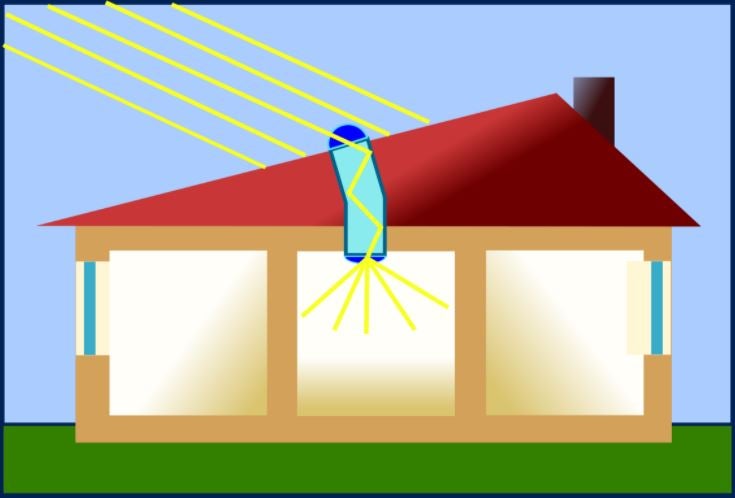
I love bringing sunlight into a home, with sun tunnels. Rita and I had Mark Lundquist of Design Skylights install a Velux sun tunnel in our garage and another one in our laundry room. (He installed four more at Golden Real Estate.)
Speaking of sunlight, we replaced every light bulb in our home with LEDs which are “daylight” color.
Installing solar photovoltaic panels is a no-brainer now that the cost has dropped so much. Your roof doesn’t have to face due south. Southeast and southwest are good enough. Since everyone will be driving an electric car eventually, install as much solar PV as Xcel Energy allows to cover that future load.
Don’t you hate climbing a curb to enter your driveway? Developers install mountable curbs the entire length of residential streets, because they can’t know where each driveway will be. One of the first things we did at our home was to remove the mountable curb in front of our driveway. It cost about $2,000 for our 3-car-wide driveway, but we love it every time we enter from the street!
When your gas forced air furnace needs replacing, consider replacing it with a heat-pump or hybrid furnace. And when your gas water heater needs replacing, I recommend buying a heat-pump water heater. We bought a 50-gallon Rheem unit for $1,200, but it came with a $400 rebate. Once you’ve replaced both, you will have eliminated the most common sources of carbon monoxide poisoning in your home.
Other improvements I’d recommend: Replacing any bathroom carpeting with ceramic or porcelain tile; replacing regular double-pane windows with Low-E windows on south-facing windows; replacing fluorescent fixtures (as we did in our garage) with flush-mount LED panels sold at Lowes for about $100. Love ’em!
I don’t know anyone who doesn’t like the idea of saving money, which will happen when you convert your home to “net zero energy.” So, what are the steps you can take to get there?
“Net zero energy” means that your home generates more energy than it consumes. With “net metering,” your electric meter runs backwards when your solar panels generate more electricity than you’re using (on a sunny day), then runs forward at night, resulting in zero (or less) net consumption of electric power.
Solar power gets more affordable every year. When I purchased my first 10-kW solar photovoltaic system 15 years ago, the cost was over $60,000, but Xcel Energy gave a rebate of $4.50 per watt, so I got a check for $45,000 from the utility, reducing my net cost to $15,000. Nowadays that same system would cost as little as $15,000 with no Xcel rebate but a 26% federal tax credit.
While you can generate your own electricity, you cannot generate your own natural gas, so terminating natural gas service is key to achieving net zero energy. This involves some major system changes if you are currently heating your home and your water using natural gas, cooking with gas (including with a gas grill) and have a gas fireplace.
There are electric alternatives to all of these uses of natural gas, and you’ll appreciate that eliminating natural gas also eliminates the possibility of a gas explosion and of carbon monoxide poisoning (unless you have a gas powered car).
Heating your home with electricity used to mean installing baseboard resistance heating units in each room, but that is so 20th century. Nowadays electric space heating is done far more efficiently (and evenly) using heat pumps.
Gas forced air furnaces and water heaters are considered to have a 15-year life expectancy, so when yours fail, think of that as an opportunity to adopt heat pump technology for both functions. And a heat pump eliminates the need for a separate A/C unit, since it heats and cools.
Gas furnaces and water heaters generate heat by burning gas. A heat pump moves heat, similar to what A/C does. (How heat pumps work) It cools your home by moving the heat out of your house. If you put your hand over the external compressor unit while it’s cooling your home, you will feel the heat that was moved from inside your home. In heating mode, the process is reversed, and the heat pump moves heat from outdoors into your house. It may surprise you to know that when it’s freezing outside there is actually heat that can be moved from outside to the interior of your house, but it’s true. (Heat pumps work in extremely cold climates) Our office has been heated solely by heat pump since November 2017, and ever since there has never been a day when the system failed to keep our office at 70°F or warmer.
A heat pump water heater (which I installed at our home) has the compressor built into the unit, above the tank. You can feel cool air emitting from it when it is heating water. I suggest putting it in a wine cellar where it’ll keep the room cool without buying a separate A/C unit.
For cooking, you’ll be amazed and delighted by the induction cooktops that are now widely available. I saw them used on a cruise ship for both cooking and warming surfaces, and the chefs loved them. (Modern cruise ships have eliminated natural gas because of the fire hazard.)
An all-electric home will, of course, demand more electricity, but Xcel Energy now allows you to install enough solar panels to generate double your electrical usage over the prior 12 months. That is more than enough to cover your new electric space heating, water heating and cooking needs, with capacity left over to charge an EV, too.
An important first step in pursuing net zero energy for your home is to reduce your need for energy, and the easiest and cheapest way to do that is to improve your home’s insulation. I had Dennis Brachfield of About Saving Heatblow cellulose insulation into the exterior walls (not just the attic) of a 1940s bungalow I owned, and I was astonished at how much more comfortable the house became. Even if your exterior walls have batt insulation in them, there is still space in the walls to blow in cellulose. (How to insulate an old house)
I learned something interesting from that experience. We all know that walls can radiate heat, such as a brick wall in bright sunlight. Well, walls can also radiate coldness, or suck heat. The air temperature in my bungalow before and after blowing in insulation was the same, but I felt warmer and burned less gas.
You can go beyond improving the insulation of your exterior walls and attic. There are numerous places that allow cold into your home, especially around your windows. Whether or not you install triple-pane Alpen windows, as we did at our office, caulking around the window frames and elsewhere can reduce the energy needed to heat your home.
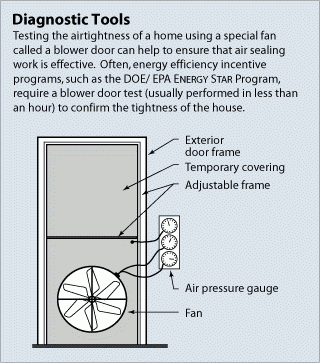
A blower door test done by a contractor will identify the air leaks in your home. Insulating your attic with blown-in cellulose and your crawlspace with plastic sheeting will also reduce your home’s energy needs whether from gas heating or your new heat pump. (Insulating crawl spaces)
Of course, many homes, especially in older neighborhoods, can’t benefit from solar power because of shading from trees or insufficient south-facing roof area, but you can purchase community solar. (This is also a good solution for condos which have no roof at all.)
The way community solar works is that you invest in solar panels that are part of a solar farm in some distant pasture. The electricity generated by your panels in that remote location is credited to the electric meter for your home or condo. One advantage of community solar is that when you move, you only need to change which meter gets credited with your solar production.
Other ways of reducing energy use include replacing CFL or incandescent light bulbs with affordable LED bulbs and “daylighting” your home or office. (Batteries + Bulbs sell 8-packs of 60W LED replacement bulbs for $6.49, tax included, after $15 instant rebate.) We have “sun tunnels” in our home and office to bring daylight into interior spaces. In fact, on a sunny day we don’t need to turn on any lights in our office. It’s great— and saves energy. We had Design Skylights of Evergreen install Velux sun tunnels at both home and office.
Would you like one of us to visit your home for a private consultation about the sustainability possibilities in your home? Email me at Jim@GoldenRealEstate.com.
It’s sad to see elected officials not taking the time to learn about new technology, especially technology that contributes to abating the effects of climate change.
Such is the story unfolding in the city of Arvada, where the city council — historically super friendly to developers — has bought into a false narrative by a developer/builder team that all-electric homes are not affordable or desired by today’s home buyers.
This is happening despite the fact that Arvada is itself home to a well known model of affordable all-electric homes in the Geos Community located west of Indiana Street and south of 72nd Avenue.
The Geos Community was partially built out several years ago without any natural gas lines. Home heating is by geothermal and air source heat pumps. Cooking is on induction cooktops. Heat pump water heaters provide the domestic hot water. Solar panels on each home provide all the electricity needed for these and other needs, making all 26 current homes “net zero energy.”
Before the Geos Community could be fully built out, its original developer was forced into selling due to a divorce settlement. Otherwise the remaining 250 homes — a mix of townhomes and single family homes — would have been built to the same net zero standard. The new developer had promised to do so, as described in a Nov. 17, 2020, post on MileHighCRE.com, but it reneged on that promise and is in the process of installing natural gas lines to the new homes, greatly annoying and angering the owners of the original 26 homes.
The fossil fuel industry duped all of us by promoting methane as a “natural and safe” gas for use in homes. This gas is highly heat-trapping (80-100 times more so than carbon dioxide), prone to explosion and causes many health issues (see Electric4Health.org). During the last decade Colorado added an average of 20,500 residential gas customers each year. BigPivots.com reports that our state now has 1.8 million residential gas customers. That trend needs to be reversed. There’s no need to keep building home reliant on natural gas.
Geos homeowners appealed to Arvada’s city council to deny the developer a permit for the gas lines, but the city declined to do so. The neighbors, however, are not giving up and have 267 signatures (including my own) on a petition to reverse that decision. The City of Arvada has advised the current Geos residents that this issue is closed.
Arvada should be proud that it is the home of the country’s first “geosolar” community which has, among other honors, been featured several times in the Metro Denver Green Homes Tour. I myself have produced narrated video tours of three Geos homes for that tour, which you can view here, here, and here.
As part of its COP 26 coverage this week in Glasgow, CNN will air a segment on Geos as a home building model to be emulated, essential for addressing climate change.
If you’re thinking of 20th Century home construction, promoting the all-electric home would make little sense. Electric baseboard heating has its place, but no longer as a whole house solution. One advantage of it is that each room can have its own thermostat, so you’re only heating rooms when you use them. For the heat it produces, however, it is many times more expensive than using a mini-split heat pump solution. Recently I showed a home where a heat pump mini-split was used to heat a detached and insulated garage which doubled as a workshop. That’s a great application for that kind of heating — also because the mini-split can cool the garage in the summer, not just heat it in the winter.
There has been a revolution in the development of electric appliances, too. The induction cooktop, for example, is a highly efficient replacement for earlier electric ranges or cooktops which used resistance-based cooking elements.
Another change from the 20th Century: you can now generate your own electricity with highly affordable roof-top solar photovoltaic installations.
As much as we Americans love our gas fireplaces, gas ranges and gas grills, we need to recognize that the move to an all-electric home, with the electricity being generated using minimal fossil fuels, is central to the goal of mitigating the effects of climate change.
And it can be a good future, especially if you’re able to generate all the electricity that your home and cars use.
That’s the future Rita and I have created for ourselves. We have 10 kW of solar panels on our Golden home, enough to heat and cool our home and charge our two electric cars. Our forced air furnace only burns gas when the outside temp dips below freezing. Otherwise, a heat pump provides all the heat we need. And recently we replaced our gas water heater with a hybrid water heater that heats all the water we need using its built-in heat pump. It has a standard electric heater coil in case we need faster recovery. (We never have needed faster recovery.)
Yes, we still have a gas cooktop and gas fireplace, and our BBQ grill is plumbed with gas. I can picture us moving to an induction electric cooktop, electric fireplace and electric grill, but for now we comfort ourselves with the knowledge that we have drastically reduced our carbon footprint and our monthly energy bills with the use of heat pumps for heating, cooling and water heating, as well as by driving EVs.
A December article on axios.com reported that some progressive jurisdictions are now banning gas hookups in new residential and commercial construction. According the article, 40 California municipalities, starting with Berkeley in 2019, have banned the installation of natural gas service in new construction.
The most common argument against this anti-natural gas trend relates to the cost of electric heating vs. gas heating, but the people who make that argument are probably thinking of conventional resistance heating, such as baseboard electric heating.
Resistance heating is similar to your kitchen toaster, sending electricity to a coil causing it to generate heat. There is a more efficient way to heat, however, which is to use a heat pump. A heat pump moves heat instead of generating heat, and the cost is as little at one quarter that of resistance heating for the same BTU (heat) output. Here’s a article comparing the two kinds of electric heating.
Moreover, a heat pump can provide both heating and cooling, merely by reversing the direction in which it moves heat, replacing both the gas furnace and electric air conditioning unit which most of us have in our homes.
Another argument against increased electrification is that electricity is itself created by the burning of coal and natural gas. The current fuel mix of Xcel Energy in Colorado is 36% natural gas, 32.5% coal, and the rest renewable energy (mostly wind). The company’s goal is 55% renewable by 2026 and 100% “carbon-free” by 2050, so it makes sense to start now replacing gas appliances with high efficiency electric ones such as heat pumps.
Keep in mind, too, that we can generate our own electricity at home and on our office buildings, taking advantage of “net metering,” paying only to be connected to the electric grid. With net metering, Xcel’s grid functions like a battery, taking excess electricity from our solar installations during the day and delivering it back to us when the sun goes away — or when our solar panels are covered with snow!






 Jim Smith's Blog