Xcel Energy Is Penalizing Small Businesses Which Offer Workplace Charging

Golden Real Estate is justly proud — if I say so myself — of having a Net Zero Energy office, meaning that our solar photovoltaic panels produce all the electricity needed to heat, cool and power our office as well as to the charge the five Teslas owned by our agents and me and offering free EV charging to the general public. (We have four EV charging stations at our office — two for our own use and two for the public.)

Meanwhile, Xcel Energy boasts that it is moving in the direction of 100% renewable energy and facilitating the adoption of electric vehicles. A big part of that is promoting “workplace charging.”

Xcel is right to promote workplace charging over, say, charging stations at retail stores, because cars are parked for up to 8 hours at one’s workplace — long enough to fully charge almost any EV using a standard Level 2 (240V) charging station.

So why is Xcel Energy penalizing small companies like Golden Real Estate which have already installed workplace charging stations for EVs?

As stated above, we generate all the electricity needed at our office on South Golden Road. Until this March, our monthly Xcel bill was under $11 every month — the cost of being connected to Xcel’s electric grid.

But now our Xcel bill is over $300 per month, even though we are still generating all the electricity we use. How can that be?  It’s because one day in March we drew over 30,000 watts of energy during a single 15-minute period, converting us automatically from standard “commercial” service to “demand” service. That means that in addition to the charges for electricity consumption, we are now charged for the highest amount of electricity that we draw during each month.
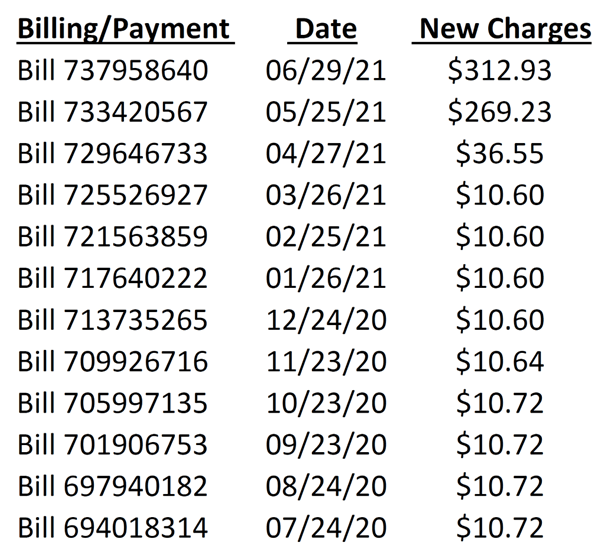
So our electric bill at Golden Real Estate is now over $300 per month regardless of the amount of actual electricity we consume during any particular month. To put it in numbers, we are charged about $15 per kilowatt for peak demand, and our monthly maximum draw of power is usually about 20 kilowatts.  Thus, we are charged $300 each month even though our net consumption of electricity is zero!

The only way we could draw over 25 kW of electricity at a given time is because we are charging cars at all four charging stations, something Xcel says they want to encourage.

When I communicated my dilemma to Xcel Energy, the response was to tell me that they’re introducing a new EV charging tariff later this summer. Unfortunately, the tariff requires that Xcel install the charging stations and offers nothing to those of us who were early adopters and already have charging stations in place.

Under Xcel’s proposed EV tariff, my penalty would drop to a little over $100 per month. But that’s still a $100 penalty.

The logical solution would be for Xcel to modify its commercial tariff to make the demand threshold 50 or 75 kW instead of 25 kW for forcing small businesses like us into their demand tariffs.

Now some good news.

I made these same arguments during public comments at a May 13th virtual hearing before an administrative law judge (ALJ) adjudicating an Xcel Energy rate case. This Monday, that ALJ published his ruling and cited my own testimony in ordering Xcel to increase its demand threshold to 50 kW.

I had made the same argument a couple years ago during public comments at a regular PUC meeting, but I got no satisfaction at that time, so I wasn’t expecting to be more successful this time, but I was.

Ironically, I had already written this column with no clue that the ruling was about to be handed down. Indeed, this column was uploaded to three Jeffco weekly newspapers Monday morning without this news.

The ALJ’s ruling has a few more steps before it is finalized.  Parties to the case can make final pleas and seek Commission reconsideration, akin to last ditch arguments, but I’m hopeful that my Xcel bill will return to $10.26/month soon.


Are More Contracts Falling Because of Bidding Wars?

A contract on one of my listings fell on inspection last week, but the buyer would not say why and would not release the inspection report. Meanwhile, the inspector had met the seller during the inspection and expressed shock when told that the contract was terminated. The logical conclusion was that the contract fell due to buyer’s remorse, i.e., a change of mind about buying the home.

The buyer and their agent could have simply stated that, because it’s a perfectly valid reason for terminating under the inspection contingency. It practically says as much in the contract itself. (By the way, the home quickly went under contract again with a new buyer.)

The seller asked me how common buyer’s remorse terminations are, given the way buyers are being rushed into making purchase decisions (at inflated prices) due to bidding wars.

So I did some research and found that contracts are not falling at a statistically significant higher rate than they did, say, two years ago during the same week.

Here are the specifics from my   research on REcolorado.com:

Of the 100 highest priced closings in early July that were on the market 1 to 20 days, 8% had a contract fall before a successful closing. During the same time period in 2019, 7% listings had a fallen contract before their successful closing.

Of the 100 lowest priced closings in early July that were on the MLS 1 to 20 days, 15% had a contract fall, compared to the same time period in 2019, when 16% had a contract fall before a successful closing.

It was a reasonable theory, but not true.

Every Industry Is Facing Disruption of Some Kind. How About Real Estate?

I just finished reading a white paper by the founder of Dotloop (part of Zillow Group) with the catchy title, “The End of the Traditional Real Estate Brokerage.”

The premise of the document is that unless a brokerage adopts that company’s “end-to-end collaborative platform,” it is destined to fail.  Hmm…. Is my successful brokerage, Golden Real Estate, destined to fail?

Basically, the argument is that mobile and digital technology is disrupting every industry and is also disrupting real estate.

“Disrupting,” however, implies winners and losers. I prefer to say that technology is revolutionizing real estate (as indeed every industry), but I see no end to Golden  Real Estate as a small, some say “boutique,” brokerage.

In my two decades as a Realtor (i.e., a member of the National Association of Realtors, not merely a licensed real estate professional), I have seen major transformation of the technologies, tools and software made available to brokers.

When I first got my license and joined the West Office of Coldwell Banker Residential Brokerage in Lakewood, we wrote our contracts on 3-ply NCR forms created for each of the many documents required in a real estate transaction. We used typewriters to complete them, or pressed firm with ballpoint pens.

Nowadays, virtually every agent uses on-line contracts. In our market, CTM eContracts is dominant in providing these contracts, and the integration of documents by agents on both sides of every transaction is impressive and… revolutionary. We love it!

Occasionally I will received a contract from an out-of-area agent, as I did just last week on one of my listings, that is not on CTM and uses a third-party e-signature program, DocuSign, for signing each document. (CTM has e-signature capability built into it, and it works great.)

Showing service technology has also evolved beautifully. The near-universal vendor in our market is ShowingTime, and it’s great how they have simplified the process of setting multiple showings, with well-timed route planning and management of feedback requests.

REcolorado, the Denver MLS, is introducing a replacement showing service called BrokerBay, which will have some further enhancements (and be included in our MLS fees), but it will have to be spectacular to be better than ShowingTime.

The MLS itself has been radically improved in the quarter century since it became web-based, and, as with their showing service proposal, continues to do the heavy lifting for us brokerages so that we have only the task of learning new ways of operating.

Despite these changes, I don’t think the in-person model of working with buyers and sellers is up for displacement, merely rapid and ongoing improvement.

An Update on the Ongoing Bidding Wars

This is my regular update on the real estate bidding wars. I was planning to do this analysis next week, but I’ve observed a definite slowing of the market, so I moved my report to this week, analyzing the closings that occurred last Thursday, July 1st, to see how the bidding wars have evolved since my last report. To my surprise, this analysis shows only a slight slowing, likely because those listings went under contract 30-45 days earlier.

As I did in previous months, I limited my analysis to sales within a 15-mile radius of downtown Denver. I limited my search to homes, condos and townhouses that were on the MLS at least one day but not more than 6 days before going under contract, since those are the homes with bidding wars. Once again I divided the results into listings which sold for up to $500,000 and those that sold for more.

On July 1st there were 33 closings up to $500,000, compared to 40 such closings on June 10th. The median home sold for 5.9% over its asking price, compared to 6.3% on June 10th. The highest ratio this time was 20% for a bungalow in Aurora compared to 19.6% on June 10th for a condo in Golden. Four listings sold for the asking price, and three sold for less than listing price, compared to none on June 10th.

There were 44 homes that closed on July 1st for more than $500,000, compared to 37 homes on June 10th. The median home in that group sold for 7.4% over its listing price, compared to 7.7% on June 10th. Only one sold for the listing price, and not one home sold for less than the listing price. The highest overbid was 29.7% for a contemporary 1969 home on Lookout Mountain, compared to 20.9% on June 10th.

To have a statistically significant number of closings over $1 million, I analyzed the 123 closings between June 16th and July 1st. The median closing for those high-end homes was 5.7% over listing price, compared to 6.1% from June 1-13. Fifteen homes sold for the listing price and 9 homes sold for less than the listing price. The highest overbid was for a 1985 home in “The Ridge” south of downtown Littleton which was listed at $900,000 and sold in five days for $1,200,000, 33.3% over listing price.  

Note: 27 of the 123 homes that sold for over $1 million were listed for under $1 million.

How Listing Agents Handle Bidding Wars: The Good, the Bad and the Ugly

I have written in the past about how we handle multiple offers and bidding wars on our listings using an auction style, which we feel is best for our sellers and most fair to buyers and their agents.

Regrettably, very few listing agents handle multiple offers and bidding wars the way we do. Most are sticking with the “highest and best” approach, in which buyers submit an above-listing-price offer without knowing what other buyers are offering.

Usually agents maintain that their sellers won’t let them reveal the competing offers, but I find that hard to believe. Have they even had an honest discussion with their sellers about that? I have that discussion with every seller who hires me and invariably they agree that full transparency about offers in hand is not only going to net them the highest price for their home but is also fairest to the buyers.

I have written in the past that 4 days on the MLS before going under contract is the “sweet spot” when it comes to netting the best price for sellers, and I have supported that opinion statistically.

However, recently we have modified our policy because of more buyers submitting early offers which are too good to pass up. Do we keep our word not to sell before the 4th day, or take the offer?

Rule #1 is that the seller makes that decision, not us. If the seller wants to accept a particularly sweet offer on day one or day two, we ask for 24 hours’ lead time so that we can notify all other agents who have set showings that our timeline has changed. “We have this great offer, and the seller wants to accept it.” That gives those agents time to accelerate their timeline and compete (or not) with that particularly sweet offer.

Regardless of how an agent handles multiple offers, professional courtesy demands that they communicate with other agents and not just ignore the competing offers. Just call us and say, “My seller has decided to go with a better offer.” Give us a chance to recalibrate and resubmit. That’s best for your seller (to whom you owe “utmost good faith and fidelity”), and it’s only fair to the other bidders.

Sometime soon these bidding wars will subside, and we’ll go back to having a “balanced” market. I’d settle, frankly, for a seller’s market that is not crazy wild!

We are still seeing way too many homes that are selling with zero days on the market, often because the listing agent convinced the seller to accept a contract obtained by the listing agent, thereby allowing the listing agent to keep his or her entire commission instead of sharing it with a buyer’s agent.

The Colorado Real Estate Commission frowns upon this practice and has issued guidance that every listing agent should advise their sellers that they may be leaving money on the table (that is, getting less than they might for their home) if they don’t allow the home to be on the MLS for at least a few days so that all interested buyers have a chance to see it and make an offer.

Along that vein, the National Association of Realtors last November adopted a “Clear Cooperation Policy,” making it a violation to have “pocket listings” not on the MLS so agents can see and show it. On our MLS that carries a $1,500 fine.

Winning a Bidding War Is Harder Than Ever for Buyers

It is a lot harder working for buyers these days. You’d be hard pressed to find a buyer’s agent who hasn’t lost more bidding wars than he has won for his clients. I don’t mind admitting that has certainly been true for me.

Last Sunday, however, I had a big success. My buyer fell in love with a patio home that backed to her alma mater, a Jeffco high school. Like her, the seller was a single woman, so maybe there was some sympathy there — I wouldn’t know.

It’s not accepted nowadays to present “love letters” from buyers, because they could lead to a fair housing violation, but it is okay to say things in a cover message with the contract written by me, not the buyer, so I made a point of saying that my buyer was an alum of that high school and relished buying this house. I don’t know if that helped either, but it didn’t hurt and it didn’t constitute a fair housing violation.

What did help was that I learned from the listing agent that while the seller was moving out of state, she was going to move her furniture to a friend’s house in the greater metro area. We have a moving truck which we make available to our buyers and sellers, but we can also offer it free to another agent’s client if it will help us win a bidding war. That did the trick for my buyer in this situation, and it also saved her several thousand dollars. Here is how and why.

In our offer we added an “additional provision” that Golden Real Estate (not my buyer) would provide totally free moving of the seller’s furniture anywhere in the Front Range, using our own moving truck and personnel, moving boxes and packing material.

Then, instead of a typical “escalation clause” offering to beat any competing offer by one or two thousand dollars (or more), I wrote that “buyer requests the opportunity to match any competing offer in order to retain for the seller the above mentioned totally free moving benefit.”

It worked. We were told the dollar amount of the best competing offer and were allowed to match, not beat, it. My buyer is now happily under contract for her dream home.

Any agent could make the same offer on behalf of his or her buyer, paying for the cost of moving. It’s just that we have the economy of having our own truck and moving personnel.

Since I’m often on the listing side of a bidding war, I have seen other strategies used by agents hoping to win a bidding war for their clients. A common one is to make a quick first offer that is substantially over the asking price but with an early acceptance deadline, hoping to get it under contract before anyone else can submit. This can pose a dilemma for the listing agent when his strategy, like ours, is to wait four days so that every possible buyer gets a change to compete.

Agreeing to accept an early offer like that should be the seller’s decision, however, not mine. Yes I gave my word that we would not sell the home in less than four days, but now I modify that promise by saying that, “in the event the seller wants to accept a particularly attractive early offer, we will give sufficient notice to every agent who has set a showing so that they can accelerate their showing and offering schedule.” We don’t want any buyer or their agent to be blindsided. As we like to say, “the only way a buyer will lose out is if he or she drops out.”

Don’t Fall for ‘Title Lock’ Services. They Are a Waste of Money and Don’t Provide Much Protection.

Perhaps you have seen advertisements or received a solicitation to purchase “title lock” service. A reader asked me to find out if it was a scam, so I asked my friends at First Integrity Title to check it out. Here’s what I learned.

The premise of the service is that the company monitors your public property information. It is supposed to alert you to changes to your home title (similar to credit monitoring) but is not as helpful or as necessary.

The truth is that it really isn’t as easy to steal your home’s title as they claim. Also, this is a monitoring service only. There is no “insurance” or help if your title is found to have changed, although Home Title Lock’s website does claim to provide a million dollars towards legal fees and costs to defend title from one of these scams. Doing so wouldn’t be terribly risky for the company, since the fraud is so rare and so easy to repair legally.

The reason a scammer would pretend to own your home is to take out a loan against it, pocket the money and disappear. The best target for such fraud would be a home that is owned free and clear. Any lender would require the purchase of title insurance, so if the scammer were successful in fooling a title company to insure that loan, it would be the title company at risk, not you.

Jerry Spaeth, a lawyer and the CEO of First Integrity Title, reported that in 22 years of doing title work, he has never seen a case where someone has been able to “steal” tile and then take out a loan, as they claim. And for only $15 a month, which such services typically charge, it would be difficult to be anything more than a monitoring service. 

It is difficult to find out how many such frauds have been committed, because they would be lumped together statistically with wire fraud and identity theft. 

The likelihood of needing this service is greater if you have several properties that you own, or if you own your home free and clear — and if you are elderly. The victim might not be able to receive the letters from the new mortgage company that a payment is late.

Again, you aren’t going to be getting support from most title lock services. They are just letting you know if something has taken place.

The title policy you received when you purchased your home does not provide protection for a fraud incident after the purchase of the policy. You can, however, monitor your property on assessment websites to verify that you are still the rightful owner.  Every year you should be receiving valuation and tax notices from your county assessor and treasurer. If you don’t get such notices, contact the county to find out why.

If you have a credit monitoring service, as Rita and I do, you would be notified if a new loan is taken out in your name, and a no-cost “credit freeze” with the three credit bureaus would stymie anyone seeking to obtain credit in your name. 

In conclusion, title lock service is not necessarily a scam, but it is questionable how useful the service is if there is little or no protection that comes with it.

Remember that Google is your friend. I found some useful information by Googling “title lock protection,” including a September 2020 piece from Fox 5 Atlanta calling title lock service a “Waste of Your Money.”

Real Estate Bidding Wars Are Not Abating

This is my monthly update on the real estate bidding wars. This week I chose to analyze the closings that occurred last Thursday, June 10th, to see how the bidding wars have evolved over the past four weeks. The source for this monthly analysis is REcolorado.com, the Denver MLS.

As I did in previous months, I limited my analysis to sales within a 15-mile radius of downtown Denver. I limited my search to homes, condos and townhouses that were on the MLS at least one day and not more than 6 days before going under contract. Those are the homes with bidding wars. I divided the results into homes which sold up to $500,000 and those that sold for more.

As you can see in this chart, the bidding wars only took off in earnest during February 2021, and they have kept accelerating month by month, enough that it raised the average ratio of closing price to listing price over all sales, not just the homes which sold in six days or less.

On June 10th there were 40 closings up to $500,000, compared to 44 closings on May 13th. The median home sold for 6.2% over its asking price, compared to 8.7% on May 13th. The highest ratio this time was 19.6% for a condo in Golden compared to 15.7% on May 13th for a home in southwest Denver. Only one listing sold for the asking price, and only two sold for less than listing price.

There were 37 homes that closed on June 10th for more than $500,000, compared to 56 homes on May 13th. The median home in that group sold for 7.7% over its listing price, compared to 8.1% on May 13th. Only three sold for the listing price, and none sold for less than the listing price. The highest overbid in this group was 20.9% for a one-story home in Lakewood on June 10 compared to 29.4% on May 13.

To have a statistically significant number of closings over $1 million, I analyzed the 82 such closings over a longer period — June 1-13. The median closing for those high-end homes was 6.1% over listing price, compared to 6.0% in May. Four homes sold for the listing price and 9 homes sold for less than the listing price. The highest overbid was for a 1979 ranch-style home in Jeffco’s Sixth Avenue West subdivision, which was listed at $1,080,000 and sold in 6 days for $1,575,000, 45.8% over listing price.  

I’ll repeat this analysis on July 15.

We and Our Truck Go the Extra Mile for Our Clients!

    Our clients have put a lot of miles on this box truck, saving them thousands of dollars on moving costs. They also get free moving boxes, packing paper and bubble wrap.  They only pay for the gas used.  The truck is also used twice a week by BGoldN to pick up food from Food Bank of the Rockies and by other non-profits, including Family Promise of Greater Denver and the Golden Chamber of Commerce.

We also use it ourselves every couple weeks to take truckloads of polystyrene (aka “Styrofoam,” a brand name) to a reprocessing center in Aurora, keeping over 200 cubic yards of the material out of landfills every year. People from all over Jefferson County (and beyond) bring their block white polystyrene to the Styrofoam Corral behind our office.

Legislation Bans HOA Limits on Political Flags & Signage

Before the current session of the Colorado General Assembly ends this Saturday, it will send to the Governor a bill which bars HOAs from limiting the display of partisan flags and signs.

The bill’s prime sponsors are Rep. Lisa Cutter of Jefferson County and Sen. Robert Rodriguez of Denver, both Democrats.

The title of the bill is “Homeowners’ Association Regulation of Flags and Signs” with the subtitle “Concerning additional protections for homeowners’ freedom of expression in common interest communities.”

Sounds like a good idea, right? Who is (or dares to be) against freedom of expression? It has attracted 11 other representatives and 5 other senators as sponsors.

However, let’s consider the unintended (or perhaps intended) consequences of this law. Basically the bill only allows content-neutral regulation of signs and flags, prohibiting only commercial messages.

Considering the political divide in our country and the extremism on each side of it, do we really want to allow unfettered display in our communities of right-wing and left-wing signs and flags?

I can live with the fact that a neighbor might be a QAnon follower, but I don’t want his lawn festooned with conspiracy messages or even Trump 2024 flags and signs without any limitation on their number or duration of display.

Currently it is common for an HOA to bar flags or signs of a political nature unless they are for a particular candidate or ballot measure and to limit their display to 45 days prior to an election and a short period afterwards. The effect of HB21-1310 would be to bar HOAs from enforcing any such limitation on the display of any political message at all, even if the membership voted for such a limitation.

If this bill becomes law, look for signs cropping up in your neighborhood for “Stop the Steal” or “Black Lives Matter” or “White Power” or even hate speech that’s reduced to a slogan. Do we need that much freedom of expression right under our noses every, day year round?

This can only serve to rile up divisions among neighbors who were heretofore happily ignorant of each other’s political beliefs. I can picture neighbors removing or destroying signs and flags they disagree with. These actions will be caught on cameras leading to criminal complaints and sometimes violence.  Do we really want to go in this direction?

Homeowners and renters are entitled to the quiet enjoyment of their premises. Unleashing this “freedom of expression” through flags and signs will only work against that principle.

I hope Governor Polis vetoes this bill when it gets to his desk.