Fannie Mae Requires Appraisers to Use a Measurement Model for Square Footage Not Used by Realtors

How we measure the gross living area of a home is important, but there is little consistency. Different websites may use different numbers for the same home, primarily because they tend to have only one field for square footage.

Below, I’ll write about Fannie Mae’s new rules for measuring homes, but it’s up to each real estate website operator which number it uses for square footage. For example, the web page that we create for each Golden Real Estate listing has only one square footage field, so I choose to display finished square footage. The MLS has fields to distinguish between finished, unfinished, basement, above-grade, and total square feet, as shown below, and all those fields are uploaded to every consumer website, but I haven’t found any consumer website which displays all those fields.

Zillow is an example of a website which features only the total square footage in each listing, even if half that area is unfinished basement space. It doesn’t show the breakdown of finished vs. unfinished space or basement vs. above-grade space unless you click on a link titled “See more facts and features.”

Trulia, which is owned by Zillow, has a link “See all” which lists “finished area” if you scroll down far enough, but that’s all. I find this ironic, because both Trulia and Zillow provide a ton of information not found on the MLS, yet they downplay or omit the most important detail of all — the breakdown of square footage.

Redfin, which, like Trulia and Zillow, gets the full feed from our MLS, also features only the total square feet and has no link that I could find which displays a breakdown. And, like both Trulia and Zillow, Redfin prominently features “price per square foot,” but that figure is based on the total square feet, which can be really misleading.

Golden Real Estate’s website, like those three, gets its active listings from the MLS, but our display is managed by the MLS, and all listings on our website use the finished square footage number, which is, I believe, the most useful single number to use. But, once again, there’s only one field for displaying square footage.

The MLS has its own consumer-facing website, www.REcolorado.com, where you can search for listings. On that site, the total square footage is featured, but scroll down and you see this very thorough breakdown of square footage:

On other websites, you’d only see 3,166 square feet and $271/sq. ft. for the listing in this example.

The numbers  displayed on the MLS are entered by the listing agent. Our sole obligation in providing them is to indicate the source. It could be from public records, or it could be from a prior appraisal. We could also measure it ourselves, but that is really unlikely. The only requirement is that we disclose the source. The safest choice is public records, but those numbers could be wrong.

Fun fact: Square footage of a home, by whatever standard, is measured from the outside of the exterior walls, not the inside.

Lenders, of course, want to know that the square footage is accurate and consistent, so recently Fannie Mae mandated that all appraisers follow the ANSI (American National Standards Institute) standard, which can result in appraisals which come up with different numbers than in the MLS listing on which the buyer relied.

The ANSI standards don’t allow for space with ceiling heights under 7’ to be included in the gross living area, and the square footage of staircases can only be counted on the level from which the staircase descends. Also, if even part of a level is below grade, the entire level has to be counted as “basement,” which directly conflicts with MLS rules which say the lower level of a bi-level or tri-level home (which is at least partially below grade) can be counted as above-grade square footage.

Complicating matters, appraisers must measure properties using the ANSI standards, but they have no choice but to rely on MLS measurements for the comps they cite in an appraisal, which were surely not done to ANSI standards. The technical term for this is “apples and oranges…”

There are three different square footage numbers for every MLS listing, and here is a quick tutorial on REcolorado’s rules for measuring square footage.

Above-Grade square footage used to be called “Main” square footage. As the new name suggests, it does not include basement square footage.  But that begs the question, “what is a basement?”  In a split-level home, the lower level, which is often below grade, is included in the “above-grade” square footage, since there is frequently a basement below that level. In a “raised ranch” home, the lower level is included in “above-grade” square footage for the same reason. (A “raised ranch” is defined as a home where you have to climb a flight of stairs to get to the “main” level. The “main” level is defined as the level containing the kitchen.) 

Finished square footage includes all the finished square feet, whether in the basement or above-grade. If the basement is unfinished (or there is no basement), this number will be the same as the “Above Grade” number.

Total square footage is what the name suggests, whether finished or unfinished.

All three of these numbers will be different when a listing has a partially finished basement.
The Real Estate Market Is Showing Signs of Revival

Here at Golden Real Estate, we have some anecdotal evidence of a resurgence in the real estate market, which was moribund in December.

On Saturday, Jan. 7th, I held a 2-hour open house at my listing on Bates Avenue. My previous open house at that listing had drawn not a single visitor, so I was quite surprised to have ten sets of visitors that day. All of them were actual buyers, not lookie-loos.

I immediately decided to hold it open the following day, Jan. 8th, and once again it was my most visited open house in recent memory.

I had four prospective buyers from those open houses and this Monday that home went under contract.

A second example of this resurgence came when broker associate David Dlugasch listed a 1960 brick ranch with walkout basement in south Golden/Pleasantview. (It was featured in last week’s ad.) It drew 22 agent showings on the first three days, and it went under contract on Sunday at full price — $798,000, which I frankly thought was a reach.

Although anecdotal, these experiences give me hope for a continued market resurgence in 2023.

For Sale: Golden Real Estate’s Former Office Building on South Golden Road

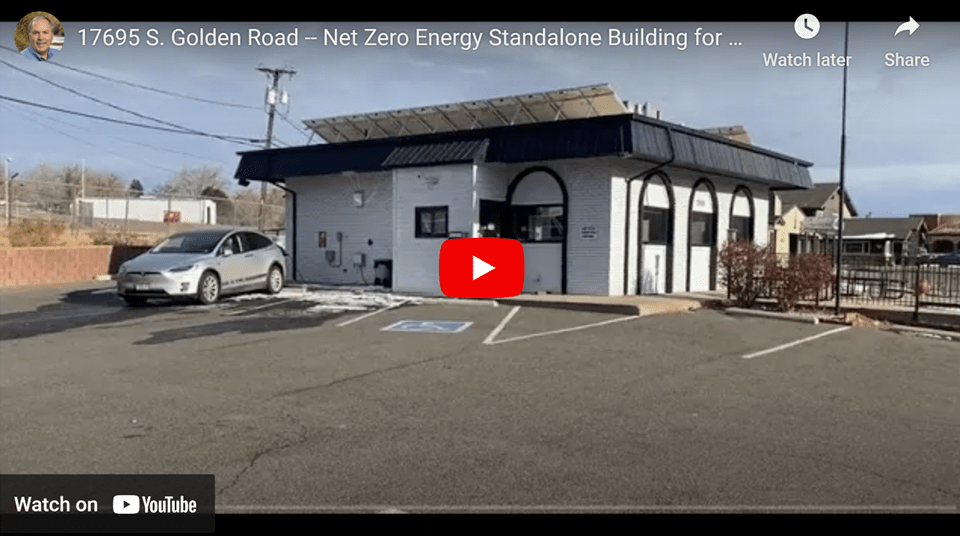
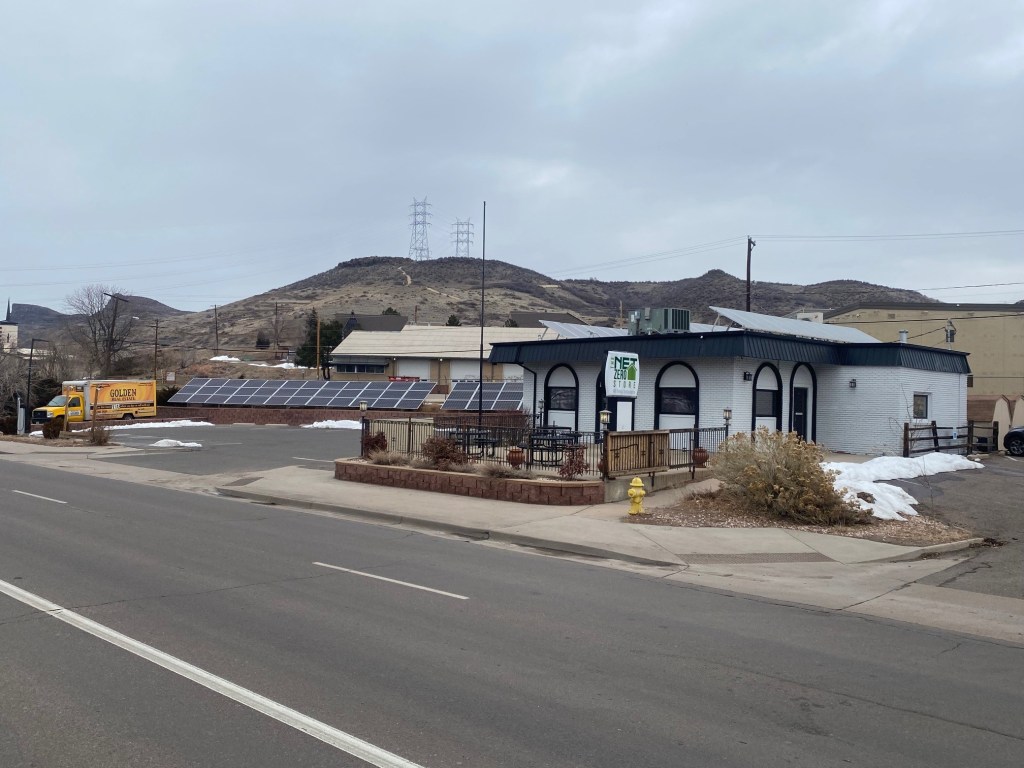
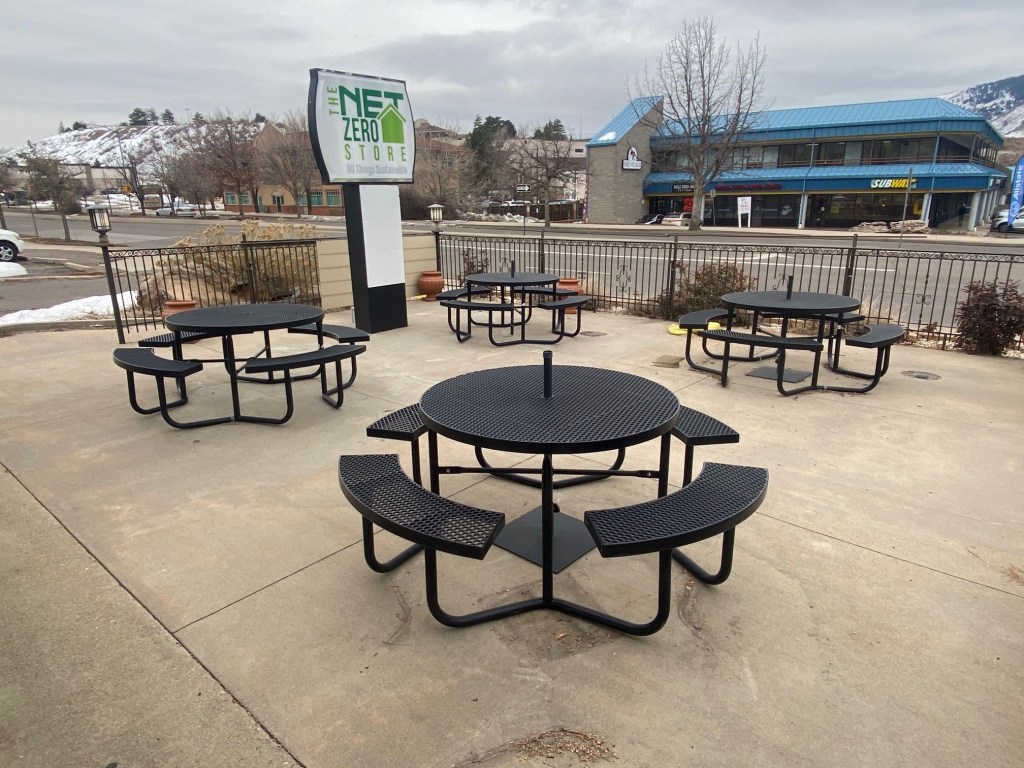
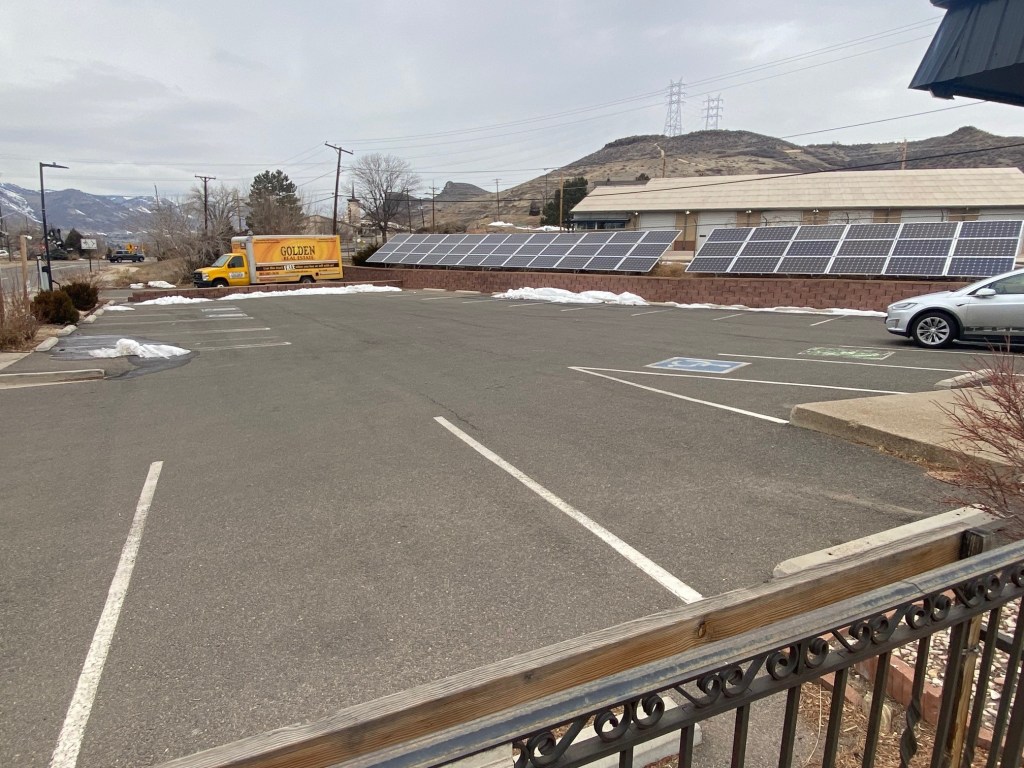
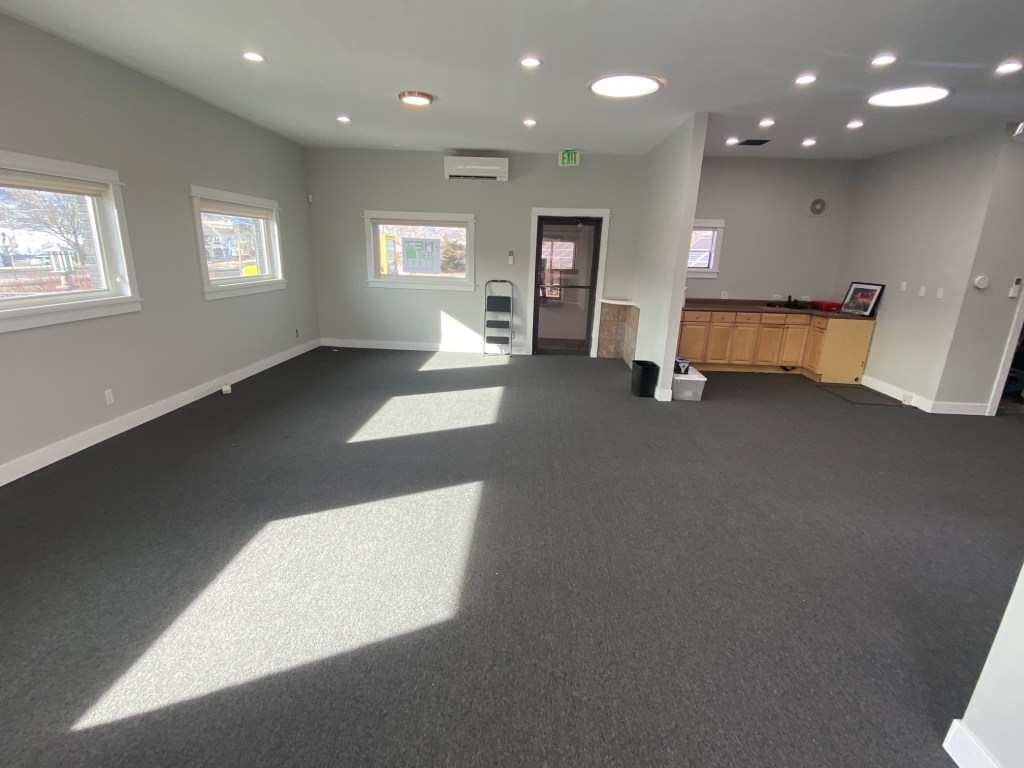
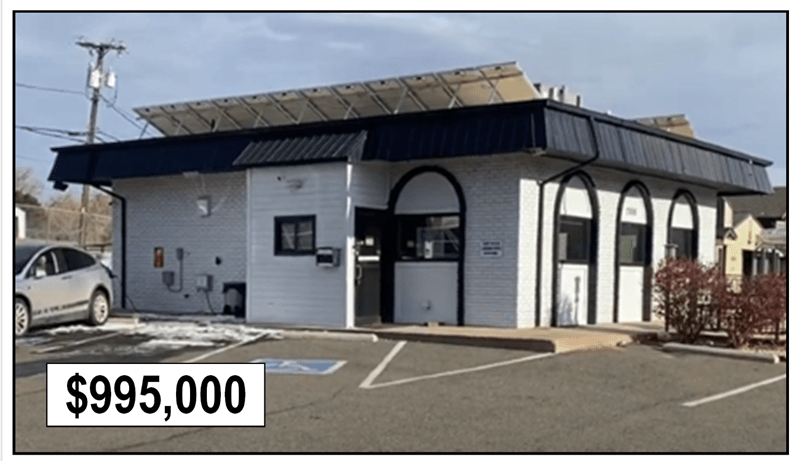
Currently vacant, this unique 1,318-square-foot office building at 17695 S. Golden Road (originally a restaurant) is powered by 20 kilowatts of solar power, which more than meets the energy needs of the building in addition to charging up to three electric vehicles at three Level 2 charging stations. The monthly bill from Xcel Energy is only $12.56.  There is no natural gas service, because the building is heated and cooled by a state-of-the-art heat pump/mini-split system powered by those solar panels. This is a true “net zero energy” building and was planned to be “The Net Zero Store,” but we decided to stick to real estate and sell the building. For a showing, call Jim Smith at 303-525-1851. You can take a narrated video tour and view interior and exterior photos at www.SouthGoldenBuilding.online.

Note the 5 kilowatts of solar panels on the building roof.

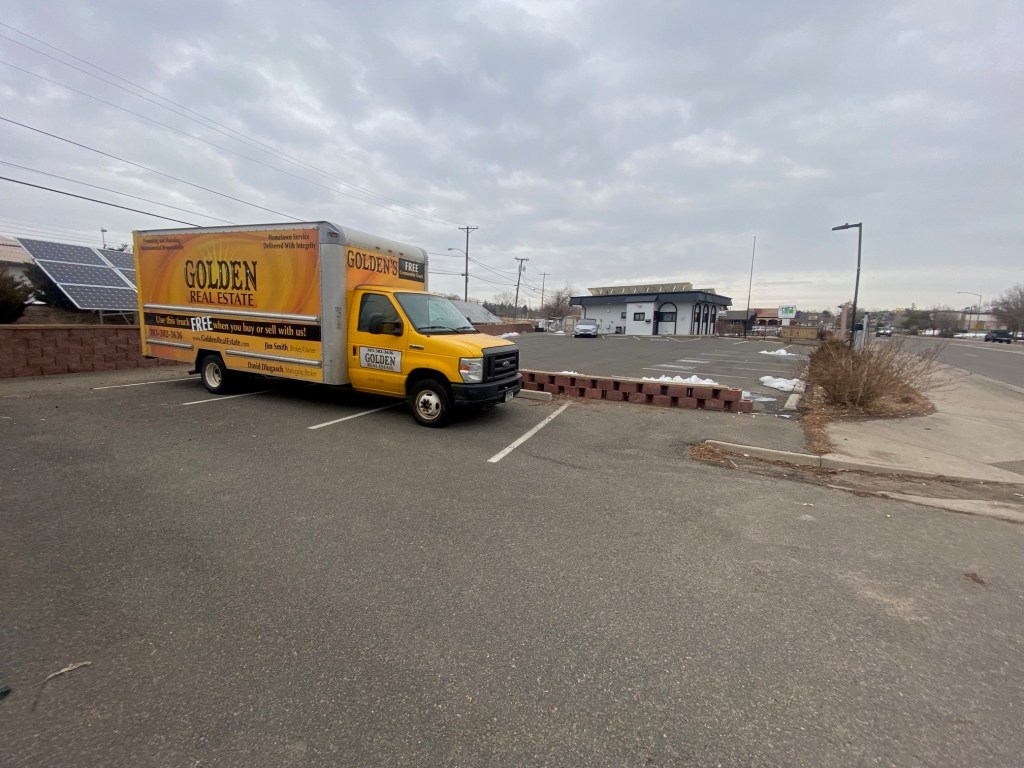
View of parking lots and 15 kilowatts of ground-mounted solar panels.

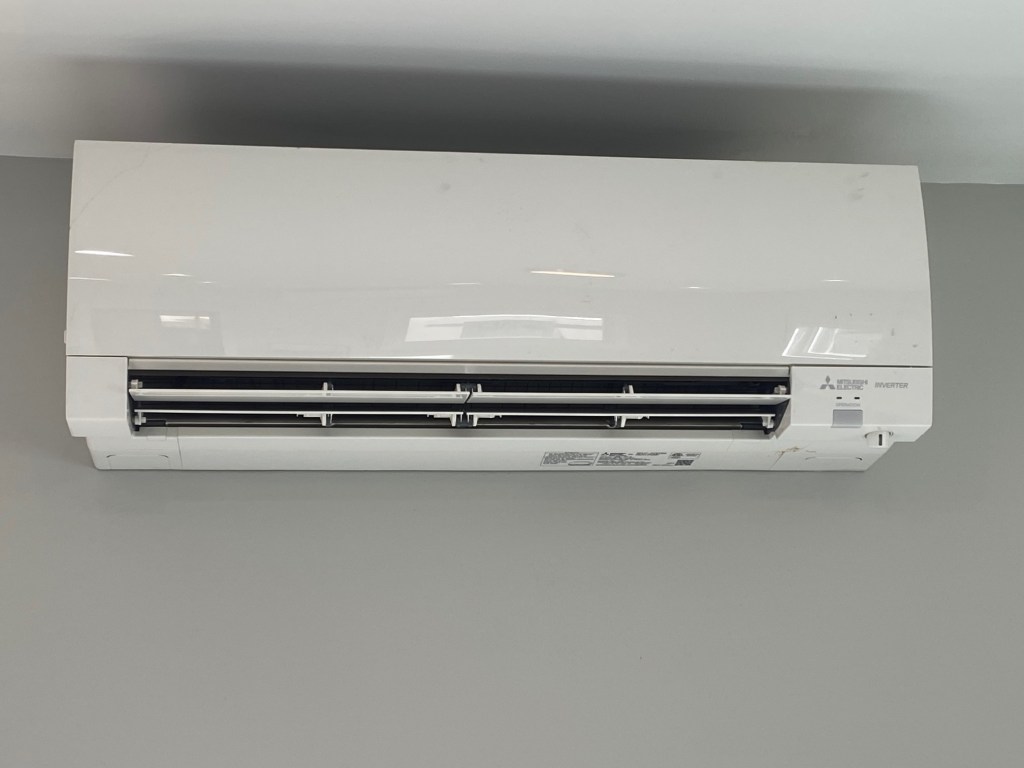
One of three wall-mounted mini-splits driven by a heat pump on roof, provides both heating and cooling at no cost thanks to solar panels.

Four Velux sun tunnels (similar to Solatube brand) provide natural light

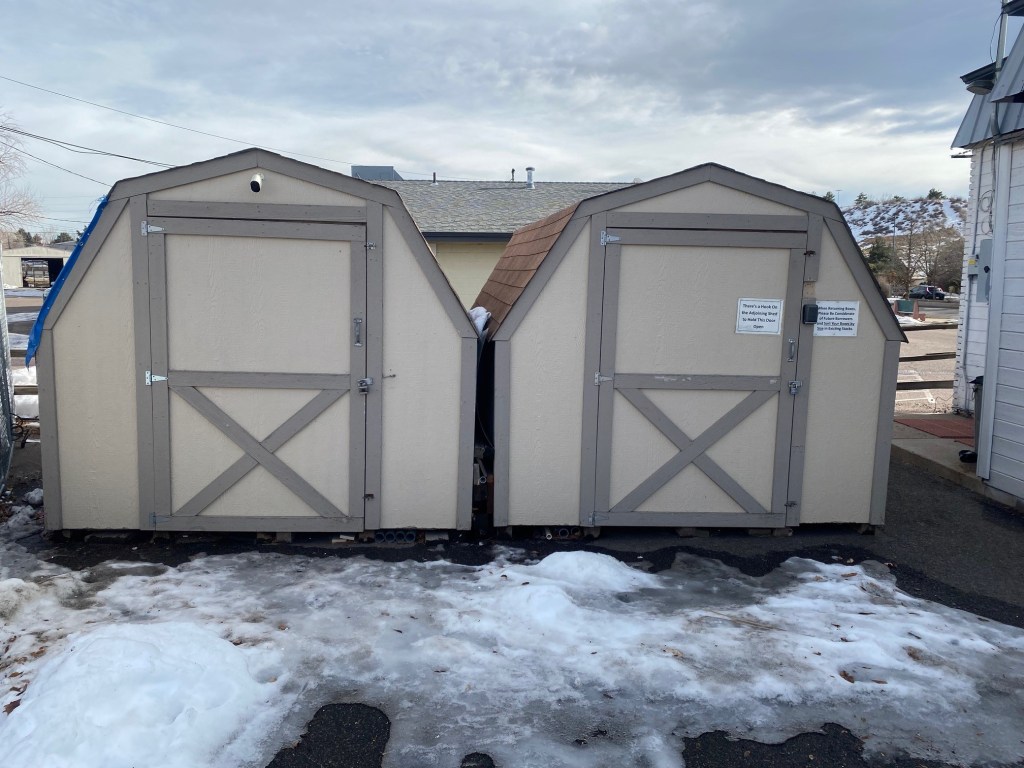
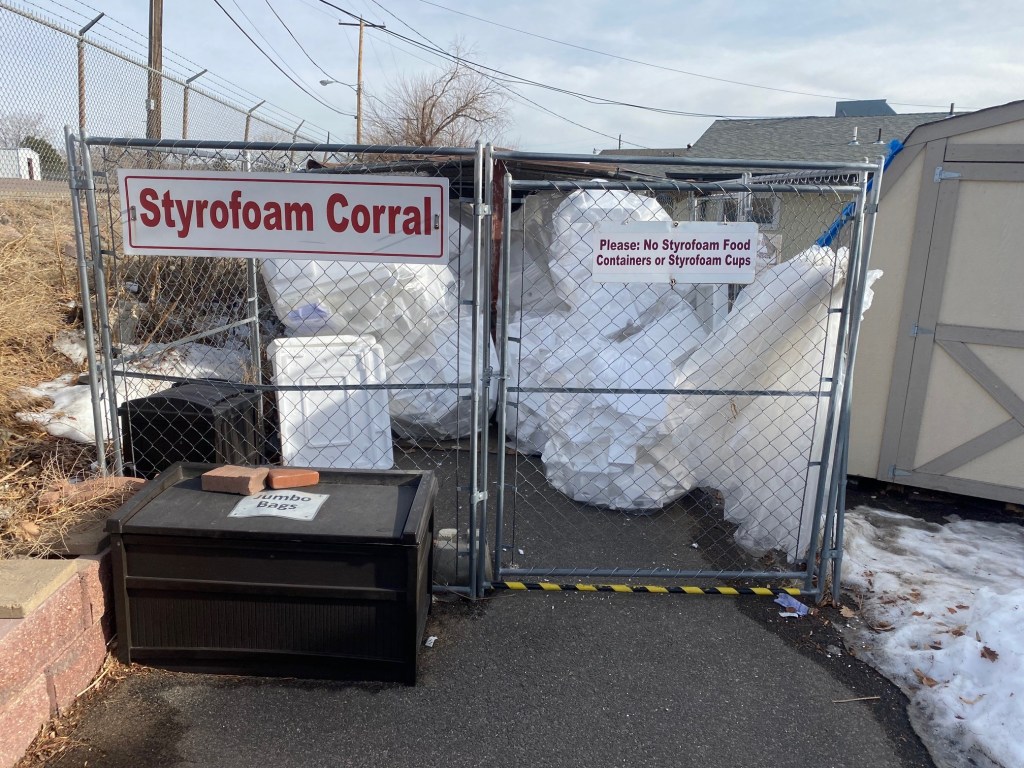
Golden Real Estate wants to rent back this secondary parking lot plus the two sheds and Styrofoam Corral behind the building for $200/month.

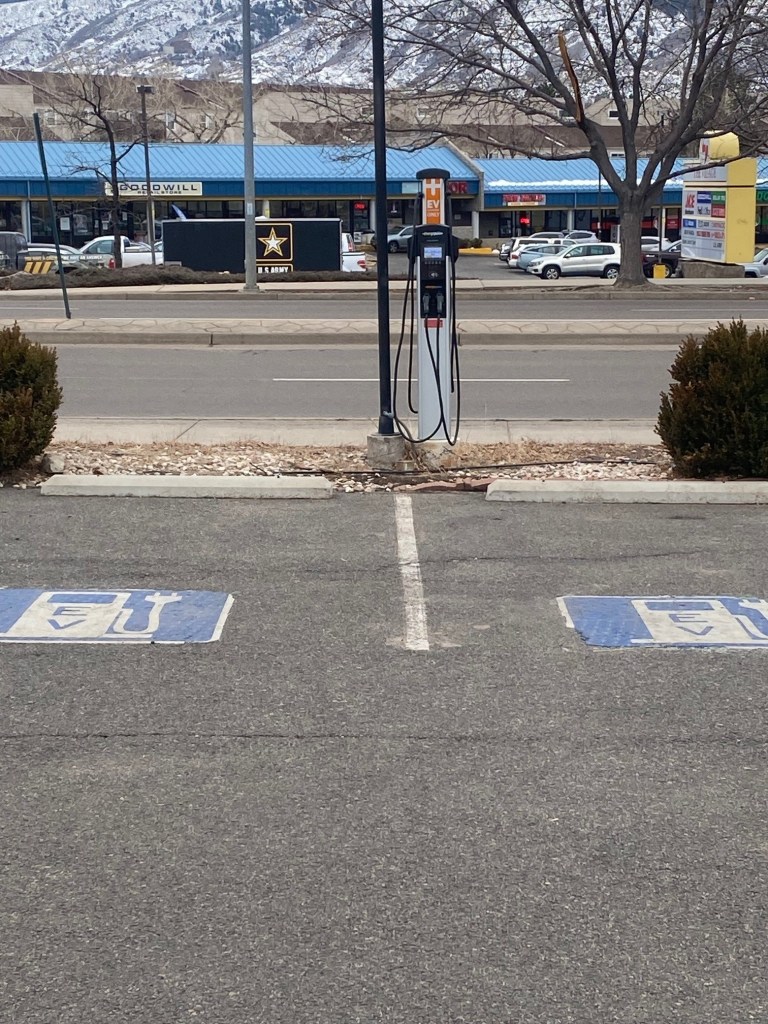
Two ChargePoint charging stations earn average $50/month at no cost to building owner because of solar power.

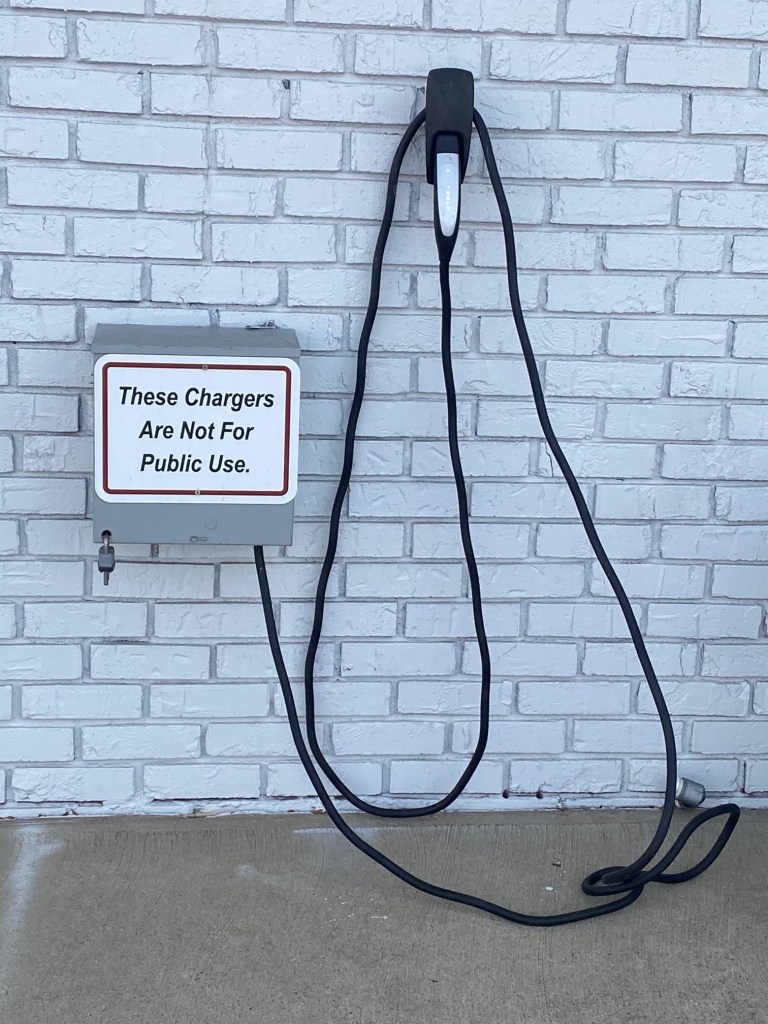
This Tesla charging station earns $75/month from an Uber driver.

Here’s a Solution to Your Snow-Packed Streets

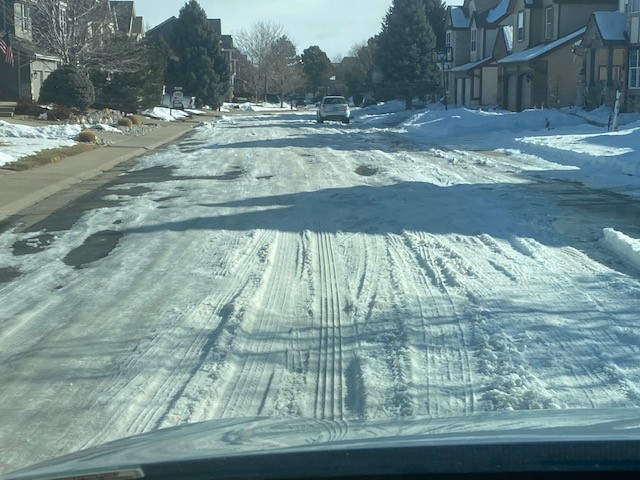
Does your street still look like the one above — over two weeks after the snow stopped falling?

Would you pay $1 or $2 to have someone plow your street before the snow gets beaten down, rutted and icy?

If you live in the City of Golden, this is not a problem. It’s the only city I know of which has committed to plowing every residential street, no matter how small the snowfall. (If you know of another city that does that, let me know, and I’ll share it.)

If your street is not being plowed, there’s a solution in plain sight, but only if you have an HOA or neighborhood association. Lobby your HOA to hire a person or company to plow your street immediately after each snowfall. The cost will be in proportion to how many streets and homes are in your subdivision, but regardless of size, I bet your association could find a person or company who would do it, and the cost would probably compute to no more than $2 per household per storm. Ten plowing events a year might cost $20 per household, but even it if were twice that, wouldn’t it be worth it?

Your association would probably not even have to raise their monthly dues for such a small expense. Google “snow plowing companies near me,” and get some quotes. Be your neighborhood hero and solve this recurring problem!

(If your HOA, not the city or county, owns and maintains your streets and/or if your community is gated, the HOA is probably already plowing your streets when it snows.)

The above picture is of the street in front of my listing at 14165 W. Bates Avenue. When I returned the day after taking that picture, I found a City of Lakewood road grader and dump truck working in tandem to scrape up the ice-caked snow and plow it to the side. Lakewood would have saved money by following Golden’s example and plowing the street when it snowed! Later that day, I found four Lakewood workers on foot chopping and removing ice on Union Blvd.

Price Reduced on Downtown Denver Loft

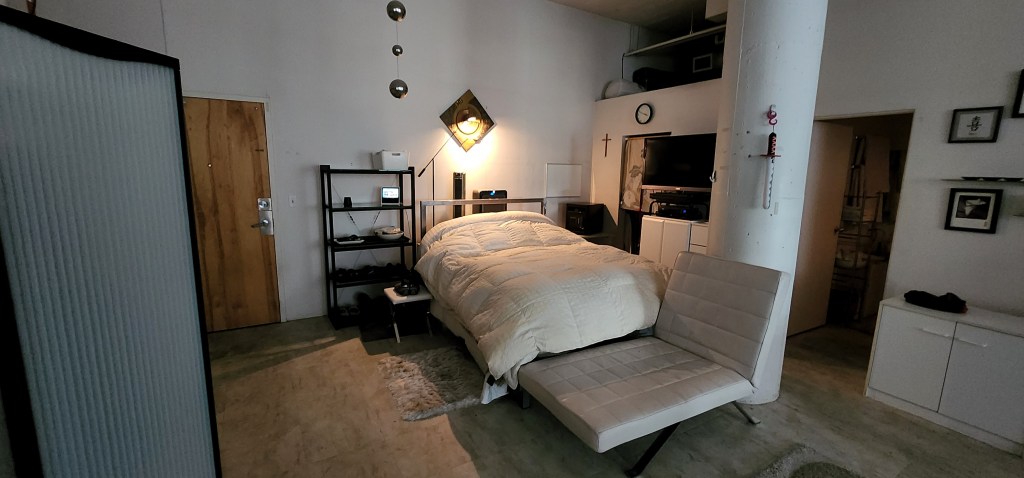
If you’re looking for loft living, this is as good as it gets! The price of this loft at 2000 Arapahoe St. #204 was just reduced to $550,000. Walk to everything in Downtown Denver — Coors Field, the  Performing Arts Complex, 16th Street Mall, Lodo, Union Station, shopping, restaurants, and light rail, including the A-line to DIA. The 12-foot ceilings and four massive pillars, plus huge windows with views of nearby skyscrapers — this is the loft life you’ve been looking for! It comes with three garage spaces, which is probably more than you need. Rent them out for $150-200 each to create a nice cash flow! This is a rare opportunity, so act fast. No open houses. More pictures and information can be found at www.DenverLoft.info.

View from Loft window

Experts Differ on What 2023 Will Bring in Terms of the Real Estate and Mortgage Markets

Real estate and mortgage professionals are coming to grips with how the market changed in 2022, but they’re holding back on predictions for the market in 2023.

On the national level, Lawrence Yun, NAR chief economist, predicts home prices will remain stable and the sales of existing homes will decline by 6.8%. He identified ten markets that will outperform other metro areas, and all ten of them are in the southeast.

“Half of the country may experience small price gains, while the other half may see slight price declines,” Yun said.

Here in the Denver market, the Denver Metro Association of Realtors (DMAR) issues a monthly market trends report. In its latest report, it pointed out that while there is a steady month-over-month decline in the average sold price, the year-over-year sold prices remain higher.

“Without a doubt, the Denver Metro housing market is changing, but the question on everyone’s mind is how long this change will last and what to expect next year,” commented Libby Levinson-Katz, Chair of the DMAR Market Trends Committee and a metro Denver Realtor®. “Most of the answers are tied directly to when we will see relief from increasing mortgage rates that have more than doubled since January… While we expect to see the Denver real estate market continue to change through 2023 due to interest rates and inventory woes, it has continued to show strength and stability.” 

As I highlighted above, a lot depends on the direction of mortgage rates, and predictions of where rates are headed are few and varied, because there are so many factors.

For example, will the Federal Reserve’s increases in the Fed Funds rate continue, and for how long? Will it cause a recession? Will unemployment increase and inflation abate?  What’s the future of the war in Ukraine and its impact on the US and world economy? What will energy cost in 2023?

Personally, I have no predictions to offer. What I know for sure is that people will still want to sell, and there will always be buyers ready to buy. We continue to see new listings come on the market. As always, some listings will be priced wisely and will sell quickly, but most will be overpriced and will sit on the market, slowly reducing their prices until they sell, expire, or are withdrawn from the MLS.

There may even be bidding wars on homes that are priced right. For example, I just sold a home in Applewood which we priced at $895,000 and sold to one of three bidders within a week for over $900,000. But we’re not perfect. Other listings have languished on the market and only sold once we reduced the price sufficiently to attract a buyer.

Revisiting Lessons Learned from the Marshall Fire a Year Later

The devastating Marshall Fire a year ago inspired several columns by me about how it could have been prevented or mitigated. My favorite column was the one on Oct. 13, which made an important observation about how vented attics (the most common kind in tract homes) allow wind-blown embers to enter homes.

All these columns can be downloaded by clicking on their dates:

Jan. 6, 2022 — Last Week’s Fire Disaster Is a Wake-up Call for Building More Fire-Resistant Homes

Jan. 13, 2022 — Homes Built of Concrete Garner Increased Interest in Wake of the Marshall Fire

Jan. 20, 2022 — Here Are More Examples of Concrete Construction and Fire-Resistant Roofing

Jan. 27, 2022 — The Buying of Homes Has Become More Frantic Since the Marshall Fire; Also: How to Alert Residents About an Approaching Wildfire

Apr. 14, 2022 — AirCrete Is a Lighter, More Climate-Friendly Version of Concrete for Home Construction

May 12, 2022 — Report from the Division of Insurance Details the Extent of Underinsurance in the Marshall Fire

July 14, 2022 — Are You Wondering If Your Home Is Underinsured? One Reader Shares His Research

Oct. 13, 2022 — Homes That  Survived the Marshall Fire Were More Airtight and Had Conditioned Attics

I am disappointed not to see any of the insights I shared reflected in recent anniversary articles and television programs.

Price Reduced on Solar-Powered Lakewood Home

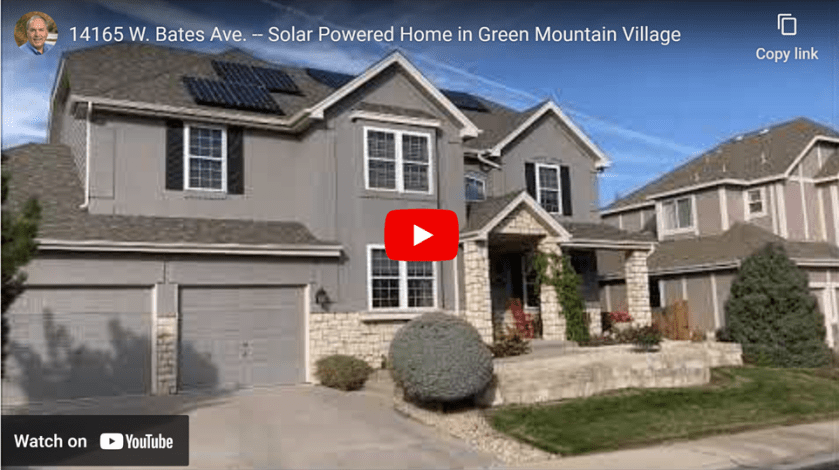
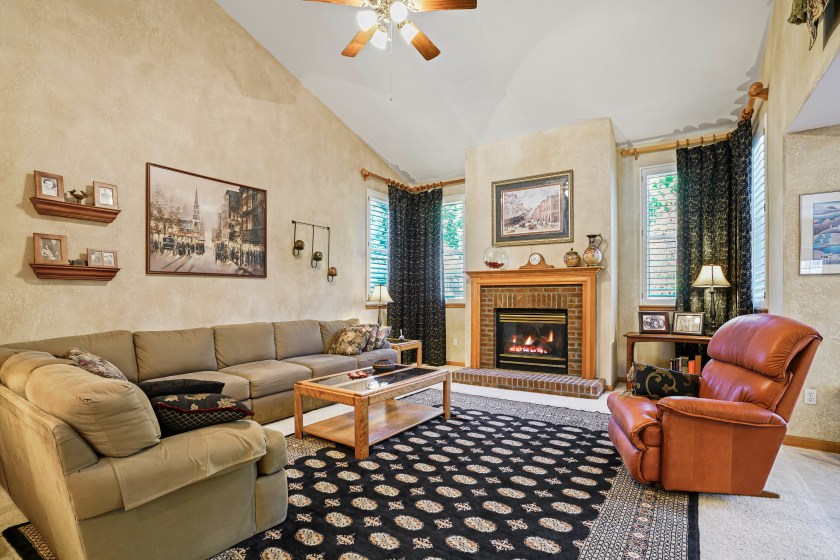
You’ll enjoy an Xcel Energy bill of $45 per month, including gas, during the summer and still under $100 per month in the winter thanks to this home’s roof-mounted solar photovoltaic system. The address is 14165 W. Bates Ave., in Hutchinson’s Green Mountain Village, which is south of Yale Avenue and north of Bear Creek Lake Park in Lakewood. It has 3 bedrooms, 3½ baths, plus a 14’x16’ loft that could be converted into a 4th bedroom with en suite bathroom. It has 2,957 finished square feet plus a basement ready to finish. This home is beautifully landscaped and updated, with hardwood floors on both levels (and even the stairs), a gourmet kitchen, and a fabulous backyard with a  free-standing Sunsetter retractable awning!  The walk-in closet in the master suite is a gem, which you’ll get to see in the narrated video tour at www.JeffcoSolarHomes.com. I’ll hold it open Saturday, Jan. 7, 11 to 1.

Have You Considered Cohousing? Here’s an Explanation and Some Examples

Cohousing puts like-minded people together in “intentional communities.” Many people, Rita and me included, resonate with the idea of community housing, where everyone has their own private home with kitchen and living room, but shares meals occasionally in a common house, perhaps work a community garden, but above all share the same values.

But bringing together like-minded families with the money to buy the land and build the individual units as well as the common elements can be difficult, resulting in few local examples of cohousing communities.

Just ask the people who tried a couple years ago to create the Ralston Creek Cohousing community next to the Geos Community in Arvada. They did all that work and were ready to put down the money when the land they wanted to buy was snapped up by a developer. Deeply disappointed, the community-without-a-home has now disbanded, no longer even publishing an email newsletter, according to www.RalstonCreekCohousing.org.

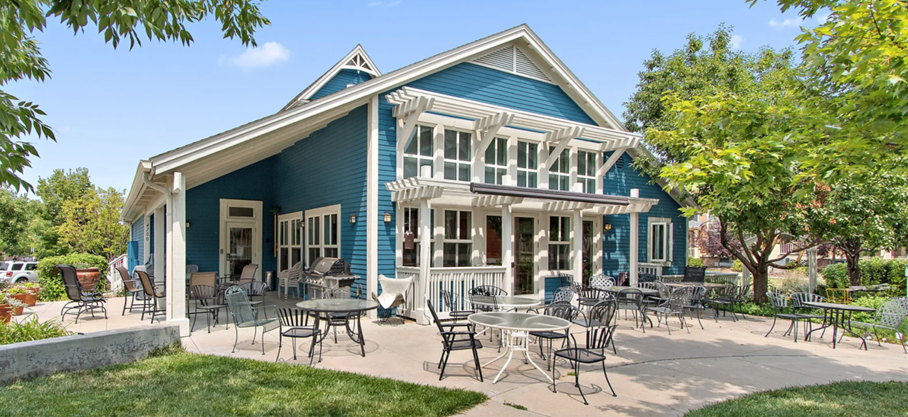
The concept of cohousing with like-minded neighbors has always appealed to me, but the opportunity never presented itself. In Golden there’s a long-established and highly successful 27-townhome cohousing community called Harmony Village, but turnover is close to zero because the members are so happy — and healthy!

Most cohousing communities are designed to leave cars on the periphery, as in Harmony Village.

Here are some other cohousing communities in the metro area, if you want to check them out.

Aria Cohousing, just east of the Regis University campus in northwest Denver, has 28 units under one roof. It was founded in 2017.

A community meal at least once a month is typical in cohousing communities, as at the Aria Cohousing community, allowing members to get to know each other better, part of being an “intentional community.”

Hearthstone Cohousing, on the former Elitch Gardens site in northwest Denver, has 33 townhomes plus a common house. I sold a unit there in 2021.

Common houses are a typical feature of cohousing communities, such as this one at the Homestead Cohousing community. It has a guest apartment, woodworking shop, laundry room, mail room and meeting/dining room with a kitchen for preparing community meals.

Highline Crossing Cohousing, along the Highline Canal east of Santa Fe Drive and north of C470, has 40 homes, built in 1995.

Wild Sage Cohousing, in north Boulder’s Holiday neighborhood, has 34 attached townhomes. A block south of this community is Silver Sage Village, an 18-unit cohousing community restricted to senior citizens — the first in the country. It offers only independent living, no assisted living or nursing care.

Other cohousing communities in our state can be found in Colorado Springs, Ft. Collins, Bayfield, Lyons, Ridgway and Lafayette.

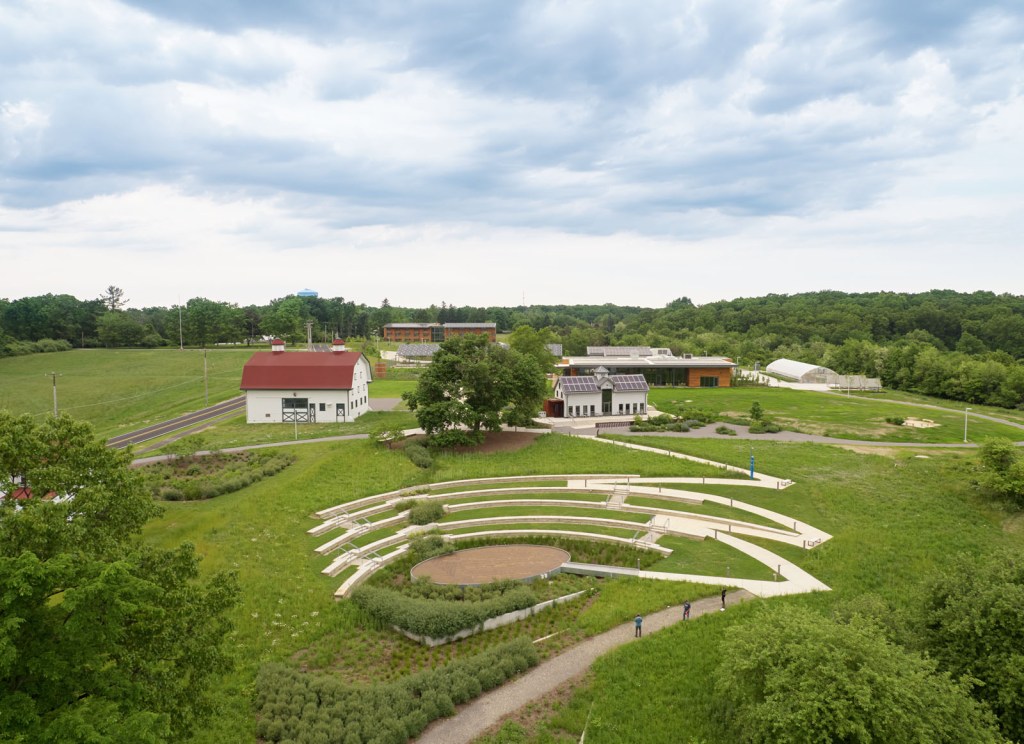
Looking beyond Colorado, I’m inspired by a project taking shape 20 miles north of Pittsburgh. It will be built on the campus of Chatham University’s Falk School of Sustainability and Environment. (See aerial photo below.) Chatham is the alma mater of Rachel Carson  when it was called the Pennsylvania College for Women. You probably know Carson’s groundbreaking 1962 book, Silent Spring, which is widely credited with sparking environmental consciousness in the United States and worldwide, leading initially to the banning of DDT.

The cohousing community being built there is appropriately named the Rachel Carson Ecovillage. What makes this project particularly exciting is that, by being located on the campus of a college devoted to sustainability and the environment, it serves as an onsite laboratory and example for the students as well as a great intergenerational home for environmentally conscious families.

As you might expect, the homes will be all-electric, built to Passive House standards, and solar-ready.

The Falk School of Sustainability and Environment was created in 2010 and occupies land donated with a stipulation that the land must remain under Chatham University’s ownership, so the homes in the ecovillage can be purchased for prices ranging from $225,000 for a studio condo to $580,000 for a 2-BR suite that be customized as a 4-BR unit, but the land is subject to a 99-year land lease from the university.

While that may not seem ideal, it solves the problem of land acquisition which stymied the Ralston Creek Cohousing community. To quote from the Ecovillage website:

There is no profit built into these costs — they will be offered for sale at the cost to build them….  

The Common House is a shared facility of approximately 2,500-3,000 square feet. It includes a dining/meeting room, a kitchen, mail/package pick-up, and two guestroom suites. Other amenities may be included, as well. 

The units will be designed and constructed to conserve energy and minimize carbon emissions. To avoid combustion of fossil fuels, they will be all-electric, which makes it possible for them to be powered entirely by renewable energy. The units will be designed to meet high indoor air quality standards. It is our intent to be able to monitor building performance after construction to see how well they meet these goals.

Sustainability is a common theme in all cohousing communities, which makes sense, because valuing and caring for your neighbors translates logically to caring for the planet as a whole.

Learn more about the cohousing concept at www.Cohousing.org, or by reading Creating Cohousing: Building Sustainable Communities.

Getting Personal: Reflections on My Two Decades as a Colorado Realtor

I’m writing this from a hotel room in Athens, following an 11-day cruise of the Aegean Sea, so real estate isn’t top of mind for me right now. I needed something that would be easy to write, and it occurred to me to share my path from newly licensed agent over 20 years ago to where I am today. Maybe it will interest a few readers.

I was originally licensed as a Colorado real estate agent in April 2002, so I’m well into my third decade as a real estate broker.

Real estate is a tough field to break into. Back in 2002, new brokers received a one-year initial license. More than half of new licensees would not renew their license at the end of their first year because they had completed few or no transactions, burned through savings, and thought it futile to continue.

As I recall it, my gross commission income that first year was about $7,000. In my second year, it was about $75,000, and in my third year it was $150,000. These are gross figures, because back then we were all “independent contractors” and we had to cover all the costs of being in business — computers, software, MLS dues, Realtor dues, E&O insurance, cell phones, car expenses, and self-employment tax. And most of those expenses came upfront, so waiting six months or longer for a first commission check was hard for anyone who wasn’t prepared to go thousands of dollars in the hole before earning a reliable income.

Fortunately, I did have the financial reserves to outlast that “newbie drought,” and I did go at least $30,000 negative before going positive, ultimately becoming quite successful.

When a real estate license is first issued, you have to hang your license with a brokerage. You may be an independent contractor, but you can’t be an independent broker until you have two years’ experience as a broker associate and pass a 24-hour employing broker’s class.

I was drawn into getting a real estate license by attending a career night at Coldwell Banker, so hanging my license with them was an easy decision, and they had a two-week “Fast Start” class for new agents taught by Rich Sands which gave me the tools and understanding I needed to put my financial reserves to work. “You have to spend money to make money,” I reminded myself as I invested heavily in a full-time career as a real estate broker.

I’ll never forget what Rich said in the very first session of that 2-week intensive class. “Congratulations,” he told my classmates and me, “you are now licensed to sell real estate, and there are 20,000 agents out there with more experience than you. How are you going to make yourself stand out from them?”

At the time I was chair of the speakers bureau for Habitat for Humanity of Metro Denver, so my first thought was to stand out by pledging 10% of every earned commission to Habitat.  I recall getting one listing from that offer, but Habitat wouldn’t promote it, so I dropped that pledge after sending several large checks.  (I’m still active with Habitat and still donate, but not a percentage of each closing.)

The other thing I did — a common strategy recommended by Rich Sands — was to specialize in a particular subdivision and “farm” it for listings. The subdivision I chose was the Village at Mountain Ridge, which had just been developed on the west side of Hwy 93 in Golden.

At the time I had a yellow-naped Amazon parrot, Flower, who I referred to as my “unlicensed personal assistant” and even printed up business cards for her with that title. Countless residents or former residents of Mountain Ridge have pictures of Flower on their children’s shoulders and received her business card which Flower “autographed” by puncturing it with her beak. I served free ice cream at the neighborhood picnic (with Flower, of course), and I sponsored a yearly garage sale. I also published a newsletter with useful information including but not limited to the real estate market for the subdivision.

I did all those things Realtors do to get known and trusted by homeowners — plus some things unique to me.  It worked well.

However, you’re looking at my most successful investment. Using my training as a journalist, which included a summer internship at The Washington Post, I chose from the very beginning to write a real estate column. At first it appeared in The Voice of Golden, then the Golden Transcript, and ultimately other Jeffco weekly newspapers and the Jeffco editions of YourHub. It has been so successful in generating business that for several years now I have paid for it to appear in every edition of YourHub.

At first I wrote this column only once a month, but soon I was writing it weekly, spending $30-50,000 per year to have it published in those newspapers. Almost two decades later, I estimate that I get about 90% of my buyers and sellers from long-time (and newer) readers of this “advertorial.” It has also benefited our broker associates (listed below), since I can’t service all the leads that come to me. As a result, the per-agent business done by Golden Real Estate is much higher than that of other brokerages in this market.

Of course, I didn’t know much about real estate when I started writing this column in 2003, but I would research a topic in order to write about it, and I would ask  my managing broker to review and correct what I wrote before sending it to be published. The process taught me a lot about real estate. It’s my personal continuing education program. You’ve probably heard the expression that “you teach what you need to learn.” I needed to learn all aspects of real estate, and writing this column was how I did that.

Most brokers with my number of years in the business have numerous initials after their name representing the certifications they have earned by taking special classes. These include Accredited Buyer Representative (ABR), Graduate Realtor Institute (GRI), Certified Residential Specialist (CRS), GREEN, e-Pro, Seniors Real Estate Specialist (SRES),  and others. I have none of those certifications, but my writings have given me a broad understanding in all those fields.

I’m not downplaying those classes and certifications — they have helped many of my fellow agents gain knowledge in each field, which is why I look for those initials myself when making referrals.  Those initials evidence real knowledge.

I like to tell a story from my childhood which rings true in this context. One of my 9th grade teachers said in an end-of-term report, “Jim shows dangerous signs of becoming a dilettante.”  I asked Dad what a dilettante was. “It’s a person who knows a little about everything but not a lot about one thing,” he said. “Sounds good to me!” I replied.

As I have written in the past, the biggest contributor to an agent’s expertise — in most but not all cases — besides those certifications is the number of transactions he or she has completed, more so than the number of years in the business. We learn from every transaction, and I have been blessed to have completed hundreds of transactions. The average agent completes only two or three transactions per year, and a high percentage of agents go an entire year without a paycheck. That was true in 2002 and it’s still true today.