Here’s a Postscript to My Earlier Post About All-Electric Homes

Some readers were surprised to read my column promoting the all-electric home as a cost-effective contribution to the mitigation of climate change.

If you’re thinking of 20th Century home construction, promoting the all-electric home would make little sense. Electric baseboard heating has its place, but no longer as a whole house solution. One advantage of it is that each room can have its own thermostat, so you’re only heating rooms when you use them. For the heat it produces, however, it is many times more expensive than using a mini-split heat pump solution. Recently I showed a home where a heat pump mini-split was used to heat a detached and insulated garage which doubled as a workshop. That’s a great application for that kind of heating — also because the mini-split can cool the garage in the summer, not just heat it in the winter.

There has been a revolution in the development of electric appliances, too. The induction cooktop, for example, is a highly efficient replacement for earlier electric ranges or cooktops which used resistance-based cooking elements.

Another change from the 20th Century: you can now generate your own electricity with highly affordable roof-top solar photovoltaic installations.

Zillow’s Offer to Buy Your Home for Its ‘Zestimate’ Price Is a Brilliant But Devious Strategy

I’ve written in the past about various “iBuyer” players — look for my August 22, 2019, and January 2, 2020, columns archived online at www.JimSmithColumns. com.

Basically, iBuyers such as Opendoor and Zillow Offers attempt to lure homeowners in-to selling their home for what appears to be a good price but which is literally intended to net the seller less than if they exposed their home to the full universe of potential buyers.

Literally intended? Yes, all you need to know is that if a company wants to buy your home in order to resell it, it’s because they will make a profit from doing so. Wouldn’t  you want to keep that profit for yourself?

Now Zillow has weaponized its much criticized “Zestimate” for the purpose of getting their “foot in the door” with you. Let me share with you a few points to ponder before responding to Zillow’s pitch.

First of all, you and I both know that the Zestimate is a computer-generated number that is by definition not particularly accurate. (Zillow’s estimate on my own home is at least $100,000 over its true value.)

To facilitate their iBuyer program in Colorado and elsewhere, Zillow made big news recently when they opened brokerages and started hiring brokers. They have opened an office in Centennial and, as of this week, have 15 broker associates, 12 of them members of the Denver Metro Association of Realtors. The others belong to an out-of-state Realtor association.  So far that brokerage has put zero listings on REcolorado, our MLS, whether active, pending or closed. Presumably those 15 broker associates are busy responding to homeowners who responded to Zillow’s pitch about buying their home for the Zestimate price. How will those meetings go?

First, the broker associate will do a true market analysis and explain that the Zestimate was computer generated and overstated their home’s value. “Here’s what we will offer you, now that we know the true value.”

If the seller accepts the lowered price and signs a Zillow purchase contract, it will have the following provisions, assuming it’s similar to the contract from Opendoor that I was able to study.

First of all, the seller will have accepted a 7½% “service fee” in lieu of a commission. Next, they will have agreed to an inspection or  “assessment” of the property, which will be followed by “adjustments” to the purchase price based on “needed repairs,” including, for example, a new roof, a new furnace or water heater based on age — whatever can be justified. The example I cited in my August 2019 column mentioned $38,563 worth of “repairs found in assessment.” 

That contract had an escape clause for the seller, which Zillow’s contract probably does too, allowing the seller to terminate at any time, which is what that buyer did.  The combination of the “service fee” and the reductions to cover supposed “repairs” was so great that they called me. I listed their home for the right price and sold it above asking price due to multiple offers, netting the seller more than they would have netted under their contract with Opendoor.

I got the seller more money, because, as I said above, the only reason for Opendoor or any iBuyer to purchase a home is to sell it at the market, which requires them to purchase the home below its market value.

In the iBuyer marketplace, Zillow clearly has the advantage, because virtually every homeowner is already being dazzled by the Zestimates they get routinely by email, whereas Opendoor and other iBuyer competitors have to canvass and cold-cold homeowners about selling their home “without putting it on the market or paying a commission.”  Zillow enjoys what every brokerage wants — sellers calling them! All the Zillow brokerage has to do is employ enough agents to answer the phone and arrange those in-home “selling” appointments, which are really for the purpose of listing the home for sale once it is owned by Zillow.

It’s a great business model — for Zillow, but not necessarily for the homeowner. That is, unless the homeowner is willing to give up thousands of dollars in proceeds in return for the “convenience” of selling without any showings or other intrusions.

For some homeowners, that convenience is worth the loss of proceeds, and there are probably enough such homeowners to make the iBuyer model successful. What bothers me is that for some it will feel like a “bait and switch” situation. After all those “adjustments” have been made, they might be un-able or unwilling to exercise their right to terminate the contract because they have made life plans based on the expectation of selling their home for an acceptable price. 

Some will have already signed contracts for a new home or at a senior community. They will have already packed some of their belongings or put them in storage, and they may have told their friends that they are selling and moving. For these persons, it may be psychologically difficult or financially costly to reverse course when they discover they have been fooled into selling their home for less than its worth.

If you have responded to the Zillow pitch and would be willing to share your experience, I’d like to hear from you. My email address is Jim@GoldenRealEstate.com.  I’ll share what I learn in a future column.  Subscribe to this blog to get alerts about future postings on this or another topic of interest.

Want to Avoid Bidding Wars?

   Sellers love bidding wars. Buyers not so much. If you’re a buyer and want to avoid a bidding war, simply ask one of our agents (below) to set up an MLS alert including this criterion: Days in MLS >9. As I write this, there are 1,021 listings that have been active on REcolorado 1 to 9 days on MLS, but 4,044 that have been active over 9 days. A listing that has been on the MLS 10 days or longer is far less likely to have multiple offers (unless it just posted a big price drop).

Jim Smith, 303-525-1851

Jim Swanson, 303-929-2727

Chuck Brown, 303-885-7855

David Dlugasch, 303-908-4835

Ty Scrable, 720-281-6783

Andrea Cox, 720-446-8674

All-Electric Homes (and Buildings) Are Central to Mitigating Climate Change

As much as we Americans love our gas fireplaces, gas ranges and gas grills, we need to recognize that the move to an all-electric home, with the electricity being generated using minimal fossil fuels, is central to the goal of mitigating the effects of climate change.

And it can be a good future, especially if you’re able to generate all the electricity that your home and cars use.

That’s the future Rita and I have created for ourselves. We have 10 kW of solar panels on our Golden home, enough to heat and cool our home and charge our two electric cars. Our forced air furnace only burns gas when the outside temp dips below freezing. Otherwise, a heat pump provides all the heat we need. And recently we replaced our gas water heater with a hybrid water heater that heats all the water we need using its built-in heat pump. It has a standard electric heater coil in case we need faster recovery.  (We never have needed faster recovery.)

Yes, we still have a gas cooktop and gas fireplace, and our BBQ grill is plumbed with gas. I can picture us moving to an induction electric cooktop, electric fireplace and electric grill, but for now we comfort ourselves with the knowledge that we have drastically reduced our carbon footprint and our monthly energy bills with the use of heat pumps for heating, cooling and water heating, as well as by driving EVs.

A December article on axios.com reported that some progressive jurisdictions are now banning gas hookups in new residential and commercial construction. According the article, 40 California municipalities, starting with Berkeley in 2019, have banned the installation of natural gas service in new construction.

The most common argument against this anti-natural gas trend relates to the cost of electric heating vs. gas heating, but the people who make that argument are probably thinking of conventional resistance heating, such as baseboard electric heating.

Resistance heating is similar to your kitchen toaster, sending electricity to a coil causing it to generate heat.  There is a more efficient way to heat, however, which is to use a heat pump. A heat pump moves heat instead of generating heat, and the cost is as little at one quarter that of resistance heating for the same BTU (heat) output. Here’s a article comparing the two kinds of electric heating.

Moreover, a heat pump can provide both heating and cooling, merely by reversing the direction in which it moves heat, replacing both the gas furnace and electric air conditioning unit which most of us have in our homes.

Another argument against increased electrification is that electricity is itself created by the burning of coal and natural gas. The current fuel mix of Xcel Energy in Colorado is 36% natural gas, 32.5% coal, and the rest renewable energy (mostly wind). The company’s goal is 55% renewable by 2026 and 100% “carbon-free” by 2050, so it makes sense to start now replacing gas appliances with high efficiency electric ones such as heat pumps.

Keep in mind, too, that we can generate our own electricity at home and on our office buildings, taking advantage of “net metering,” paying only to be connected to the electric grid. With net metering, Xcel’s grid functions like a battery, taking excess electricity from our solar installations during the day and delivering it back to us when the sun goes away — or when our solar panels are covered with snow!

‘Selling Agent’ vs. ‘Seller’s Agent’ Confuses People

Among the real estate terminology that confuses home buyers and sellers is the term “selling agent.” 

The selling agent is, in fact, the agent representing the buyer in the purchase of a home, not to be confused (hopefully) with the seller’s agent, also referred to as the listing agent.

The reasoning behind calling a buyer’s agent the selling agent is that the buyer’s agent is the one who actually sells the home. The listing agent could, of course, sell his listing himself, but 90% of the time (actually closer to 95% of the time), the home is sold by another agent who shows the home to a buyer and then writes the contract to purchase it. In return for finding the buyer, the listing agent then shares his or her listing commission with the selling agent. It’s called the “co-op” commission, because the selling agent is cooperating with the listing agent to sell the listing.

I like to compare our industry to the automobile industry. Picture, for a moment, a sales person working for a Chevrolet dealership being able to bring a buyer to a Subaru dealership, get the keys to any of the cars on the lot, give multiple test drives and then get paid 40 to 50% of a Subaru sales person’s commission for selling one of that dealer’s cars. That’s how real estate works. The Mulitple Listing Service, or MLS, was created to facilitate such “cooperation and compensation” in the real estate industry. It benefits both buyer and seller as well as both real estate agents.

We Must Face the Coming Crisis of Transportation Funding

By JIM SMITH

I’ve been driving electric cars, buying little or no gasoline, since 2012, happy to be a freeloader when it comes to the cost of building and maintaining our state and federal roads and bridges.

My first Tesla in 2014

But the adoption of electric cars is accelerating, as expected, to the point where we can’t continue to depend on gas and diesel taxes to pay for our transportation infrastructure.

Yes, I have paid a $50 registration fee each year for my EVs, but that doesn’t come close to paying my fair share of the costs, and it contributes nothing to the federal highway trust fund.

In Colorado, there is a 23-cent-per-gallon gas tax, plus an 18.4-cent federal gas tax.  Rita and I drove our three EVs a total of 16,380 miles in 2020.  If they had been fueled by gas and got 25 miles per gallon, we would have purchased 655 gallons, paying $271 in state and federal gas taxes.

Rita and Jim with their 2 Teslas

Raising the gas tax makes no sense as fewer and fewer vehicles will be consuming gas in coming years.

As much as I’d like to keep being a freeloader in this regard, I am willing to pay 1.5 cents per mile traveled on my combined state and federal tax returns instead of paying $50 in annual registration fees per vehicle.  This is referred to as a VMT (vehicle miles traveled) tax.

Critics of a VMT tax say people will lie about miles traveled, but our tax system is based on voluntary reporting, and mileage is easily audited now that cars, like Tesla, are connected to the internet.

CES 2021 Featured New Tech and Designs for Kitchen, Bath and Elsewhere

January’s virtual CES 2021 showcased some interesting new products for kitchen, bath and other rooms, which were described in an article by Melissa Dittmann Tracey of Realtor Magazine.

For kitchen appliances, there’s a move toward more intelligent and colorful appliances. Rita and I have one of Samsung’s Family Hub refrigerators, and we like it! You can display a slide show of pictures from a thumb drive, or even mirror your WiFi-connected TV from another room.

Samsung is offering its Bespoke refrigerators in eight glass or steel colors: gray glass; sky blue glass, navy steel, champagne steel, matte black steel, navy glass, white glass, and rose pink glass.

LG introduced its “Furniture Concept Appliances,” which make sense now that open floor plans are commonly combining kitchen, dining room and family room. Their appliances come in several materials and color combos.

Another trend featured in the article was toward a “wellness” design for bathrooms, inspired by the greater amount of time everyone is spending at home because of Covid. Kohler’s $16,000 “Stillness Bath” (above) is an extreme example of this: “It mixes water, light, fog, and essential oils and features an infinity-style water cascade that falls onto a Hinoki wood moat that then recirculates the water back into the bathtub.”  No thanks!

LG also introduced a $2,599 “Wash Tower” which is nothing more than a stacked washer and dryer in a single unit with controls of both units between the two. I don’t like this because Rita and I are completely sold on the new style of high efficiency washing machines which are top loading with a glass top and no agitator, also sold by LG. They are smart units which, among other things, sense the size of your load and only introduce the amount of water needed for that load. 

As you’d expect, there were lots of innovations displayed by TV manufacturers. I like the idea of Samsung’s The Frame (above): “An extra-slim 4K television, attempts to turn the TV into actual artwork that you can hang on your wall like a picture frame.” When you’re not watching TV, it can display a painting or picture of your choosing or, presumably, a slide show like you are used to viewing on the electronic picture frames available for years.

This Climate Change Movie Is a Must-See

Of all the movies I watched during last month’s Colorado Environmental Film Festival, “Kiss the Ground” was by far the most impactful. It won the festival’s top  award, and deservedly so.

You will learn so much, as I did, from this 84-minute documentary about agriculture, farming, carbon sequestration and climate change. Schools can stream a 45-minute version of it free, including if you are doing home schooling. Visit www.KissTheGroundMovie.com to stream it. The rest of us can rent it for a dollar, or find the full-length documentary on Netflix.

The central thesis of the movie is that the mass tillage and spraying of farmlands under industrial farming is destroying the soil’s natural ability to sequester carbon. By the end of the movie you’ll be convinced that “regenerative farming” is the solution of our CO2 crisis.

The narrator of the movie is Woody Harrelson, who starts out by saying that he had given up on saving the planet from the effects of climate change, until he realized that the solution is “as old as dirt.”

A key character in the documentary is Ray Archuleta, a conservation agronomist with the USDA’s Natural Resources Conservation Service (NRCS), formerly the Soil Conservation Service created by FDR to deal with the causes of the “Dust Bowl” of the 1930s, when excessive tillage of farmland had caused massive erosion and dust storms.

The goal of NRCS agents like Archuleta is to reduce tillage and the use of chemicals that damage the soil. Achieving that counter-revolution would allow the soil to absorb and sequester enough carbon to solve the climate crisis, the film asserts. It’s a powerful argument.

I challenge you to watch the first 10 minutes of this film, and you will want to watch the remaining 74 minutes. You’ll get a huge education about the importance of soil health to the future of our planet. There’s a trailer on the website.

Big Battery-Electric Trucks Are Coming Soon

Previously I wrote about 2021 being “the year of the electric pickup.” Well, this year is also going to see the arrival of multiple box trucks, buses (including school buses), and big rigs with electric drive trains.

Rivian is already delivering on its order of 100,000 electric delivery trucks for Amazon, shown here. Nikola has an order from Republic Services for 5,000 trash trucks using the same platform as their semi tractor (below). Even Detroit Diesel, despite its name, is going to be producing a battery-electric semi tractor (also below) for its biggest customer, Freightliner.

The Tesla Semi (bottom) begins production by the end of 2021. Introduced with great fanfare in 2017, it has been field tested, I’m told, delivering trailer loads of Tesla cars to local Tesla stores. One was spotted last year at the Littleton store.

Want to keep up with EV news? Subscribe to a great weekly newsletter at www.GreenCarReports.com.

Nikola semi tractor
Detroit Diesel electric tractor schematic
Tesla Semi

NAR’s ‘Clear Cooperation’ Policy Is a First Step at Eliminating Pocket Listings

A “pocket listing” is a property which the listing agent does not put on the MLS, hoping to sell it himself or get it sold by other agents in his office. It’s not typically in the best interest of the seller, since the property is withheld from the full universe of potential buyers.

The organizing principle of the Multi-List System, or MLS, is “cooperation and compensation.” Every real estate agent working in the public arena needs to belong to the local MLS, because it’s only through the MLS that the agent can show and sell that MLS’s listings and be guaranteed the “co-op” commission displayed on the MLS.

A listing agent, naturally, would prefer not to give a big slice of the listing commission to the “cooperat-ing” broker who brings the buyer. He or she would much rather sell the listing, keeping the entire commission for him or herself. Meanwhile, other agents (and their buyers) are upset when they don’t have the opportunity to show a new listing and submit an offer, especially when there are so few listings on the market, as is currently the case.

The National Association of Realtors (NAR) took up the issue of pocket listings last year when it adopted a policy called Clear Cooperation. Essentially the policy says that if an MLS member advertises or promotes a listing in any way — including putting a “coming soon” sign in the yard or mentioning it on social media — that listing must be entered on the MLS within 24 hours. It can be listed as “coming soon” on the MLS, during which time it can’t be shown, including by the listing agent. Once it is shown, it must immediately be changed to “active,” allowing all MLS members to show and sell it.

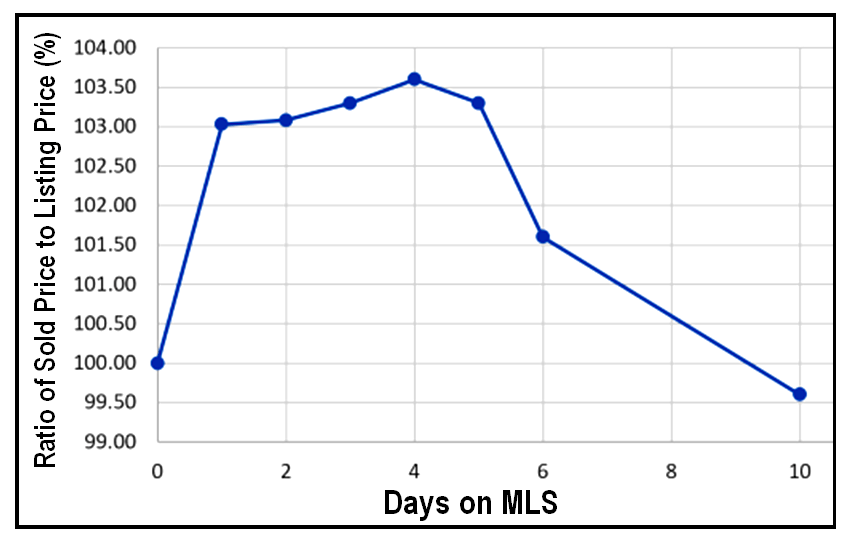
Unfortunately for sellers, who are the big losers with pocket listings, this policy will never be completely effective. That is evident from the fact that over 7% of listings, by my count, are entered on the MLS only after they are sold. Unless a home remains active on the MLS for 3 or 4 days, it’s unlikely that all potential buyers will have had a chance to compete for it.

You may recall the featured listing in last week’s column. It was listed at $375,000, a price consistent with comparable sales, and we received a full-price offer on the first day. Our policy, however, is to get our sellers to wait four days before going under contract. We had 30 showings and received six offers by day four. By being transparent about the offers received, we were able to bid up the property by  more than $55,000 by day four. We did get an offer $35,000 over listing price on day two, but we waited. Our seller benefited from waiting 2 more days.

Sadly, most listing agents haven’t adopted this practice. They sell their listings too quickly, potentially costing their sellers thousands but also frustrating would-be buyers who might pay more. 

I have calculated that in addition to the 7% of listings being sold with zero days on the MLS, 15% are sold after only 1 or 2 days on the MLS.

One technique for minimizing showings by other agents has been to make a listing “active” but block showings with the showing service. Because the listing is “active,” the listing agent can show the property him or herself without technically violating the clear cooperation policy.

Another technique is the “office exclusive” option.  A listing can be marketed within a brokerage without putting it on the MLS. But once any kind of public marketing takes place, the listing must immediately be put on the MLS as either “coming soon” or “active.”