Jim Smith is best known for his weekly "Real Estate Today" column published on the Real Estate page of The Denver every Saturday and in 24 metro area weekly newspapers the following Wednesday or Thursday. Individual articles are also published at http://RealEstateToday.substack.com. Over a decade of the columns are archived at www.JimSmithColumns.com.
A recent article in the San Francisco Chronicle caught my attention. It spoke of harvesting the rainfall from otherwise catastrophic “atmospheric rivers” to refill reservoirs. Another piece by the Environment Defense Fund in Oct. 2021 discussed research being conducted by the California Department of Water Resources and UC Santa Barbara on harvesting excessive rainfall to replenish underground aquifers.
Meanwhile, we are reminded daily that the Colorado River is drying up and both Lake Mead and Lake Powell, as a result, are suffering reduced levels that threaten the water supply and could even sideline vital hydro-electric turbines.
I’m reminded of those amazing 20th Century California projects which moved water all over that state to meet both agricultural and urban demands, and it got me thinking about the possibility of creating another grand project to divert some of those ocean-bound flood waters to both in-state reservoirs and to the Colorado River.
Not only could that help with the Colorado River shortfall, but it might help in some small way to reduce flooding.
Replenishing aquifers is a good idea, but can that be done at speed? I’m not knowledgeable in this area, but it seems to me that new reservoirs would have to be built to hold the water that is to be pumped into those aquifers.
Capturing flood waters on our side of the Continental Divide is already handled by the many reservoirs such as Chatfield and Cherry Creek Reservoirs designed for that purpose. Chatfield is owned by Denver Water, but Cherry Creek is owned by the Army Corps of Engineers. The dams for each are higher than needed in order to accommodate sudden downpours, flooding only open land and park facilities.
PS: Here’s a related article from TheConversation.com:
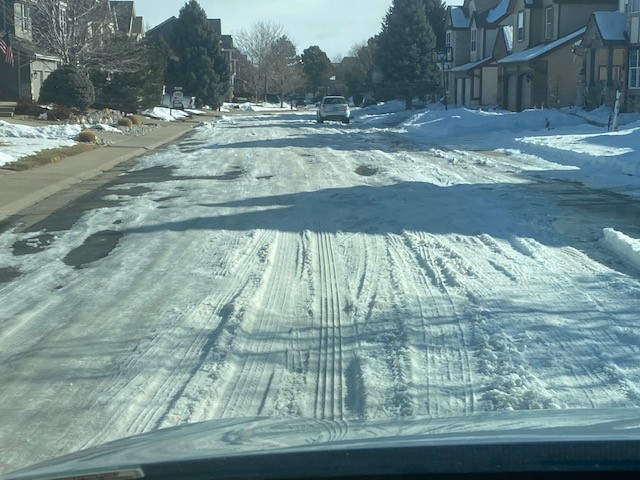
Does your street still look like the one above — over two weeks after the snow stopped falling?
Would you pay $1 or $2 to have someone plow your street before the snow gets beaten down, rutted and icy?
If you live in the City of Golden, this is not a problem. It’s the only city I know of which has committed to plowing every residential street, no matter how small the snowfall. (If you know of another city that does that, let me know, and I’ll share it.)
If your street is not being plowed, there’s a solution in plain sight, but only if you have an HOA or neighborhood association. Lobby your HOA to hire a person or company to plow your street immediately after each snowfall. The cost will be in proportion to how many streets and homes are in your subdivision, but regardless of size, I bet your association could find a person or company who would do it, and the cost would probably compute to no more than $2 per household per storm. Ten plowing events a year might cost $20 per household, but even it if were twice that, wouldn’t it be worth it?
Your association would probably not even have to raise their monthly dues for such a small expense. Google “snow plowing companies near me,” and get some quotes. Be your neighborhood hero and solve this recurring problem!
(If your HOA, not the city or county, owns and maintains your streets and/or if your community is gated, the HOA is probably already plowing your streets when it snows.)
The above picture is of the street in front of my listing at 14165 W. Bates Avenue. When I returned the day after taking that picture, I found a City of Lakewood road grader and dump truck working in tandem to scrape up the ice-caked snow and plow it to the side. Lakewood would have saved money by following Golden’s example and plowing the street when it snowed! Later that day, I found four Lakewood workers on foot chopping and removing ice on Union Blvd.
This week I was made aware of a social studies teacher in Chicago who introduced media literacy as a 5-week segment of her class at Whitney Young High School, according to an article from Chalkbeat.
The inspiration for adding media literacy was the Jan. 6, 2021, insurrection. To quote the Chalkbeat article, the teacher “scrapped her lesson plans for February and spent the entire month focused on media literacy. Among her goals: to help her juniors and seniors discern fact from fiction, identify credible sources of news, and spot misleading information.”
Every citizen, not just high school students could benefit from learning, at the very least, that news outlets carry both hard news articles and opinion columns or segments and learn how to distinguish one from the other.
They should learn about QAnon and its origins and the outsized role it has played in recent events, not just the Jan. 6 insurrection. They should learn that “if it sounds too good to be true or too bad to be true,” it may not be true and how to utilize the internet (such as on www.snopes.com and other fact-checking sites) to research such items and not to forward those juicy and seductive emails or blog posts without verifying them.
No one likes to be duped, right? Liars count on you to spread their lies.
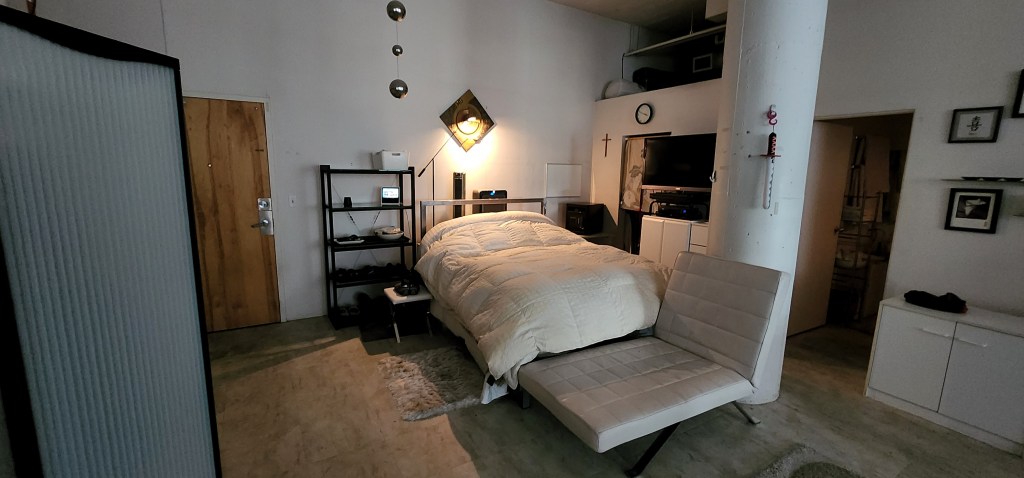
If you’re looking for loft living, this is as good as it gets! The price of this loft at 2000 Arapahoe St. #204 was just reduced to $550,000. Walk to everything in Downtown Denver — Coors Field, the Performing Arts Complex, 16th Street Mall, Lodo, Union Station, shopping, restaurants, and light rail, including the A-line to DIA. The 12-foot ceilings and four massive pillars, plus huge windows with views of nearby skyscrapers — this is the loft life you’ve been looking for! It comes with three garage spaces, which is probably more than you need. Rent them out for $150-200 each to create a nice cash flow! This is a rare opportunity, so act fast. No open houses. More pictures and information can be found at www.DenverLoft.info.
Real estate and mortgage professionals are coming to grips with how the market changed in 2022, but they’re holding back on predictions for the market in 2023.
On the national level, Lawrence Yun, NAR chief economist, predicts home prices will remain stable and the sales of existing homes will decline by 6.8%. He identified ten markets that will outperform other metro areas, and all ten of them are in the southeast.
“Half of the country may experience small price gains, while the other half may see slight price declines,” Yun said.
Here in the Denver market, the Denver Metro Association of Realtors (DMAR) issues a monthly market trends report. In its latest report, it pointed out that while there is a steady month-over-month decline in the average sold price, the year-over-year sold prices remain higher.
“Without a doubt, the Denver Metro housing market is changing, but the question on everyone’s mind is how long this change will last and what to expect next year,” commented Libby Levinson-Katz, Chair of the DMAR Market Trends Committee and a metro Denver Realtor®. “Most of the answers are tied directly to when we will see relief from increasing mortgage rates that have more than doubled since January… While we expect to see the Denver real estate market continue to change through 2023 due to interest rates and inventory woes, it has continued to show strength and stability.”
As I highlighted above, a lot depends on the direction of mortgage rates, and predictions of where rates are headed are few and varied, because there are so many factors.
For example, will the Federal Reserve’s increases in the Fed Funds rate continue, and for how long? Will it cause a recession? Will unemployment increase and inflation abate? What’s the future of the war in Ukraine and its impact on the US and world economy? What will energy cost in 2023?
Personally, I have no predictions to offer. What I know for sure is that people will still want to sell, and there will always be buyers ready to buy. We continue to see new listings come on the market. As always, some listings will be priced wisely and will sell quickly, but most will be overpriced and will sit on the market, slowly reducing their prices until they sell, expire, or are withdrawn from the MLS.
There may even be bidding wars on homes that are priced right. For example, I just sold a home in Applewood which we priced at $895,000 and sold to one of three bidders within a week for over $900,000. But we’re not perfect. Other listings have languished on the market and only sold once we reduced the price sufficiently to attract a buyer.
By now you are probably aware that starting on Jan. 1st, supermarkets and most other retailers must charge 10 cents per plastic or paper bag, as dictated by a state law passed in 2021. Several cities across Colorado, including Denver and Boulder, already banned plastic bags, garnering 60-90% compliance, but this week the 10-cent charge and future ban goes statewide.
Plastic bags won’t be banned until a year from now, although Walmart is eliminating plastic and paper bags immediately. This time next year, you’ll still have the option of paying 10 cents for a paper bag, but plastic bags will not be available at most stores and restaurants. In addition, restaurants will be barred from using polystyrene (aka Styrofoam) containers for carryout food.
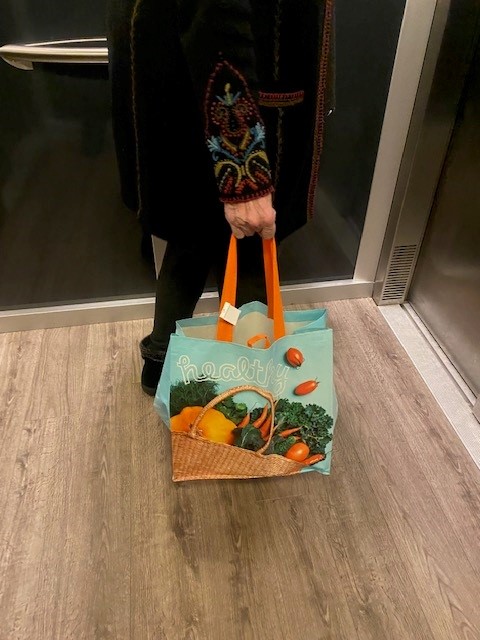
King Soopers is preparing its customers for the change by selling bags at its checkout stations. Better ones cost $5-6, but there’s one for 99 cents (shown here in Rita’s hand) that I’m keeping in my car so it’s not forgotten when I go shopping. Rita has been taking reusable shopping bags with her for months.
Another option is to take your own cart into the store, instead of using the store’s shopping carts. Fill it with your selections, and put your selections back in the cart, bagged or unbagged, after paying for them. In addition to the typical wire cart, Google can show you lots of personal shopping carts or wagons.
If, like me, you’re open to other ways to “save the planet,” here are some ideas.
Starbucks stopped filling your own cup or mug for a “personal” drink during the pandemic, but now it’s back, and they give you a 10-cent discount.
Recently I was at lunch with a friend who pulled out a Tupperware container to take leftovers home. When I told Rita, we immediately decided to adopt the practice, and she now puts a plastic container in her purse every time we go out to a restaurant.
At Avenida, we enjoy the continental breakfast served six mornings a week, and several residents bring their own coffee mugs and cereal bowls so they don’t have to use the provided single-use coffee cups or bowls. Tell me your ideas!
The devastating Marshall Fire a year ago inspired several columns by me about how it could have been prevented or mitigated. My favorite column was the one on Oct. 13, which made an important observation about how vented attics (the most common kind in tract homes) allow wind-blown embers to enter homes.
All these columns can be downloaded by clicking on their dates:
Jan. 6, 2022 — Last Week’s Fire Disaster Is a Wake-up Call for Building More Fire-Resistant Homes
Jan. 13, 2022 — Homes Built of Concrete Garner Increased Interest in Wake of the Marshall Fire
Jan. 20, 2022 — Here Are More Examples of Concrete Construction and Fire-Resistant Roofing
Jan. 27, 2022 — The Buying of Homes Has Become More Frantic Since the Marshall Fire; Also: How to Alert Residents About an Approaching Wildfire
Apr. 14, 2022 — AirCrete Is a Lighter, More Climate-Friendly Version of Concrete for Home Construction
May 12, 2022 — Report from the Division of Insurance Details the Extent of Underinsurance in the Marshall Fire
July 14, 2022 — Are You Wondering If Your Home Is Underinsured? One Reader Shares His Research
Oct. 13, 2022 — Homes That Survived the Marshall Fire Were More Airtight and Had Conditioned Attics
I am disappointed not to see any of the insights I shared reflected in recent anniversary articles and television programs.
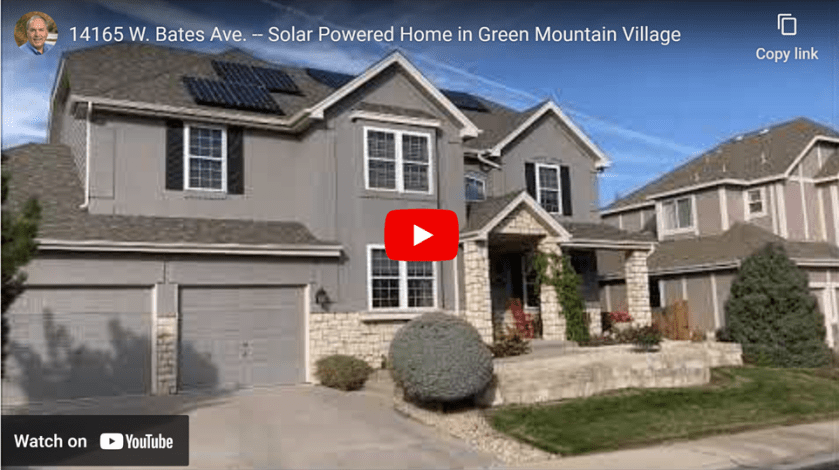
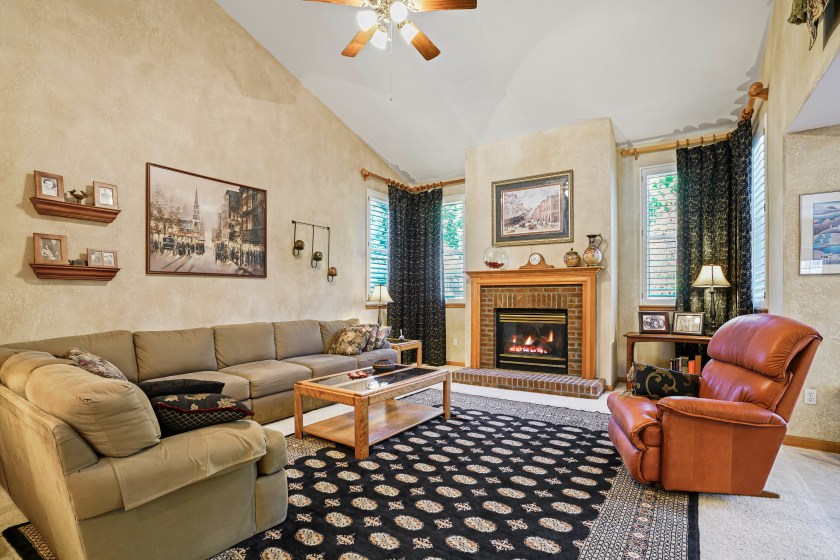
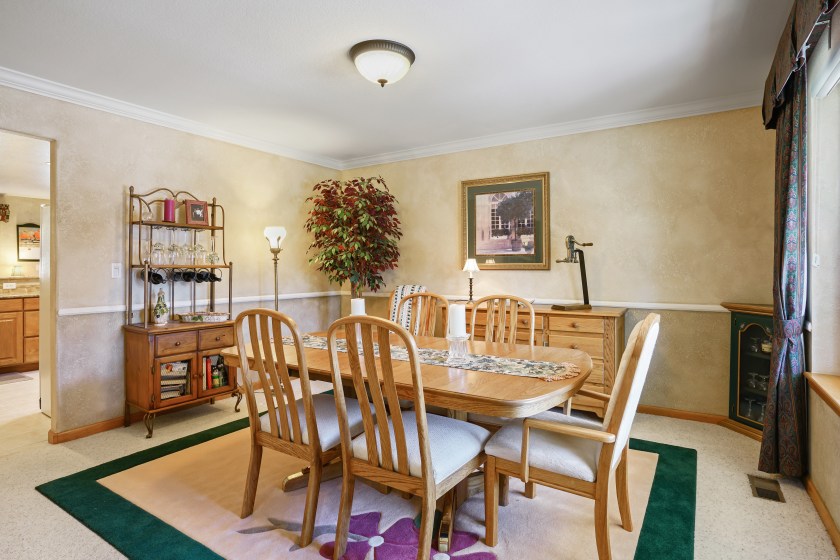
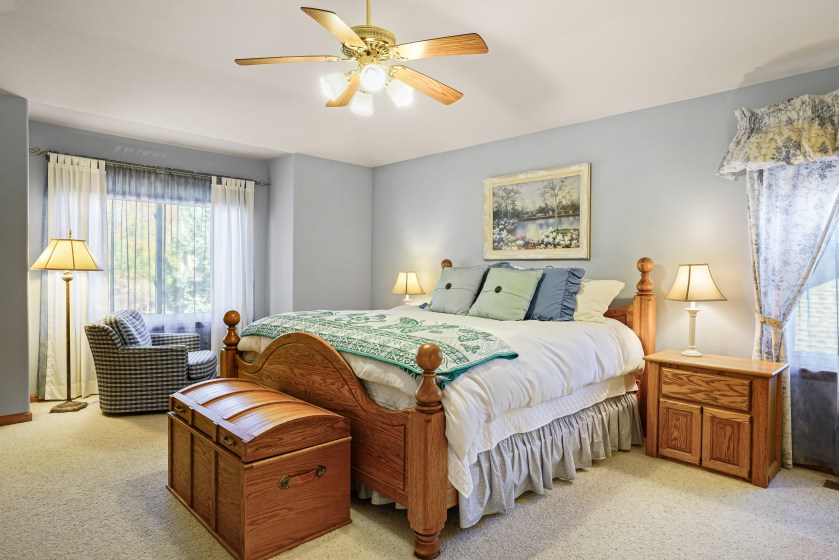
You’ll enjoy an Xcel Energy bill of $45 per month, including gas, during the summer and still under $100 per month in the winter thanks to this home’s roof-mounted solar photovoltaic system. The address is 14165 W. Bates Ave., in Hutchinson’s Green Mountain Village, which is south of Yale Avenue and north of Bear Creek Lake Park in Lakewood. It has 3 bedrooms, 3½ baths, plus a 14’x16’ loft that could be converted into a 4th bedroom with en suite bathroom. It has 2,957 finished square feet plus a basement ready to finish. This home is beautifully landscaped and updated, with hardwood floors on both levels (and even the stairs), a gourmet kitchen, and a fabulous backyard with a free-standing Sunsetter retractable awning! The walk-in closet in the master suite is a gem, which you’ll get to see in the narrated video tour at www.JeffcoSolarHomes.com. I’ll hold it open Saturday, Jan. 7, 11 to 1.
Cohousing puts like-minded people together in “intentional communities.” Many people, Rita and me included, resonate with the idea of community housing, where everyone has their own private home with kitchen and living room, but shares meals occasionally in a common house, perhaps work a community garden, but above all share the same values.
But bringing together like-minded families with the money to buy the land and build the individual units as well as the common elements can be difficult, resulting in few local examples of cohousing communities.
Just ask the people who tried a couple years ago to create the Ralston Creek Cohousing community next to the Geos Community in Arvada. They did all that work and were ready to put down the money when the land they wanted to buy was snapped up by a developer. Deeply disappointed, the community-without-a-home has now disbanded, no longer even publishing an email newsletter, according to www.RalstonCreekCohousing.org.
The concept of cohousing with like-minded neighbors has always appealed to me, but the opportunity never presented itself. In Golden there’s a long-established and highly successful 27-townhome cohousing community called Harmony Village, but turnover is close to zero because the members are so happy — and healthy!
Most cohousing communities are designed to leave cars on theperiphery, as in Harmony Village.
Here are some other cohousing communities in the metro area, if you want to check them out.
Aria Cohousing, just east of the Regis University campus in northwest Denver, has 28 units under one roof. It was founded in 2017.
A community meal at least once a month is typical in cohousing communities, as at the Aria Cohousing community, allowing members to get to know each other better, part of being an “intentional community.”
Hearthstone Cohousing, on the former Elitch Gardens site in northwest Denver, has 33 townhomes plus a common house. I sold a unit there in 2021.
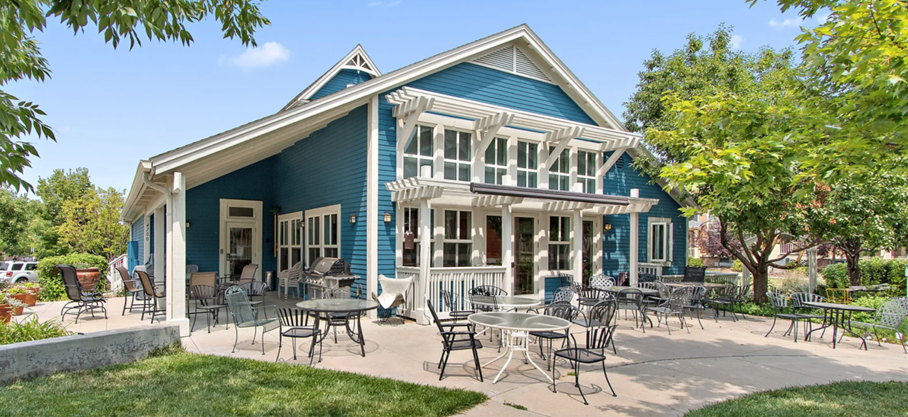
Common houses are a typical feature of cohousing communities, such as this one at the Homestead Cohousing community. It has a guest apartment, woodworking shop, laundry room, mail room and meeting/dining room with a kitchen for preparing community meals.
Highline Crossing Cohousing, along the Highline Canal east of Santa Fe Drive and north of C470, has 40 homes, built in 1995.
Wild Sage Cohousing, in north Boulder’s Holiday neighborhood, has 34 attached townhomes. A block south of this community is Silver Sage Village, an 18-unit cohousing community restricted to senior citizens — the first in the country. It offers only independent living, no assisted living or nursing care.
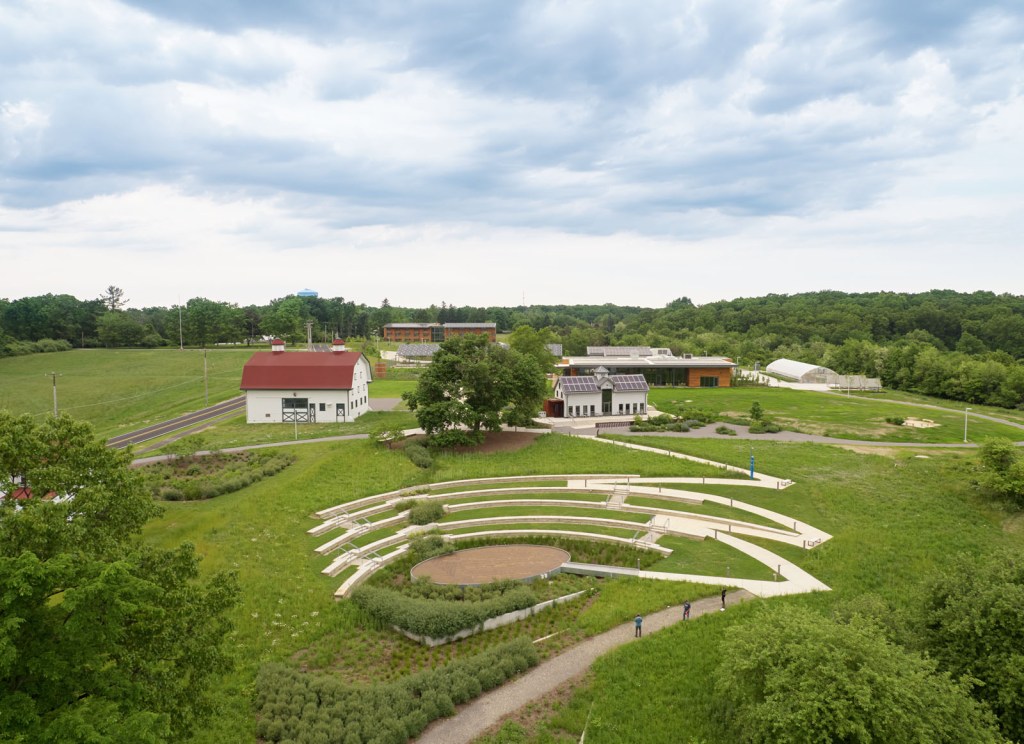
Looking beyond Colorado, I’m inspired by a project taking shape 20 miles north of Pittsburgh. It will be built on the campus of Chatham University’s Falk School of Sustainability and Environment. (See aerial photo below.) Chatham is the alma mater of Rachel Carson when it was called the Pennsylvania College for Women. You probably know Carson’s groundbreaking 1962 book, Silent Spring, which is widely credited with sparking environmental consciousness in the United States and worldwide, leading initially to the banning of DDT.
The cohousing community being built there is appropriately named the Rachel Carson Ecovillage. What makes this project particularly exciting is that, by being located on the campus of a college devoted to sustainability and the environment, it serves as an onsite laboratory and example for the students as well as a great intergenerational home for environmentally conscious families.
As you might expect, the homes will be all-electric, built to Passive House standards, and solar-ready.
The Falk School of Sustainability and Environment was created in 2010 and occupies land donated with a stipulation that the land must remain under Chatham University’s ownership, so the homes in the ecovillage can be purchased for prices ranging from $225,000 for a studio condo to $580,000 for a 2-BR suite that be customized as a 4-BR unit, but the land is subject to a 99-year land lease from the university.
While that may not seem ideal, it solves the problem of land acquisition which stymied the Ralston Creek Cohousing community. To quote from the Ecovillage website:
There is no profit built into these costs — they will be offered for sale at the cost to build them….
The Common House is a shared facility of approximately 2,500-3,000 square feet. It includes a dining/meeting room, a kitchen, mail/package pick-up, and two guestroom suites. Other amenities may be included, as well.
The units will be designed and constructed to conserve energy and minimize carbon emissions. To avoid combustion of fossil fuels, they will be all-electric, which makes it possible for them to be powered entirely by renewable energy. The units will be designed to meet high indoor air quality standards. It is our intent to be able to monitor building performance after construction to see how well they meet these goals.
Sustainability is a common theme in all cohousing communities, which makes sense, because valuing and caring for your neighbors translates logically to caring for the planet as a whole.












 Jim Smith's Blog