I have expressed dismay in the past that builders of new homes in our area are not getting “with it” when it comes to incorporating the latest thinking and technology regarding energy efficiency.
Builders boast their Energy Star appliances and lower HERS scores, but they are still, for example, installing gas forced-air furnaces instead of heat pumps, gas water heaters instead of heat pump water heaters, and gas cooktops or ranges instead of induction cooktops.
The Geos Community in Arvada provided proof of concept for the all-electric solar-powered, net zero energy home, and homes in that small, privately developed neighborhood have been featured for several years on the annual tour of “green homes.” But no production builder here has picked up on that concept, and when another builder acquired the undeveloped parcels at Geos last year, the first thing they did was bring a natural gas pipeline into the community to serve their new homes, greatly upsetting the happy homeowners of the original net zero energy Geos homes, which purposely have no natural gas lines.
Above is one of KB Home’s all-electric homes in Menifee CA, a smaller city south of Riverside. Not only is every home in that subdivision “net zero energy ready,” but they are tied together in an electric “microgrid,” designed to power itself cooperatively should there be an outage in the larger electric grid.
In the garage you can see both an EV charger and a wall-mounted battery backup system. The small print on the sign reads: “This all-electric, solar-powered home is equipped with smart technologies and a backup battery, plus community microgrid connectivity designed to help maximize home energy efficiency and comfort.”
Meanwhile, here in Colorado, neither KB nor any other builder, to my knowledge, is even offering heat pump HVAC units or heat pump water heaters as upgrades.
“Conventional wisdom” says that it costs more to build a solar powered, highly sustainable or net zero energy home, but that’s not really true if you look at the issue a little differently.
As you surely know, such improvements reduce the operating cost of a home. Solar panels, for example, can virtually eliminate your electrical bill, if your system is sized correctly. They can even provide free fuel for your cars — if they are powered by electricity.
Super insulating your home can reduce the cost of heating it, whether by natural gas or electricity (using a heat pump system). Ditto for installing triple-pane Alpen windows and doors.
If you go all-electric, you not only save on the natural gas or propane you consume, you can have your gas meter removed, saving on the base cost of being connected to the gas distribution network. As a commercial customer, Golden Real Estate, saves over $600 per year from having removed our gas meter, since that’s what Xcel Energy charges before a business uses a single cubic foot of natural gas. The savings is lower for residential customers.
So, yes, it may cost more to go all-electric, but the return on investment is substantial over a pretty short period of time.
But consider the following. Whether you build or buy a home with these cost saving features, and whether or not you pay a premium for them, you will likely be financing your home with a mortgage.
Let’s say, conservatively, that you pay an extra $50,000 or even $100,000 for those features, and it adds that amount to the principal of your mortgage. Your monthly savings from those solar panels or that heat pump system or those Alpen windows and extra insulation will be far in excess of the increased monthly payment for your mortgage.
And if you make those improvements in a home you already own, you can take out a Home Equity Line of Credit (or HELOC) to pay for them, and the monthly payments will again be less than your monthly savings.
Looked at it this way, does it make any sense at all to build a home powered by fossil fuels, that is not solar powered or that has “normal” insulation and have higher monthly cost of ownership, starting from day one? Of course not.
You can apply the same reasoning to the purchase of an electric car. You could go with the conventional wisdom that electric cars are more expensive and you should wait until the price comes down, but that thinking substantially misrepresents the cost of ownership.
I haven’t purchased gasoline for my electric cars since 2014, during which time I have saved tens of thousands of dollars on gasoline as well as on repairs on components that don’t exist on an EV, such as transmission, engine, fuel pumps, water pumps, timing belts and so much more.
And I have never had a catalytic converter stolen — or lost any sleep after reading about the epidemic of such thefts in my city.
Forgetting for the moment that there are indeed EVs which cost no more than their gasoline-powered equivalents, even if you paid $10,000 more for an EV than you might for a gas powered car, the cost of financing that difference is far less than what you’ll save on fuel and repairs.
If I have changed your thinking about making your home (or transportation) more sustainable, here’s what you can do. First, attend this year’s Metro Denver Green Homes Tour on October 1st. You’ll be able to visit a dozen or so homes whose owners have taken steps to make their homes more energy efficient or even net zero energy. You’ll also visit a home builder who is building net zero energy homes. If you can’t visit some of these homes in person, you can view the narrated video tours which I have created for most of them.
And if I have changed your thinking about the cost of buying or owning an electric vehicle, plan on coming to the Electric Vehicle Roundup(mentioned below) which occurs the same day, October 1st, as the Metro Denver Green Homes Tour. If that date doesn’t work for you, there are many other EV roundups in October around Colorado. Find those other events online at www.DriveElectricWeek.org.
On April 27, Zillow published an article, “6 Questions to Ask as You Consider Home Solar.” I thought it was pretty comprehensive, but it was written for a national audience, and some of the questions are readily answered for us here in Colorado.
The article begins by asserting that, according to Zillow’s research, homes which highlight eco-friendly features like solar sell up to 10 days quicker and for 1.4% more than homes that don’t. That statistic, however, fails to distinguish between homes which have fully-owned solar installations, and homes that have leased systems or “power purchase agreements.” Those alternative arrangements basically create a situation in which the homeowner purchases electricity from two companies instead of one — still a good deal, since the solar power typically costs less than the power purchased from the utility.
Zillow’s question #1 is whether your home is suitable for solar. We all know, of course, that a south-facing roof without shading is best, but there are other considerations, such as the condition of your roof. If your roof needs replacing before you put solar panels on it, you may want to include Roper Roofing & Solarin Golden among the solar companies you interview. It’s the only solar company I know which is also a roofing company.
One question posed by Zillow is whether your HOA (if you have one) will allow solar. Fortunately, Colorado passed a law over a decade ago (C.R.S. 38-30-168) which requires HOAs to allow solar and other sustainable improvements. HOAs can regulate appearance but not prohibit solar. For example, it could require that solar panels be flush with your roof rather than angled out from it.
The article points out that if your home is not suitable for solar, you should look into community solar, for which it provides a link. Community solar is also a good alternative for renters and condo owners.
The second question is how to find a reputable installer. Personally, I prefer to hire a small (and local) family-owned company over a national business with a local sales team. I recommend Golden Solar, which has installed five systems for me over the past two decades, and Buglet Solar Electric. The owners of those two companies, Don Parker and Whitney Painter, can answer question #3, which is what incentives and rebates are available on the federal, state, local and utility level. The current federal incentive is a 26% tax credit, which drops to 22% next year and expires the following year unless Congress extends it.
Question #4 is whether there’s net metering, which allows you to “bank” your daytime production for nighttime use and carry forward your surplus solar production to future months and years. In Colorado, the answer is a resounding yes.
Question #5 is about battery storage. Net metering, in my opinion, makes home battery backup/storage unnecessary unless you are worried about power outages. (If you have life-sustaining equipment that requires uninterrupted electricity, battery storage might be appropriate.)
Where battery storage is essential, of course, is in off-grid applications, such as in a mountain cabin without accessible electricity from a utility. I have listed such homes with impressive battery systems.
The last question which Zillow poses is whether a solar installation is worth it, admitting that this is a very personal decision.
A solar installation nowadays costs between $10,000 and $20,000 for the typical home, and you can ask the companies you interview what the return on investment will be. I have never worried about ROI, because installing solar, to me, is simply the right thing to do, satisfied as I am that it does pay for itself, whether in five years or ten.
One piece of advice not in the Zillow article is to factor in the increased electricity you will need when you buy an electric vehicle — which you will at some point, since most manufacturers plan to phase out gas-powered vehicles. Xcel Energy lets you to carry forward surplus generation from year to year, and allows you to install solar panels equivalent to double your last 12 months’ usage. (Do NOT elect to receive a yearly check from Xcel Energy for your excess solar production, because they pay you a small fraction of that electricity’s retail value — carry it forward for future use at its full retail value.)
Last week I worked with a buyer looking at new homes. One community we visited was in central Arvada; the other was just north of Golden at the corner of Hwy. 93 and 58th Ave.
Neither builder was even offering upgrades such as solar panels, heat pump HVAC systems, or induction cooktops.
Yes, they were enhancing the insulation of their homes, but little else.
And, speaking of solar panels, neither builder was building into the design of their homes an orientation that would favor solar panels on the roof. One had unnecessary peaks or dormers on their roofs that would seriously inhibit the usefulness of the roof for installing a solar photovoltaic system.
The heating systems in both communities were gas forced air furnaces, which I consider obsolete. Such furnaces require the separate installation of an A/C compressor to provide cooling. I asked if an upgrade to a heat pump system was available, and it wasn’t.
These are silly and unnecessary design flaws in any new construction. A heat pump HVAC system provides both heating and cooling within one unit. It is the preferred choice in Europe and Asia, but our builders seem to know only gas forced air furnaces with a conventional A/C add-on.
New-build homes are typically equipped with conventional gas water heaters, while it would be just as easy and cost little more to install a highly efficient heat pump water heater, as I have done.
Geothermal heat pump systems are the “gold standard” when it comes to energy efficiency and sustainability in new home construction. Retrofitting an existing home with geothermal can be prohibitively expensive, but on a dirt-start build, it would be easy to drill geothermal wells in the middle of the basement or crawl space before installing the foundation and building the house. There’s even more efficiency in a dirt-start subdivision, because the drilling rig could go from one unit to the next, drilling 10, 20 or 100 geothermal wells in one area.
I have written in the past about the Geos Community west of Indiana Street and 68th Avenue in Arvada, where all the detached single-family homes have geothermal heat pump systems, and all the townhomes have air source heat pump systems. They also have heat pump water heaters and induction electric ranges, and all have south-facing roofs with solar panels providing all the electricity to run each of those systems. There is no need for natural gas service to the homes.
Geos was intended to showcase the cost effectiveness of all-electric homes using geothermal and air source heat pump systems and orienting the homes for maximum passive solar as well as active solar efficiency. But it seems that builders are slow learners. The developer who purchased the lots next to the previously built Geos Community felt it necessary to install natural gas service to all its new homes currently under construction “because buyers want gas,” much to the understandable dismay and anger of the Geos Community residents.
There is similar inertia in the HVAC industry itself. It’s hard to find an HVAC company that even understands the advantages of heat pumps for heating and cooling homes. It is so much easier for them to do what they have learned to do, even though it represents an obsolete technology. I have heard countless stories of homeowners whose forced air furnace needed replacing and who were unable to get their HVAC vendor to sell them a heat pump system. Most HVAC vendors just want to keep doing what they already know how to do.
(I can recommend a couple vendors who specialize in heat pump systems and even geothermal drilling. Ask me.)
This is not unlike the problem with car dealerships and electric vehicles. If you go to a Chevy dealer and ask about the Chevy Bolt EV, the salesman will often bad-mouth the Bolt and try to sell you a non-electric model that he loves to sell and requires no learning on his part of new technology.
This guest speaker at the April meeting of the Denver Electric Vehicle Council was a man who, having bought a Chevy Volt in 2012, convinced a Texas Chevy dealership to let him be a salesman of EVs exclusively. Other salesmen started sending him buyers who expressed an interest in EVs, and he quickly became the number one seller of EVs in the state of Texas. It helped that hardly any other Texas car dealership had a salesman who was comfortable selling EVs. Their loss.
Getting back to home construction, we need and the planet needs home builders to be more educated about the wisdom and relative ease of building energy efficient, solar-powered, all-electric homes with a passive solar orientation and design. It’s not that hard to learn, but we need to overcome the inertia built into that industry just as with the automotive and other industries.
I could have written it myself! I can’t improve upon the wording, so here it is, verbatim:
More homeowners understand the importance of “decarbonizing” everything from products to transportation, and especially their homes, says Chicago- and Boulder, Colo.-based architect Nate Kipnis of Kipnis Architecture + Planning. “The way we can best do this is by eliminating all fossil fuels use from houses and including induction cooktops rather than gas for cooking, which offers safer, faster, and more even cooking,” he says. Kipnis recommends using either an air-source heat pump (mini-split) for the HVAC system or a ground source system (geotherm-al). The big payoff, he says, is that renewable energy has become the cheapest form of electricity generation.
This column is adapted from my July 18, 2019, column on this topic.
Energy efficiency is very important to Rita and me, so the first thing we did when we purchased our current home was to pay for an energy audit to identify opportunities for making the home more air-tight. One result of that test was to blow additional cellulose insulation into walls and ceilings and to caulk around windows. We considered installing an energy recovery ventilator (ERV) to bring fresh air into the home using a heat exchanger that warms outside air in the winter and cools outside air in the summer. Instead we installed a fan in our powder room that runs 24/7 at a very low volume, but higher when occupied.
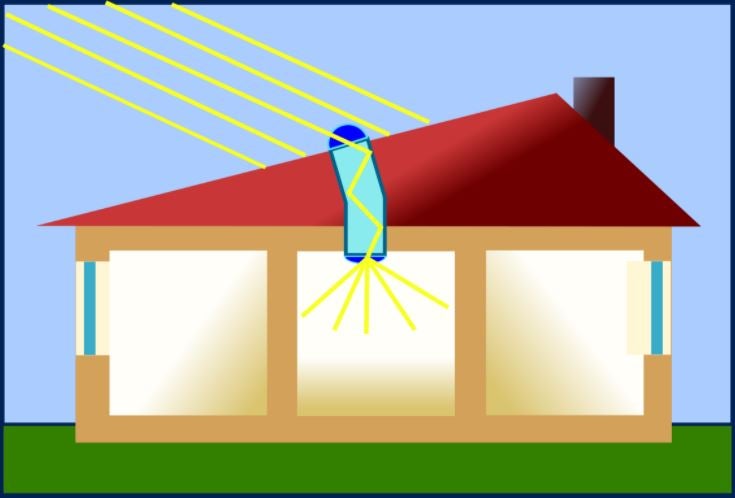
I love bringing sunlight into a home, with sun tunnels. Rita and I had Mark Lundquist of Design Skylights install a Velux sun tunnel in our garage and another one in our laundry room. (He installed four more at Golden Real Estate.)
Speaking of sunlight, we replaced every light bulb in our home with LEDs which are “daylight” color.
Installing solar photovoltaic panels is a no-brainer now that the cost has dropped so much. Your roof doesn’t have to face due south. Southeast and southwest are good enough. Since everyone will be driving an electric car eventually, install as much solar PV as Xcel Energy allows to cover that future load.
Don’t you hate climbing a curb to enter your driveway? Developers install mountable curbs the entire length of residential streets, because they can’t know where each driveway will be. One of the first things we did at our home was to remove the mountable curb in front of our driveway. It cost about $2,000 for our 3-car-wide driveway, but we love it every time we enter from the street!
When your gas forced air furnace needs replacing, consider replacing it with a heat-pump or hybrid furnace. And when your gas water heater needs replacing, I recommend buying a heat-pump water heater. We bought a 50-gallon Rheem unit for $1,200, but it came with a $400 rebate. Once you’ve replaced both, you will have eliminated the most common sources of carbon monoxide poisoning in your home.
Other improvements I’d recommend: Replacing any bathroom carpeting with ceramic or porcelain tile; replacing regular double-pane windows with Low-E windows on south-facing windows; replacing fluorescent fixtures (as we did in our garage) with flush-mount LED panels sold at Lowes for about $100. Love ’em!
I don’t know anyone who doesn’t like the idea of saving money, which will happen when you convert your home to “net zero energy.” So, what are the steps you can take to get there?
“Net zero energy” means that your home generates more energy than it consumes. With “net metering,” your electric meter runs backwards when your solar panels generate more electricity than you’re using (on a sunny day), then runs forward at night, resulting in zero (or less) net consumption of electric power.
Solar power gets more affordable every year. When I purchased my first 10-kW solar photovoltaic system 15 years ago, the cost was over $60,000, but Xcel Energy gave a rebate of $4.50 per watt, so I got a check for $45,000 from the utility, reducing my net cost to $15,000. Nowadays that same system would cost as little as $15,000 with no Xcel rebate but a 26% federal tax credit.
While you can generate your own electricity, you cannot generate your own natural gas, so terminating natural gas service is key to achieving net zero energy. This involves some major system changes if you are currently heating your home and your water using natural gas, cooking with gas (including with a gas grill) and have a gas fireplace.
There are electric alternatives to all of these uses of natural gas, and you’ll appreciate that eliminating natural gas also eliminates the possibility of a gas explosion and of carbon monoxide poisoning (unless you have a gas powered car).
Heating your home with electricity used to mean installing baseboard resistance heating units in each room, but that is so 20th century. Nowadays electric space heating is done far more efficiently (and evenly) using heat pumps.
Gas forced air furnaces and water heaters are considered to have a 15-year life expectancy, so when yours fail, think of that as an opportunity to adopt heat pump technology for both functions. And a heat pump eliminates the need for a separate A/C unit, since it heats and cools.
Gas furnaces and water heaters generate heat by burning gas. A heat pump moves heat, similar to what A/C does. (How heat pumps work) It cools your home by moving the heat out of your house. If you put your hand over the external compressor unit while it’s cooling your home, you will feel the heat that was moved from inside your home. In heating mode, the process is reversed, and the heat pump moves heat from outdoors into your house. It may surprise you to know that when it’s freezing outside there is actually heat that can be moved from outside to the interior of your house, but it’s true. (Heat pumps work in extremely cold climates) Our office has been heated solely by heat pump since November 2017, and ever since there has never been a day when the system failed to keep our office at 70°F or warmer.
A heat pump water heater (which I installed at our home) has the compressor built into the unit, above the tank. You can feel cool air emitting from it when it is heating water. I suggest putting it in a wine cellar where it’ll keep the room cool without buying a separate A/C unit.
For cooking, you’ll be amazed and delighted by the induction cooktops that are now widely available. I saw them used on a cruise ship for both cooking and warming surfaces, and the chefs loved them. (Modern cruise ships have eliminated natural gas because of the fire hazard.)
An all-electric home will, of course, demand more electricity, but Xcel Energy now allows you to install enough solar panels to generate double your electrical usage over the prior 12 months. That is more than enough to cover your new electric space heating, water heating and cooking needs, with capacity left over to charge an EV, too.
An important first step in pursuing net zero energy for your home is to reduce your need for energy, and the easiest and cheapest way to do that is to improve your home’s insulation. I had Dennis Brachfield of About Saving Heatblow cellulose insulation into the exterior walls (not just the attic) of a 1940s bungalow I owned, and I was astonished at how much more comfortable the house became. Even if your exterior walls have batt insulation in them, there is still space in the walls to blow in cellulose. (How to insulate an old house)
I learned something interesting from that experience. We all know that walls can radiate heat, such as a brick wall in bright sunlight. Well, walls can also radiate coldness, or suck heat. The air temperature in my bungalow before and after blowing in insulation was the same, but I felt warmer and burned less gas.
You can go beyond improving the insulation of your exterior walls and attic. There are numerous places that allow cold into your home, especially around your windows. Whether or not you install triple-pane Alpen windows, as we did at our office, caulking around the window frames and elsewhere can reduce the energy needed to heat your home.
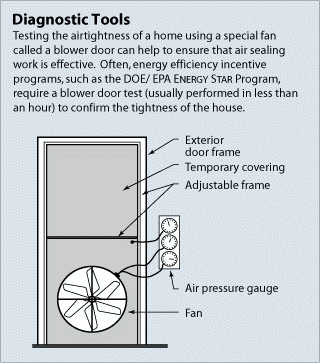
A blower door test done by a contractor will identify the air leaks in your home. Insulating your attic with blown-in cellulose and your crawlspace with plastic sheeting will also reduce your home’s energy needs whether from gas heating or your new heat pump. (Insulating crawl spaces)
Of course, many homes, especially in older neighborhoods, can’t benefit from solar power because of shading from trees or insufficient south-facing roof area, but you can purchase community solar. (This is also a good solution for condos which have no roof at all.)
The way community solar works is that you invest in solar panels that are part of a solar farm in some distant pasture. The electricity generated by your panels in that remote location is credited to the electric meter for your home or condo. One advantage of community solar is that when you move, you only need to change which meter gets credited with your solar production.
Other ways of reducing energy use include replacing CFL or incandescent light bulbs with affordable LED bulbs and “daylighting” your home or office. (Batteries + Bulbs sell 8-packs of 60W LED replacement bulbs for $6.49, tax included, after $15 instant rebate.) We have “sun tunnels” in our home and office to bring daylight into interior spaces. In fact, on a sunny day we don’t need to turn on any lights in our office. It’s great— and saves energy. We had Design Skylights of Evergreen install Velux sun tunnels at both home and office.
Would you like one of us to visit your home for a private consultation about the sustainability possibilities in your home? Email me at Jim@GoldenRealEstate.com.
It’s sad to see elected officials not taking the time to learn about new technology, especially technology that contributes to abating the effects of climate change.
Such is the story unfolding in the city of Arvada, where the city council — historically super friendly to developers — has bought into a false narrative by a developer/builder team that all-electric homes are not affordable or desired by today’s home buyers.
This is happening despite the fact that Arvada is itself home to a well known model of affordable all-electric homes in the Geos Community located west of Indiana Street and south of 72nd Avenue.
The Geos Community was partially built out several years ago without any natural gas lines. Home heating is by geothermal and air source heat pumps. Cooking is on induction cooktops. Heat pump water heaters provide the domestic hot water. Solar panels on each home provide all the electricity needed for these and other needs, making all 26 current homes “net zero energy.”
Before the Geos Community could be fully built out, its original developer was forced into selling due to a divorce settlement. Otherwise the remaining 250 homes — a mix of townhomes and single family homes — would have been built to the same net zero standard. The new developer had promised to do so, as described in a Nov. 17, 2020, post on MileHighCRE.com, but it reneged on that promise and is in the process of installing natural gas lines to the new homes, greatly annoying and angering the owners of the original 26 homes.
The fossil fuel industry duped all of us by promoting methane as a “natural and safe” gas for use in homes. This gas is highly heat-trapping (80-100 times more so than carbon dioxide), prone to explosion and causes many health issues (see Electric4Health.org). During the last decade Colorado added an average of 20,500 residential gas customers each year. BigPivots.com reports that our state now has 1.8 million residential gas customers. That trend needs to be reversed. There’s no need to keep building home reliant on natural gas.
Geos homeowners appealed to Arvada’s city council to deny the developer a permit for the gas lines, but the city declined to do so. The neighbors, however, are not giving up and have 267 signatures (including my own) on a petition to reverse that decision. The City of Arvada has advised the current Geos residents that this issue is closed.
Arvada should be proud that it is the home of the country’s first “geosolar” community which has, among other honors, been featured several times in the Metro Denver Green Homes Tour. I myself have produced narrated video tours of three Geos homes for that tour, which you can view here, here, and here.
As part of its COP 26 coverage this week in Glasgow, CNN will air a segment on Geos as a home building model to be emulated, essential for addressing climate change.
The Metro Denver Green Homes Tour is looking for homes to feature on its next tour, October 2nd, 2021. If your home has features that would make it a good addition to this fall’s green home tour — super insulation, solar, HVAC, etc. — contact Sheila Townsend at sheilactownsend@gmail.com or Jim Smith at Jim@GoldenRealEstate.com.
Take a video tour of a different home from 2020’s Metro Denver Green Homes Tour every monthat www.GreenHomeoftheMonth.com.
The Geos Community located southwest of Indiana Street and 72nd Avenue in Arvada is a shining example of what’s possible in net zero energy home construction.
All Geos homes are solar powered and have no natural gas service. Heating and cooling is provided by ground source or air source heat pumps. Water heaters utilize heat pumps, not gas, and all the homes and townhouses are built according to passive solar design standards.
Two Geos homes were on last fall’s Metro Denver Green Homes Tour, and you can view narrated video tours of them by clicking on that link.
Now a developer has bought the remaining land within the Geos Community but is intending to install natural gas service in all the homes they will build. Naturally, the current residents are quite upset about this turn of events and are hoping to convince the City of Arvada not to allow this diminution of the original intent of Geos to be a strictly net zero energy community.
Visit www.DiscoverGeos.comto appreciate this community’s net zero energy mission.
Rainer W Gerbatsch, a Geos resident, in an email to Linda Hoover, Senior Planner for the City of Arvada, expressed concern about the new developer’s plan to deviate from the community’s principles by installing natural gas in future homes. Here is Ms. Hoover’s emailed response:
Thank you for your strong interest in your community. I was forwarded your concerns regarding the new upcoming development in the GEOS Neighborhood and I will do my best to address your comments. The GEOS Development was approved 12 years ago. I took over as the staff planner for this project in 2014 when the previous planner left the City. When GEOS was approved, it was intended to be a sustainable community and Norbert Klebl tried for many many years to obtain the funding to make that happen. To date, the only homes constructed out there are on Block 10 which has a mix of the staggered “checkerboard” single family detached homes and townhome units. This totals approximately 38 units out of the 282 planned. While the existing homes have a number of sustainable features, SunStudios (Architect) and Laudick Engineering are telling us that marketing of this concept has been very difficult in part due to the economics of having a development without gas service and other unique features of this development, such as having custom designed mechanical heating systems, etcetera. Most of the larger home builders want developments that have gas service. As you may know, this development went through a bankruptcy last summer. The new owners are currently in the process of working with a new builder – Dream Finders Homes. As Dream Finders comes on board, they are planning on keeping many of Norbert’s original concepts, but wanting to make some adaptations to make it economically feasible. The lot layout which has the staggered checkerboard placement of single family detached homes in the middle of the block and townhome units on the ends of the block will remain as originally intended. As a result these homes will continue to have the same architecture and passive solar design. In addition, solar panels will be placed on the rooftops and appliances will be energy efficient. These new homes will follow the Building Code to construct energy efficient homes. The building codes adopted by the City already allow various paths/choices to construct very efficient (minimum energy code) all the way to net-zero buildings – the traditional codes were followed to build the first 38 units. It is my understanding that DreamFinders would prefer to have the project served by gas, but are still looking into the economics of this issue.
This development was and still is zoned PUD (Planned Unit Development) which has its own unique design requirements rather than following the standards in the City’s Land Development Code (LDC). The GEOS Design Book states that “architecture should strive for Energy Self-Sufficiency and the avoidance of Fossil Fuels.” It also identifies net zero homes as one of the intended goals (not requirements) and further clarifies that that “goal can be achieved by combining good solar orientation and good insulation with geothermal or solar thermal heat, and photovoltaics.” However, it is silent on the issue of gas service.
As a result, we would allow the development to be built without gas service (just as was done for the first phase of GEOS) provided alternatives were ensured. However, no restrictions were included in the Design Book or on the project approvals that prohibited gas service. Passive systems, energy efficient buildings, heat recovery ventilation are guidelines not requirements.
Sent 5/13/2021
Here is Rainer’s response to Ms. Hoover’s email:
I am familiar with the background of GEOS and the more recent events. Contrary to your statement that net-zero homes are difficult to sell, recent sales activity of homes in GEOS show just the opposite – there is high interest in these homes resulting in higher than expected returns for the seller and very short listing periods. It would appear that cited developer/builder statements are either uninformed or demonstrate an unwillingness to engage in construction practices that are a win-win situation for the builder, the buyer, and perhaps most importantly, the environment we all rely on. Also, I contacted and asked the architect whether he supported the cited developer/builder statements, and he responded that he did not.
Studies of completed net-zero buildings in Colorado (including GEOS) conducted by SWEEP also show that the initial cost of net-zero, all-electric homes at this time is on par with so-called traditional (polluting) construction. Net-zero construction represents a clear choice once future buyers understand that (1) these homes represent (already at this time) substantial yearly savings in energy use/expenditures (fossil fuel based energy costs will only increase as the cost of natural gas escalates based on the need to curtail and ultimately eliminate gas as a potent driver of climate change), and (2) eliminate health risks related to exposure to gas appliances and fossil-fuel burning heating devices that generate a variety of air pollutants which have been linked to cancer, decreased lung function, heart disease and a host more diseases. While these risks have been recognized for some time, they are finally receiving mainstream media attention. However, resolution is not possible without the engagement of all levels of government with developers/builders on more responsible construction practices. In summary, net-zero construction is currently superior to traditional construction because of reduction in emissions, elimination of health issues traced to fossil fuel based energy use in homes, and escalating future costs of fossil fuels, particularly natural gas.
GEOS’ prominence as a leader in de-carbonized and sustainable community living is recognized locally (we have been visited by members of sustainability committees of several Colorado towns), and nationwide (CNN’s chief environmental correspondent Bill Weir visited GEOS; CNN will be airing a nationwide broadcast on GEOS, highlighting its features as the model for home construction to achieve decarbonization and healthier interior air quality for residents). In that vein, responsible governments on all levels are preparing and committing to road maps with the goal to rapidly reduce emissions in home construction through elimination of fossil fuels, increased efficiency in appliance/lighting and heating/cooling, as well as the production of on-site renewable energy. In order to have an effective road map, commitments are required which mean nothing less than elimination of fossil fuel use in all new buildings. Consider that the IEA has just issued a special report; this statement stands out: Fatih Birol, the IEA’s executive director and one of the world’s foremost energy economists, told the Guardian: “If governments are serious about the climate crisis, there can be no new investments in oil, gas and coal, from now – from this year.”
It is 2021, and permitting a developer/builder team the inclusion of natural gas infrastructure for about 250 new homes, based on questionable developer/builder concerns of perceived marketability or economics, thereby locking in emissions for the life of the buildings, subjecting owners to health risks related to gas pollutants and escalating energy costs (not considering future mandated retrofits based on the trajectory of climate induced changes), is not responsible, sets the wrong signal and constitutes a serious setback in rising to the challenges of the climate crisis.
The City of Arvada has the opportunity and responsibility to address the climate crisis, facilitate the transition from fossil fuels to renewable energy, and protect the health of residents from natural gas pollutants. Both can be realized, simply and effectively, through rapid adoption of policies and building codes that support state and nationwide goals in emission reductions. We urge you to demonstrate your commitment to a sustainable future not only through elimination of the fossil fuel infrastructure for the next phase(s) of GEOS, but through a city-wide commitment to net-zero construction, fossil-fuel free construction.







 Jim Smith's Blog