You’re About to Adopt a New Habit – Reusable Shopping Bags

By now you are probably aware that starting on Jan. 1st, supermarkets and most other retailers must charge 10 cents per plastic or paper bag, as dictated by a state law passed in 2021. Several cities across Colorado, including Denver and Boulder, already banned plastic bags, garnering 60-90% compliance, but this week the 10-cent charge and future ban goes statewide.

Plastic bags won’t be banned until a year from now, although Walmart is eliminating plastic and paper bags immediately. This time next year, you’ll still have the option of paying 10 cents for a paper bag, but plastic bags will not be available at most stores and restaurants. In addition, restaurants will be barred from using polystyrene (aka Styrofoam) containers for carryout food.

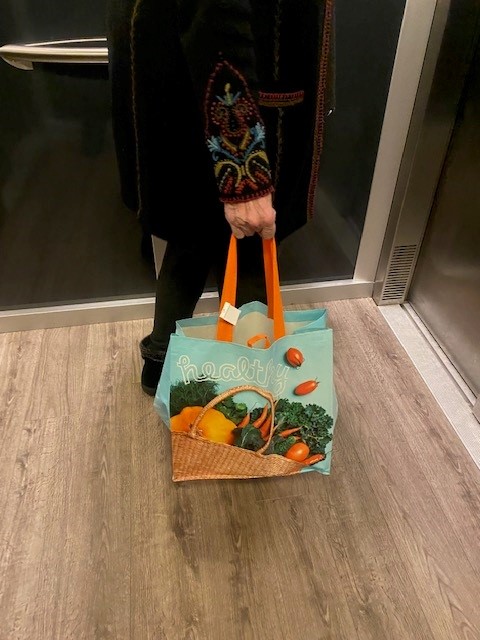
King Soopers is preparing its customers for the change by selling bags at its checkout stations. Better ones cost $5-6, but there’s one for 99 cents (shown here in Rita’s hand) that I’m keeping in my car so it’s not forgotten when I go shopping. Rita has been taking reusable shopping bags with her for months.

Another option is to take your own cart into the store, instead of using the store’s shopping carts. Fill it with your selections, and put your selections back in the cart, bagged or unbagged, after paying for them. In addition to the typical wire cart, Google can show you lots of personal shopping carts or wagons.

If, like me, you’re open to other ways to “save the planet,” here are some ideas.

Starbucks stopped filling your own cup or mug for a “personal” drink during the pandemic, but now it’s back, and they give you a 10-cent discount.

Recently I was at lunch with a friend who pulled out a Tupperware container to take leftovers home. When I told Rita, we immediately decided to adopt the practice, and she now puts a plastic container in her purse every time we go out to a restaurant.

At Avenida, we enjoy the continental breakfast served six mornings a week, and several residents bring their own coffee mugs and cereal bowls so they don’t have to use the provided single-use coffee cups or bowls. Tell me your ideas!

Revisiting Lessons Learned from the Marshall Fire a Year Later

The devastating Marshall Fire a year ago inspired several columns by me about how it could have been prevented or mitigated. My favorite column was the one on Oct. 13, which made an important observation about how vented attics (the most common kind in tract homes) allow wind-blown embers to enter homes.

All these columns can be downloaded by clicking on their dates:

Jan. 6, 2022 — Last Week’s Fire Disaster Is a Wake-up Call for Building More Fire-Resistant Homes

Jan. 13, 2022 — Homes Built of Concrete Garner Increased Interest in Wake of the Marshall Fire

Jan. 20, 2022 — Here Are More Examples of Concrete Construction and Fire-Resistant Roofing

Jan. 27, 2022 — The Buying of Homes Has Become More Frantic Since the Marshall Fire; Also: How to Alert Residents About an Approaching Wildfire

Apr. 14, 2022 — AirCrete Is a Lighter, More Climate-Friendly Version of Concrete for Home Construction

May 12, 2022 — Report from the Division of Insurance Details the Extent of Underinsurance in the Marshall Fire

July 14, 2022 — Are You Wondering If Your Home Is Underinsured? One Reader Shares His Research

Oct. 13, 2022 — Homes That  Survived the Marshall Fire Were More Airtight and Had Conditioned Attics

I am disappointed not to see any of the insights I shared reflected in recent anniversary articles and television programs.

Price Reduced on Solar-Powered Lakewood Home

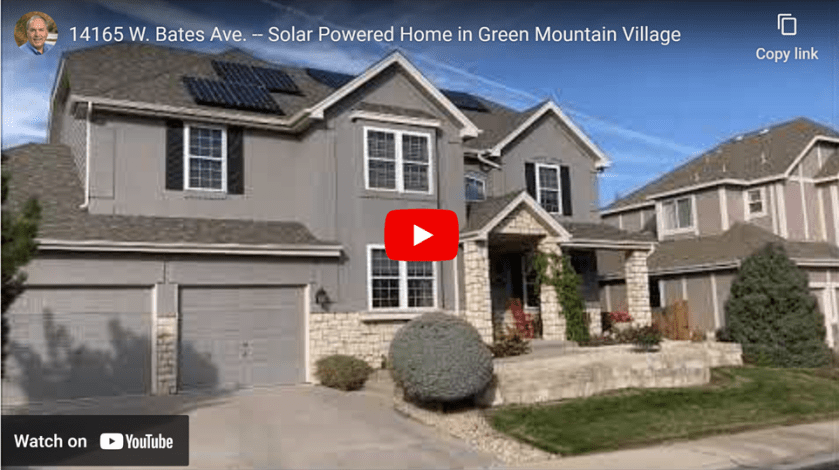
You’ll enjoy an Xcel Energy bill of $45 per month, including gas, during the summer and still under $100 per month in the winter thanks to this home’s roof-mounted solar photovoltaic system. The address is 14165 W. Bates Ave., in Hutchinson’s Green Mountain Village, which is south of Yale Avenue and north of Bear Creek Lake Park in Lakewood. It has 3 bedrooms, 3½ baths, plus a 14’x16’ loft that could be converted into a 4th bedroom with en suite bathroom. It has 2,957 finished square feet plus a basement ready to finish. This home is beautifully landscaped and updated, with hardwood floors on both levels (and even the stairs), a gourmet kitchen, and a fabulous backyard with a  free-standing Sunsetter retractable awning!  The walk-in closet in the master suite is a gem, which you’ll get to see in the narrated video tour at www.JeffcoSolarHomes.com. I’ll hold it open Saturday, Jan. 7, 11 to 1.

Have You Considered Cohousing? Here’s an Explanation and Some Examples

Cohousing puts like-minded people together in “intentional communities.” Many people, Rita and me included, resonate with the idea of community housing, where everyone has their own private home with kitchen and living room, but shares meals occasionally in a common house, perhaps work a community garden, but above all share the same values.

But bringing together like-minded families with the money to buy the land and build the individual units as well as the common elements can be difficult, resulting in few local examples of cohousing communities.

Just ask the people who tried a couple years ago to create the Ralston Creek Cohousing community next to the Geos Community in Arvada. They did all that work and were ready to put down the money when the land they wanted to buy was snapped up by a developer. Deeply disappointed, the community-without-a-home has now disbanded, no longer even publishing an email newsletter, according to www.RalstonCreekCohousing.org.

The concept of cohousing with like-minded neighbors has always appealed to me, but the opportunity never presented itself. In Golden there’s a long-established and highly successful 27-townhome cohousing community called Harmony Village, but turnover is close to zero because the members are so happy — and healthy!

Most cohousing communities are designed to leave cars on the periphery, as in Harmony Village.

Here are some other cohousing communities in the metro area, if you want to check them out.

Aria Cohousing, just east of the Regis University campus in northwest Denver, has 28 units under one roof. It was founded in 2017.

A community meal at least once a month is typical in cohousing communities, as at the Aria Cohousing community, allowing members to get to know each other better, part of being an “intentional community.”

Hearthstone Cohousing, on the former Elitch Gardens site in northwest Denver, has 33 townhomes plus a common house. I sold a unit there in 2021.

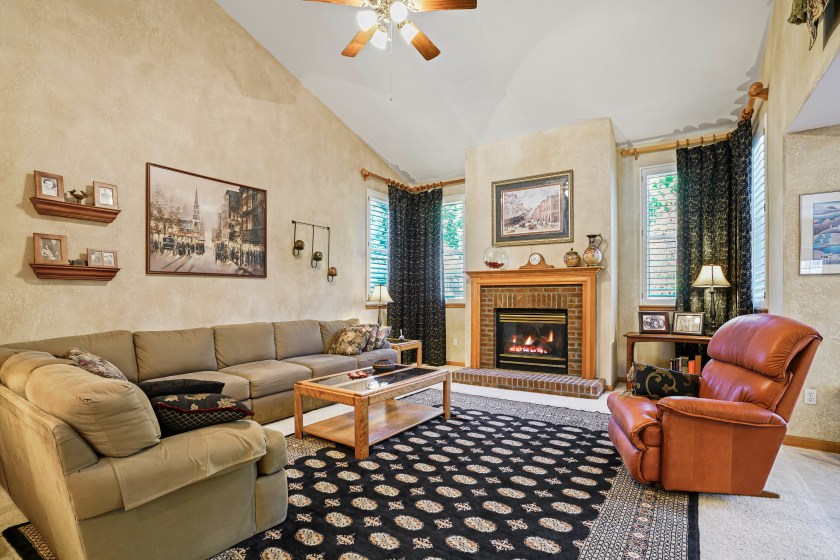
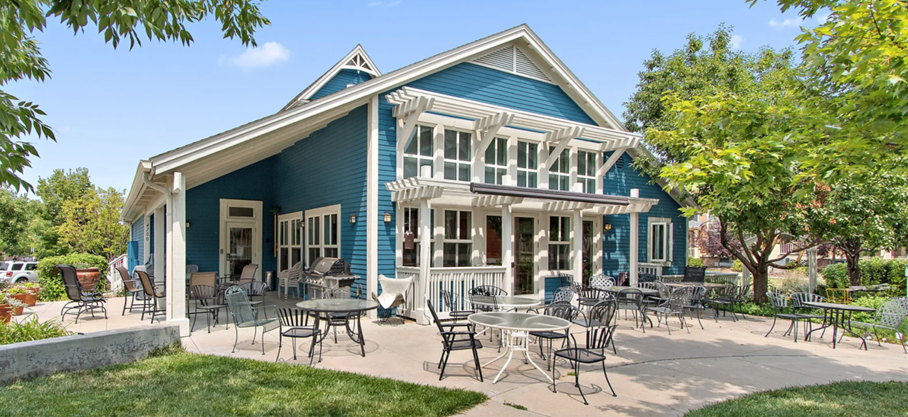
Common houses are a typical feature of cohousing communities, such as this one at the Homestead Cohousing community. It has a guest apartment, woodworking shop, laundry room, mail room and meeting/dining room with a kitchen for preparing community meals.

Highline Crossing Cohousing, along the Highline Canal east of Santa Fe Drive and north of C470, has 40 homes, built in 1995.

Wild Sage Cohousing, in north Boulder’s Holiday neighborhood, has 34 attached townhomes. A block south of this community is Silver Sage Village, an 18-unit cohousing community restricted to senior citizens — the first in the country. It offers only independent living, no assisted living or nursing care.

Other cohousing communities in our state can be found in Colorado Springs, Ft. Collins, Bayfield, Lyons, Ridgway and Lafayette.

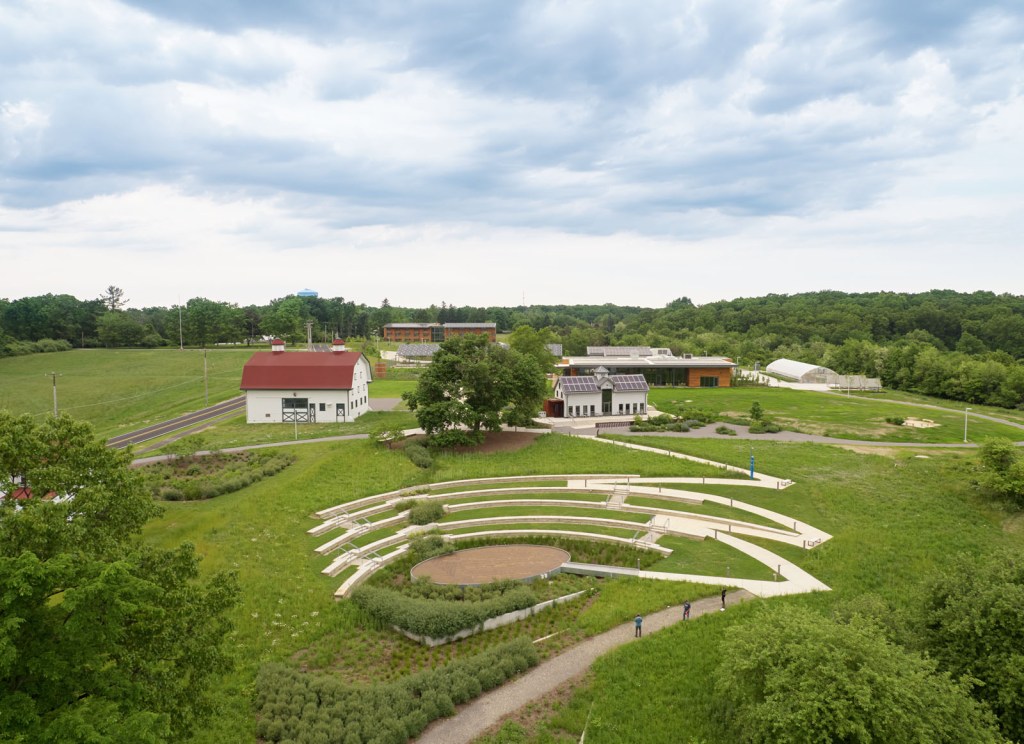
Looking beyond Colorado, I’m inspired by a project taking shape 20 miles north of Pittsburgh. It will be built on the campus of Chatham University’s Falk School of Sustainability and Environment. (See aerial photo below.) Chatham is the alma mater of Rachel Carson  when it was called the Pennsylvania College for Women. You probably know Carson’s groundbreaking 1962 book, Silent Spring, which is widely credited with sparking environmental consciousness in the United States and worldwide, leading initially to the banning of DDT.

The cohousing community being built there is appropriately named the Rachel Carson Ecovillage. What makes this project particularly exciting is that, by being located on the campus of a college devoted to sustainability and the environment, it serves as an onsite laboratory and example for the students as well as a great intergenerational home for environmentally conscious families.

As you might expect, the homes will be all-electric, built to Passive House standards, and solar-ready.

The Falk School of Sustainability and Environment was created in 2010 and occupies land donated with a stipulation that the land must remain under Chatham University’s ownership, so the homes in the ecovillage can be purchased for prices ranging from $225,000 for a studio condo to $580,000 for a 2-BR suite that be customized as a 4-BR unit, but the land is subject to a 99-year land lease from the university.

While that may not seem ideal, it solves the problem of land acquisition which stymied the Ralston Creek Cohousing community. To quote from the Ecovillage website:

There is no profit built into these costs — they will be offered for sale at the cost to build them….  

The Common House is a shared facility of approximately 2,500-3,000 square feet. It includes a dining/meeting room, a kitchen, mail/package pick-up, and two guestroom suites. Other amenities may be included, as well. 

The units will be designed and constructed to conserve energy and minimize carbon emissions. To avoid combustion of fossil fuels, they will be all-electric, which makes it possible for them to be powered entirely by renewable energy. The units will be designed to meet high indoor air quality standards. It is our intent to be able to monitor building performance after construction to see how well they meet these goals.

Sustainability is a common theme in all cohousing communities, which makes sense, because valuing and caring for your neighbors translates logically to caring for the planet as a whole.

Learn more about the cohousing concept at www.Cohousing.org, or by reading Creating Cohousing: Building Sustainable Communities.

Getting Personal: Reflections on My Two Decades as a Colorado Realtor

I’m writing this from a hotel room in Athens, following an 11-day cruise of the Aegean Sea, so real estate isn’t top of mind for me right now. I needed something that would be easy to write, and it occurred to me to share my path from newly licensed agent over 20 years ago to where I am today. Maybe it will interest a few readers.

I was originally licensed as a Colorado real estate agent in April 2002, so I’m well into my third decade as a real estate broker.

Real estate is a tough field to break into. Back in 2002, new brokers received a one-year initial license. More than half of new licensees would not renew their license at the end of their first year because they had completed few or no transactions, burned through savings, and thought it futile to continue.

As I recall it, my gross commission income that first year was about $7,000. In my second year, it was about $75,000, and in my third year it was $150,000. These are gross figures, because back then we were all “independent contractors” and we had to cover all the costs of being in business — computers, software, MLS dues, Realtor dues, E&O insurance, cell phones, car expenses, and self-employment tax. And most of those expenses came upfront, so waiting six months or longer for a first commission check was hard for anyone who wasn’t prepared to go thousands of dollars in the hole before earning a reliable income.

Fortunately, I did have the financial reserves to outlast that “newbie drought,” and I did go at least $30,000 negative before going positive, ultimately becoming quite successful.

When a real estate license is first issued, you have to hang your license with a brokerage. You may be an independent contractor, but you can’t be an independent broker until you have two years’ experience as a broker associate and pass a 24-hour employing broker’s class.

I was drawn into getting a real estate license by attending a career night at Coldwell Banker, so hanging my license with them was an easy decision, and they had a two-week “Fast Start” class for new agents taught by Rich Sands which gave me the tools and understanding I needed to put my financial reserves to work. “You have to spend money to make money,” I reminded myself as I invested heavily in a full-time career as a real estate broker.

I’ll never forget what Rich said in the very first session of that 2-week intensive class. “Congratulations,” he told my classmates and me, “you are now licensed to sell real estate, and there are 20,000 agents out there with more experience than you. How are you going to make yourself stand out from them?”

At the time I was chair of the speakers bureau for Habitat for Humanity of Metro Denver, so my first thought was to stand out by pledging 10% of every earned commission to Habitat.  I recall getting one listing from that offer, but Habitat wouldn’t promote it, so I dropped that pledge after sending several large checks.  (I’m still active with Habitat and still donate, but not a percentage of each closing.)

The other thing I did — a common strategy recommended by Rich Sands — was to specialize in a particular subdivision and “farm” it for listings. The subdivision I chose was the Village at Mountain Ridge, which had just been developed on the west side of Hwy 93 in Golden.

At the time I had a yellow-naped Amazon parrot, Flower, who I referred to as my “unlicensed personal assistant” and even printed up business cards for her with that title. Countless residents or former residents of Mountain Ridge have pictures of Flower on their children’s shoulders and received her business card which Flower “autographed” by puncturing it with her beak. I served free ice cream at the neighborhood picnic (with Flower, of course), and I sponsored a yearly garage sale. I also published a newsletter with useful information including but not limited to the real estate market for the subdivision.

I did all those things Realtors do to get known and trusted by homeowners — plus some things unique to me.  It worked well.

However, you’re looking at my most successful investment. Using my training as a journalist, which included a summer internship at The Washington Post, I chose from the very beginning to write a real estate column. At first it appeared in The Voice of Golden, then the Golden Transcript, and ultimately other Jeffco weekly newspapers and the Jeffco editions of YourHub. It has been so successful in generating business that for several years now I have paid for it to appear in every edition of YourHub.

At first I wrote this column only once a month, but soon I was writing it weekly, spending $30-50,000 per year to have it published in those newspapers. Almost two decades later, I estimate that I get about 90% of my buyers and sellers from long-time (and newer) readers of this “advertorial.” It has also benefited our broker associates (listed below), since I can’t service all the leads that come to me. As a result, the per-agent business done by Golden Real Estate is much higher than that of other brokerages in this market.

Of course, I didn’t know much about real estate when I started writing this column in 2003, but I would research a topic in order to write about it, and I would ask  my managing broker to review and correct what I wrote before sending it to be published. The process taught me a lot about real estate. It’s my personal continuing education program. You’ve probably heard the expression that “you teach what you need to learn.” I needed to learn all aspects of real estate, and writing this column was how I did that.

Most brokers with my number of years in the business have numerous initials after their name representing the certifications they have earned by taking special classes. These include Accredited Buyer Representative (ABR), Graduate Realtor Institute (GRI), Certified Residential Specialist (CRS), GREEN, e-Pro, Seniors Real Estate Specialist (SRES),  and others. I have none of those certifications, but my writings have given me a broad understanding in all those fields.

I’m not downplaying those classes and certifications — they have helped many of my fellow agents gain knowledge in each field, which is why I look for those initials myself when making referrals.  Those initials evidence real knowledge.

I like to tell a story from my childhood which rings true in this context. One of my 9th grade teachers said in an end-of-term report, “Jim shows dangerous signs of becoming a dilettante.”  I asked Dad what a dilettante was. “It’s a person who knows a little about everything but not a lot about one thing,” he said. “Sounds good to me!” I replied.

As I have written in the past, the biggest contributor to an agent’s expertise — in most but not all cases — besides those certifications is the number of transactions he or she has completed, more so than the number of years in the business. We learn from every transaction, and I have been blessed to have completed hundreds of transactions. The average agent completes only two or three transactions per year, and a high percentage of agents go an entire year without a paycheck. That was true in 2002 and it’s still true today.

The New Sellers Property Disclosure Is a Great Improvement

Every few years, the Division of Real Estate releases a revised Sellers Property Disclosure to be used by real estate brokers. A forms committee suggests revisions which then must be approved by the Colorado Real Estate Commission.

I wasn’t a big fan of the version which was released in 2018, but I’m a big fan of the one which is mandatory beginning on January 1, 2023. There are disclosures for each type of property. In this blog post, I’ll only talk about changes to the one for residential listings. Here’s a link to it, which you will need to download to scroll through it.

Some of the changes are subtle — for example, the seller is told to disclosure adverse materials facts instead of defects. That makes sense, since there was no definition of “defect” in the 2018 version.

Other changes are more substantive. For example, instead of just asking if the property is in an HOA, it asks for the name of the association(s) and contact information for each. If the neighborhood has cluster mailboxes, it asks for the location and number of the mailbox.

At the top of the form, it asks when the seller acquired the property, not only the year it was built as in the 2018 form. It also asks the seller to attach any reports, receipts or other documents “you believe necessary for the information you provide to be complete.” There was no such request in the prior version.

The seller is asked whether the home is subject to deed restrictions or affordable housing restrictions, and whether it is in a historic district. This is new.

Another sign of the times is that instead of asking if there is or has been tobacco smoke, it refers only to “smoking” and adds in parentheses “including in garages, unfinished space, or detached buildings.”

Under “Access and Parking,” the form asks if there are any limitations on parking or access due to size, number and type of vehicles. Instead of asking if there are “any access problems,” it asks the broader question of whether there are “access problems, issues or concerns.” Those three words are used elsewhere to expand on the question of “problems.”

In the section on “Use, zoning and legal issues,” instead of asking simply whether any additions or alterations have been made, it specifies whether they were made with a building permit and without a building permit, including “non-aesthetic alterations,” which is undefined. It also asks whether the property has been used for short-term rentals in the past year and whether there are “grandfathered conditions or uses.”

Under “Sewer,” the form asks for the name of the sewer service provider, the date of the last sewer scope, the date of the last septic use permit, inspection, and pumping — all useful information.

In the “Water” section, the form asks for the location of the water shutoff.  If there’s a well, it asks the date of the last inspection and service.  It asks the gallons per minute (GPM) of the well as of a specified date, and it asks the size in gallons of any cistern. Lastly, it asks whether the seller purchased any supplemental water in the last two years — an indication of the well’s adequacy.

The form asks the seller to identify the electricity, cable TV and internet service providers.

The instructor of the class I took regarding these new contracts and disclosures reminded us that the sellers property disclosure is to be accurate as of the date the home goes under contract. Therefore, if the property goes under contract after Dec. 31, 2022, this new form must be completed by the seller, but it does not need to be replaced if the listing is already pending but does not close until 2023.

That led me to adopt a new “best practice” which I’ll share here with my fellow listing agents. Instead of having the seller complete and sign the sellers property disclosure when I list the home, my practice henceforth will be to have the seller complete the document at the time of listing but to review and sign it only after going under contract with a buyer, thereby assuring that it is accurate as of the purchase contract date, as stated on the disclosure.

DMAR’s Metro Area Statistics Cover 11 Counties

What do the rural cities and towns of Kiowa, Agate, Simla, Fairplay, Georgetown, Empire, Black Hawk, Rollinsville, Nederland, Allenspark, Lyons, Longmont, and Bennett have in common?  They’re all included in the Denver metro area statistics compiled monthly by the Denver Metro Association of Realtors for its market trends report. Here is a map of the 11 counties included in that report.

REcolorado, the Denver MLS, allows infinite flexibility in drawing the boundaries when searching for listings or doing statistical analysis, so my preference is always to draw a radius of 20 miles from downtown Denver when compiling metro statistics.

Below is this month’s infographic from DMAR showing the November month-over-month statistics for their 11-county “metro area.”

Under all five elements of the infographic I have inserted the same November statistics for the 20-mile radius of downtown Denver that I prefer to use.

The variations this month are not as great as I have seen in some months.

Lennar Subdivision Near Austin, Texas, Features 3D-Printed Homes

In the Texas Hill Country outside Austin, Lennar has broken ground on a 100-home subdivision in which all the homes will be built using ICON’s 3D printing robots for the exterior and interior walls.

You can find a 1-minute You-Tube video clip demonstrating the process at https://constructutopia.com/3d-printing/lennar-and-icon-begin-100-home-3d-printed-community-texas

The bottom four homes in the aerial rendering above show the various stages of the 3D printing process. After a home’s slab is poured, an overhead gantry goes back and forth pouring 3-inch (I’m guessing) layers of concrete one on top of the other, following a computerized plan for the walls and openings.

Lennar is the first production builder I know of which has adopted ICON’s proprietary 3D printing process to build an entire subdivision. The process eliminates most of the waste and labor associated with building the walls in homes.

The windows and doors are framed conventionally, and wood trusses are added to support the roof.

Developed by Hillwood Communities, the 3- and 4-bedroom homes offer eight different floorplans, with 24 unique elevations ranging from 1,500 to over 2,100 square feet.

The Georgetown, Texas, community, called Wolf Ranch, will “set the standard for the future of homebuilding — technologically advanced, energy efficient and architecturally striking,” according to ICON.

The construction method is not only more sustainable but produces homes that are resistant to fires, floods, termites, and high-wind events.

For the Right Homeowner, an “All-in-One” Loan Can Pay Down Your Mortgage Faster

I was reminded recently about a very non-traditional mortgage loan option that might interest you. The “All in One” has been available for many years but has been widely overlooked in recent years in favor of low fixed-rate loans. I asked Jaxzann Riggs, owner of The Mortgage Network, to explain how the loan works.

The “All in One” (AIO) loan is aptly named because it ties your mortgage loan and checking account together. They become one account. Dollars left in your checking account overnight reduce your mortgage balance for that day (and subsequently the interest due on the loan).

Typically, the money that you have in your checking account does not earn interest. When your money is sitting in your checking account, it’s “working” for your bank, not you. Banks lend out the dollars that you leave in your checking account overnight to other banks, earning interest on those loans. 

The AIO checking account (which is also your mortgage account) can be used just like your current checking account. You deposit your earnings into the AIO account and pay your monthly bills (including the monthly mortgage payment) out of the account.

Since the amount of interest that you pay on your mortgage loan is based upon your loan balance, any extra money that you store in your account lowers both your loan balance and subsequently your interest owed for that month.

Interest on your mortgage is accrued daily, so you will benefit even if money is moving in and out of your account frequently. For example, if you are paid on the first of each month but your bills aren’t due until later in the month, your paycheck would be lowering your loan balance and interest payment just by sitting in your checking account for a few weeks.

Typically, an AIO borrower will store some portion of their emergency funds or savings into their AIO account. All funds in the account can be used whenever needed, but you will be reducing your mortgage balance by that amount if it’s in your AIO account.

Some will ask, why not just make extra payments to a traditional 30-year fixed mortgage? While making extra payments on your mortgage will also have the same effect of paying down your principal balance quicker, you won’t be able to access the dollars that you have prepaid if you need it in the future. To accomplish that, a borrower with a traditional loan must either refinance his or her current loan or obtain a HELOC to access equity. Also, while you will end up paying off your loan earlier, your monthly payments will always stay the same if you are in a fixed rate product.

Because the All-In-One loan is an adjustable-rate mortgage it is possible that you will be paying a higher rate for the AIO than a fixed rate option. The goal of the AIO is to utilize your excess cash to reduce your loan balance faster than a traditional loan. That is where the value lies.

The AIO can be used to refinance your current loan or to buy your next home, but it is not going to be the best option for everyone. The ideal AIO candidate has a history of having money left over each month after paying all bills. The requirements include a high credit score, and a lower debt-to-income (DTI) ratio than most mortgages allow.

If you are interested, Jaxzann, who is a licensed mortgage broker and certified to offer the AIO, will carefully analyze your current income and spending habits and create a personalized scenario for you. You can reach her at (303) 990-2992.