Readers Appreciate Our Free MLS Neighborhood Alerts

Back in April 2019, I offered to set up Free Neighborhood Alerts for any reader who wanted to keep track of real estate activity in their subdivision or larger area. The response was overwhelming. I myself have 42 readers who currently receive such alerts for their neighborhood.

I’m not complaining. My broker associates and I are pleased to make this service available to everyone who wants it, and we’ve become pretty efficient at creating these free alerts.

The MLS allows members to set up an unlimited number of email alerts, designed to assist buyers in searching for homes. We have adapted it to provide neighborhood alerts. Once set up, the alerts are generated automatically by the MLS. Just give us your address and the boundaries of the area you wish to monitor. The initial alert will tell you all the coming soon, active, under contract, sold, withdrawn and expired listings in that area, going back 90 days or longer.

Future alerts will come to you within 15 minutes of a new or changed listing being entered on the MLS. You will literally be up-to-the-minute in your knowledge of real estate activity in your neighborhood!

I’m happy to handle every request I get from readers, but feel free to ask any of our broker associates to create a neighborhood alert for you. They are listed below with their email addresses and are more than happy to provide this free service. Send your requests by email only, please.

In addition to setting up the neighborhood alert for you, we can also send you valuation reports on your home using two different software packages — Realtor Property Resource (RPR), which is only available from members of the Realtor association like us, and Realist — that you will find are much more accurate than Zillow’s “Zestimates,” which home owners are used to seeing.

I also like to provide a spreadsheet of active, under contract and sold listings that are comparable to your own home, which serves as a double-check on those two software valuations.

Jim Smith, Jim@GoldenRealEstate.com

Broker Associates:

Jim Swanson, BrokerSwanson@aol.com

Chuck Brown, Chuck@GoldenRealEstate.com

David Dlugasch, David@GoldenRealEstate.com

  Carol Milan, Carol@GoldenRealEstate.com

  Ty Scrable, Tyler.Scrable@gmail.com

Downsizing Safely and Effectively in Your Senior Years

Are you thinking that now’s the time to leave your big-house life behind? If so, you’re in luck. Despite the pandemic, the real estate market is strong, interest rates are low, and it’s still a great time to sell and buy. But you can’t go into the process blindly. Here are some tips to get you started on the right track.

First on your to-do list: Work with an experienced agent like those of us at Golden Real Estate. After all, an agent who knows the area can price your home correctly and help you find the right replacement home for you. We know the local market and whether a neighborhood is senior-friendly. You can ask us questions and get knowledgeable answers about local amenities, such as public transportation, fitness centers, and local senior facilities that will enrich your life.

If you prefer to downsize into a rental unit within a senior community, we can advise you on those communities and that process too, so feel free to ask us.

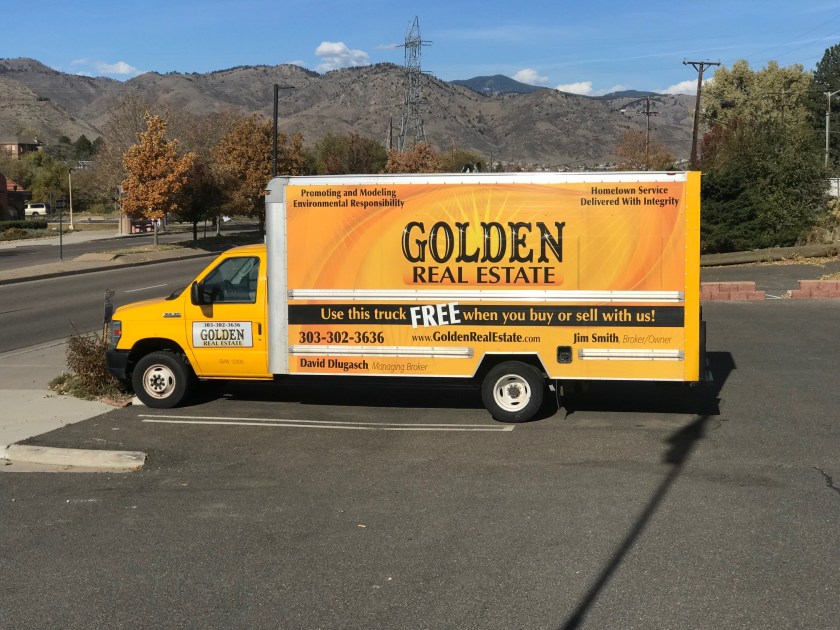
We can also help you determine a budget. As a buyer, keep in mind that it’s a seller’s market, and having us on your side can help get your foot in the door. If you’re moving locally, we can also save you a bundle with our free moving truck and our in-house movers.

You want to take a look at your budget to determine what you can afford. Our preferred lenders offer free affordability calculators. They allow you to input data, such as your home price, down payment, and monthly expenses. This can help you determine your potential future living expenses.

Once you have an agent and a price range, it’s time to compare what you can afford with what you need, and then make adjustments to your list as necessary. Many seniors, according to Home Tips For Women, look for features including those which lower utility costs. These, along with things like single-level living and wide doorways, allow for greater mobility, an important consideration if you’ve already begun to experience mobility issues.

Something to keep in mind during the downsizing process is that moving into a smaller home will require downsizing your belongings as well. Once you have chosen your future home, you can evaluate the belongings in your current one. This is an emotional process which takes patience, and, ideally, you’ll have cooperation from your friends and family. It’s often best to give certain things to your children and grandchildren now so you’re not tight on space in your new home. You can use our truck for that, too (and for trips to Goodwill).

If you’re moving outside the metro area, choosing the right moving company is something else that deserves special attention. Movers charge different prices, even for what appear to be the same services. Your moving company will factor everything from whether you need an entire truck to how far you’re moving, to the overall weight of your household goods into the price. Previous clients have given us feedback on their experiences which we can share with you.

Finally, make your move while you’re in good health and don’t wait until you have to move. And let yourself enjoy the process. Your retirement is a time of change and to feel all the excitement associated with it. Moving is not always easy, but the end result of downsizing can be more financial freedom and a better quality of life during your senior years.

Downsizing as a senior presents a significant lifestyle change, but it’s one to embrace. If you still have questions, don’t be afraid to reach out to us. My broker associates and I (see below) are here to make the process as seamless as possible and can be a valuable resource not to be overlooked.

Jim Smith— 303-525-1851

Jim Swanson — 303-929-2727

Chuck Brown — 303-885-7855

David Dlugasch — 303-908-4835

Carol Milan — 720-982-4941

View Posts

Tyler Scrable — 720-281-6783

Here’s a Good Resource for Seniors

Colorado doesn’t rank high in the percentage of our population that’s 65 and over. In fact, seniors represent only 14.2% of our population, ranking Colorado 46th among the 50 states.

Recently I was made aware of a website with tons of Colorado-specific information for seniors. Here’s that website’s address: https://www.seniorhousingnet.com/seniors/senior-living-us/colorado

Look to Us, Not Zillow, for an Accurate Valuation of Your Home

It’s common for people to put stock in Zillow’s “Zestimates” of their home’s value, but any Realtor can provide a much more accurate estimate of your home’s value. Realtors have access to my favorite valuation tool, the Realtor Property Resource or RPR, as well as to the MLS’s Realist tool, which non-Realtors can access. (Not all agents are Realtors.) Also, we can use the MLS to create a spreadsheet of all the comparable homes which have been on the market in your subdivision or area. Here’s an example:

Up for Growth Promotes Affordable Housing and ‘Accessible Growth’

Up for Growth Action describes itself as the only federal advocacy campaign focused solely on breaking down the barriers to affordable and market-rate housing.

“Housing was on the ballot on November 3,” said Mike Kingsella, executive director of the organization. “The next Congress and new administration cannot afford to ignore the immediate and long-term challenges of housing in the United States, because we have a housing shortage that affects nearly every aspect of Americans’ lives. We will be on the front lines of advancing a bipartisan, pro-housing agenda that increases access to high-quality housing in vibrant neighborhoods at prices all Americans can afford,” he said. Their work “supports the creation of affordable homes, jobs, and transit-oriented development — all critical to our country’s economic recovery and growth.”

Up for Growth Action believes that America’s housing crisis is driven by two separate, but interrelated challenges: the nation’s increasing income inequality that prevents widespread access to quality and affordable housing, and a shortage of homes, requiring proactive legislation. The organization focuses on policies that enable communities to build housing needed to meet the country’s 7.3-million-home shortage, as shown by Up for Growth’s research . 

“Improving housing accessibility and affordability across the full spectrum of American society is critical in transforming the communities in which we live, work, play and invest,” said UP for Growth’s Chuck Leitner. “Driving the real estate investment and operating industry’s deeper engagement in addressing these and other housing issues is fundamental in the process and is why our mission is so important.”

Up for Growth Action supports policies focused on tearing down systemic barriers to housing development such as exclusionary zoning, and increasing access to capital for affordable housing development. The organization promotes what it calls “accessible growth” – prioritizing housing production in areas of high economic opportunity, areas that leverage investments in transportation and infrastructure, and in areas where jobs already exist.

Though a relatively new organization, Up for Growth Action already boasts progress in enacting its legislative agenda. In my Oct. 15th column I wrote about its YIMBY (Yes in my Backyard) proposal that was passed by the US House of Representatives but stalled in the Republican-controlled Senate.

The incoming Biden-Harris administration has already outlined a comprehensive housing plan that is aligned with Up for Growth Action, including a focus on reducing exclusionary zoning to increase housing stock, direct investment in housing, and recognizing the relationship between where people live and their wellbeing.

Higher Loan Limits and Lower Rates Improve Affordability for Homebuyers

By JIM SMITH, Realtor

Both the Federal Housing Authority (FHA) and the Federal Housing Finance Agency (FHFA), which regulates Fannie Mae and Freddie Mac, have been in the headlines in the past couple weeks with their respective announcements that they will be raising mortgage loan limits for 2021. I exchanged emails with Jaxzann Riggs, owner of The Mortgage Network in Denver, to learn more about loan limits and what their implications are for potential purchasers. Here’s what I learned from her.

Jaxzann Riggs

Although loan limits have been around for many years for both conventional loans (loans that conform to Fannie Mae and Freddie Mac’s loan standards) and FHA loans, (loans insured against default by the Federal government) the Housing and Economic Recovery Act (HERA) of 2008 has largely shaped how we know them today. The 2008 act established a base loan limit of $417,000 for conventional loans and, due to the declining price trend in the real estate market at the time, also included a mandate that this baseline limit would not increase until prices rose to previous levels. In 2016, FHFA increased loan limits for the first time in ten years, and they have increased every year since. HERA also mandated that FHA set loan limits at 115% of area median house prices, with a floor and ceiling on both limits.

2021 will see conventional loan limits for single-unit properties increase from $510,400 to $548,250 as a baseline. High-cost areas (which always included places like Aspen and Boulder, but now also includes the metro area) have a maximum loan limit that is a multiple of the area’s median home value, up to 150% of the baseline. Denver, Jefferson, Adams, Arapahoe, Broomfield, and Douglas counties will all be seeing an increase from $575,000 to $596,850. Boulder county increases to $654,350. The increase in these limits means that more borrowers will be able to qualify for a conventional loan versus having to obtain a high-balance or jumbo loan, which typically come with higher interest rates.

It’s important to remember that purchase price does not necessarily correlate with loan limits. If a borrower plans, for example, to purchase a $750,000 property but puts a significant amount of money down, thus bringing their loan amount under the conforming limit, they can still qualify for a conventional loan.

The FHA has also increased loan limits for 2021, with a national conforming limit of $548,250. In the majority of the Denver metro area the loan limit has increased to $596,850, up from $575,000 in 2020. The FHA’s loan limit increases are tied closely to the FHFA’s conventional loan limit increases.

Although loan limits are most frequently mentioned in terms of single-family homes or one-unit properties, both conventional and FHA loans also impose limits on duplexes, triplexes and fourplexes. These increase at the same time and at the same frequency as single-unit loan limits. In the case of the FHA, which also insures Home Equity Conversion Mortgages —  also known as HECMs or Reverse mortgages — there will be a 2021 limit increase to $822,375. Unlike traditional loan limits, this increase applies across the board, regardless of what market the home is located in.

2021 is sure to be a year of changes, and mortgage loan limits are no exception. The increase in limits for both FHA and conventional loans matched with historically low rates and 3-3.5% down payment options just might be the ticket to purchasing your dream home.

Regardless of what loan type you are seeking, I recommend giving Jaxzann Riggs with The Mortgage Network a call today at (303) 990-2992.

Why Do Online Publishers Keep Using ‘Portrait’ Format?

It’s surprising to me that online newsletters and ‘magazines’ keep publishing in a vertical 8½x11 or ‘portrait’ format instead of in the horizontal or ‘landscape’ format of the typical computer screens on which most subscribers read their work.

When the publication is single column, portrait format might work, but if the page has two or more columns, the reader has to scroll down and up to read from one column to the next. If the newsletter were is landscape format, this annoyance would be eliminated. You could view the full page.

Please, online publishers, join me in changing to landscape format out of consideration of your readers!

News Literacy, Like Civic Literacy, Needs to Be Taught

I’m not alone in pointing out that our electorate suffers from a lack of civics literacy. Surveys have shown, for example, that a majority of Americans can’t name the three branches of government and don’t know that they are co-equal.

I suggest, however, that we also need to promote news literacy. The lack of knowledge about professional journalism demonstrates this need. Most people don’t understand the difference between straight news articles and columns. They think a news article is biased when the reporter quotes someone who expresses an opinion they disagree with, ignoring how the same article quoted opinions they do agree with.  But an article that quotes only one side of an issue is not a news article at all. It is an opinion piece, and such pieces are clearly identified as opinion in a newspaper that adheres to journalistic principles.

Society would benefit from having the principles of journalism taught in America’s schools. The following is copied and pasted from www.EthicalJournalismNetwork.org.

Five Core Principles of Journalism

1. Truth and Accuracy

Journalists cannot always guarantee ‘truth’, but getting the facts right is the cardinal principle of journalism. We should always strive for accuracy, give all the relevant facts we have and ensure that they have been checked. When we cannot corroborate information we should say so.

2. Independence

Journalists must be independent voices; we should not act, formally or informally, on behalf of special interests whether political, corporate or cultural. We should declare to our editors – or the audience – any of our political affiliations, financial arrangements or other personal information that might constitute a conflict of interest.

3. Fairness and Impartiality

Most stories have at least two sides. While there is no obligation to present every side in every piece, stories should be balanced and add context. Objectivity is not always possible, and may not always be desirable (in the face for example of brutality or inhumanity), but impartial reporting builds trust and confidence.

4. Humanity

Journalists should do no harm. What we publish or broadcast may be hurtful, but we should be aware of the impact of our words and images on the lives of others.

5. Accountability

A sure sign of professionalism and responsible journalism is the ability to hold ourselves accountable. When we commit errors we must correct them and our expressions of regret must be sincere not cynical. We listen to the concerns of our audience. We may not change what readers write or say but we will always provide remedies when we are unfair.


Does journalism need new guidelines?

EJN supporters do not believe that we need to add new rules to regulate journalists and their work in addition to the responsibilities outlined above, but we do support the creation of a legal and social framework, that encourages journalists to respect and follow the established values of their craft.

In doing so, journalists and traditional media, will put themselves in a position to be provide leadership about what constitutes ethical freedom of expression. What is good for journalism is also good for others who use the Internet or online media for public communications.

Accountable Journalism

This collaborative project aims to be the world’s largest collection of ethical codes of conduct and press organisations.

The AccountableJournalism.org website has been developed as a resource to on global media ethics and regulation systems, and provides advice on ethical reporting and dealing with hate speech.

Visit the Accountable Journalism database of codes of media ethics

If You Want to Buy or Sell a Solar Powered Home, Call Us

Jim Smith and the broker associates at Golden Real Estate are especially knowledgeable about solar powered and sustainably built homes, so consider us first if you are contemplating buying or selling such a home. Between us, we own every model Tesla vehicle — S, 3, X and Y — so we’re experts in electric vehicles, too. Our solar-powered office is “net zero energy,” with no gas service, and our Xcel Energy bill is $10 per month (the cost of being connected to Xcel’s grid), so we know what we’re talking about. Jim’s home is near-net zero (because he still has natural gas service), and he has a large network of friends with such homes, at least one of whom is planning to sell in 2021. Call Jim at 303-525-1851 if you’d like to talk.

Don’t Miss This Important Documentary on Solar PV

We watched this program when it aired on PBS a few weeks ago, but I’ve registered for an online screening this Thursday, Dec. 10th, 7 to 10 pm, because it will include a post-screening panel discussion about the topic of roof-top and community solar programs, which are under attack by utilities in different states. Here in Colorado, we’re blessed with a government which is supportive of clean energy, but that’s not the case everywhere, and there is always the risk that a less friendly government on the state or federal level could frustrate the goal of moving away from an economy based on fossil fuels and to an economy based on clean, renewable energy. Click here to register for it on Eventbrite.com.

Agents Who Submit ‘Love Letters’ Risk Committing a Fair Housing Violation

Until recently it was a common practice for buyers’ agents to submit a “love letter” with their offers, hoping to convince the seller to choose their buyer over others in a bidding war.

That practice has fallen out of favor, however, as doing so might constitute a violation of federal Fair Housing rules as well as of the Realtor Code of Ethics.

Article 10 of the Code includes the following: “Realtors shall not be parties to any plan or agreement to discriminate against a person or persons on the basis of race, color, religion, sex, handicap, familial status, national origin, sexual orientation, or gender identity.” Such discrimination is also a state and federal fair housing crime.

It would be hard not to reveal any of the above characteristics in a “love letter,” especially if it contains a photo of the buyer or buyer’s family. But there are other subtleties to consider. One of the sessions at last month’s National Association of Realtors conference was titled, “How to Stay Out of Trouble: Risk Management and the Code of Ethics,” taught by Barbara Betts, a California Realtor who is also a hearing officer for violations of the Code of Ethics.

In her talk, as reported by Inman News, Betts described how risky such letters could be, especially for the seller and listing agent. “Sellers are humans. Even though they are not purposely trying to create a fair housing situation for themselves, they inadvertently are,” she said. “When the seller gets these letters, they get excited to sell the home to someone they feel will fit into their neighborhood, and that’s where there’s a problem.”

The danger is intensified when there are competing love letters. Imagine, for example, that one of the buyers reveals himself to be a single African American who says your home is perfect for him because he is wheelchair-bound, but your seller chose a family with children who liked your home because it’s close to their synagogue. That choice has offered a veritable smorgasbord of fair housing violations that the rejected buyer could mention in a fair housing complaint, and that their broker could cite in a Code of Ethics complaint against the listing agent.

“We need to consider raising fair housing concerns with our buyers,” Betts advises her fellow Realtors. “Don’t read or accept these letters that are drafted by a buyer. Certainly do not give any support or suggestions. As listing agents, we definitely need to discuss the potential liability during the listing interview and not deliver or accept these letters for the seller.”

Betts added, “If the letter is all about ‘I love your home. It’s beautiful. I love how you’ve remodeled it, I promise I won’t tear it down and remodel it,’ there aren’t any fair housing violations in those statements. The second you start talking about family, color, race, religion, marital status, those things instantly become possible fair housing violations.”

For all these reasons, the agents at Golden Real Estate no longer submit or accept “love letters” from buyers. If we receive one, it’s best that we don’t even read it and that we inform the buyer’s agent that we have deleted it.

There are other ways in which Realtors can commit a fair housing violation, perhaps unconsciously. One is the practice known as “steering,” in which an agent recommends different neighborhoods to different buyers based on where they would “fit in” because of their race, color or religion. We must truly be blind to such characteristics and give the same information to all buyers. Fortunately, buyers do their own searching most of the time. As agents, we must show any buyer what they want to see without comment of any kind.

When a buyer from out of town asks us to describe our neighborhoods, it’s best to avoid all demographic descriptions, limiting ourselves to describing the housing stock, price range, etc. We must not provide such information with an intention to steer them based on their profile.

Meanwhile, sellers expect us to show their homes only to qualified buyers, but if we ask some buyers but not others to be pre-qualified by a trusted lender before showing a listing, we open ourselves to possible fair housing complaints.

We’d all like to believe that racism and other kinds of systemic or cultural discrimination are artifacts of the past, but we are more aware than ever that such discrimination exists even within ourselves, hopefully unconsciously. Unconscious or not, we need to realize that beyond being morally wrong, it can get us into serious professional trouble as agents and that it can also put our clients at risk, making it more important than ever that we educate our clients about the risks they could be facing.