Reflections 7 Weeks After Selling Our Home and Moving into a 55+ Rental Community  

In my March 10 column (read it at www.JimSmithColumns.com), I announced that Rita and I had decided to sell our Golden home and become renters for the first time in 50 or so years for both of us. A year ago, I could not have predicted such a decision so early in our youthful 70s. I thought you’d like to know how that has worked out for us, in case I got you thinking about a similar move yourself.

Our reasoning was simple. We felt that our home, which we could (and did) sell for 2½ times what we paid for it ten years ago, was unlikely to keep appreciating, and the money we would pocket from selling could more than support us for the rest of our lives. Since I’ll continue making a good income as a Realtor for several more years, we could pay all our living expenses without touching the principal, which we have since invested half in equity stocks and half in a Transamerica annuity with downside protection. (Ask me if you’d like references to our two advisors.)

Zillow and other valuation models show our former home continuing to appreciate, which is good news for our buyer, but it’s hard to predict how much longer that will be true.  I feel we may be at or near the peak of the market. The experience with other listings in the past month suggests that, yes, the market is softening, triggered primarily by the rapid rise in mortgage rates.

So, are Rita and I happy in our new 2-bedroom/2-bath rental? The answer is a qualified “yes.” It definitely was an exercise in “letting go” to move from a 2,639-sq.-ft. home with its 3-car garage and its 2,281-sq.-ft. basement full of “stuff” into our 1,096-sq.-ft. apartment.  I made countless trips to Goodwill, plus targeted donations elsewhere. We gave three unused bicycles plus accessories to the Golden Optimists’ Bicycle Recycle program, gave our gas generator to a Habitat for Humanity group, gave our air compressor to our handyman who uses it to blow out sprinkler systems, and, most helpful of all, included virtually all our furniture in the sale of our home.

It was, in short, quite a process of letting go, not just of miscellaneous possessions accumulated over the years, but also of family heirlooms which had been passed down over the years from our two families.

We had boxes and boxes of artifacts and papers in our basement which we spent many hours culling, recycling most of it. (I didn’t quite finish and have a few boxes in storage that I will get to “sometime.”)

Yes, we rented storage space — both a long-term unit at Public Storage and two small cages in our apartment building a short distance from our apartment for short-term storage — stuff that might otherwise go in a pantry or closet if we had a larger unit.

Long before we had decided to sell and downsize, Rita and I had purchased a week-long cruise of the Mediterranean, which began three weeks after our move into the apartment. We had barely settled in by that time, and the cruise allowed us to experience living in 200 square feet for long enough to make our 1,096-sq.-ft. apartment feel rather spacious when we returned.

As I write this, another 16 days have passed, and we are finally settled in and enjoying our new digs. We spend a lot of time on our south-facing balcony with its view of Green Mountain and the foothills. We watch less TV, having “cut the cord” and subscribed to YouTube TV. We watch much less news and more Netflix movies and programs.

We are also beginning to take advantage of the many programs at Avenida Lakewood, although the press of business is keeping me from taking the yoga and fitness classes which are offered. Shown here is a picture of the sign in our elevator listing the various facilities in the building, to give you an idea of what’s offered. A recent census reported by our community manager said that 70% of the 266 residents in Avenida’s 207 occupied apartments have participated in 9 or more activities, and that 57% of February’s programs were created and led by a resident. There were 314 programs on the March calendar.  Talk about “active living”!

Continental breakfast is served daily except Sunday on the main floor and is one of many opportunities to meet fellow residents. Being on the 4th floor, we also meet people in the elevator, and everyone is super friendly. Residents don’t pass each other, indoors or on the sidewalk, without saying “hello.” This is a contrast from our single-family subdivision, where there were few opportunities to meet our neighbors. I already know more neighbors in this building than I knew in that subdivision.

Rita has made use of the full-service salon, where I have already had a haircut. Rita joined a card game and a Mahjong group, meeting additional neighbors that way. I attended the men’s group where we discussed possible events. I will be driving up Mt. Evans with some of the men after that road opens.

At this time, 95% of the apartments at Avenida Lakewood have been leased. (It was only opened in the summer of 2019.) Soon they will start creating a waiting list. Call me if you’d like to know more or be introduced to the sales staff. Don’t call me if you smoke, however. It’s not permitted anywhere in the building or on the grounds — even within your apartment or on your balcony.

In conclusion, Rita and I feel that we made the right decision. Thanks to the nest egg we created by selling our home, plus Medicare and our long-term care policies, we feel that our future is secure and we can even splurge on more vacations.

I don’t know how many communities there are like Avenida, which charges rent with no “buy-in” that would tie up capital that could otherwise be producing income. Jenn Gomer of CarePatrol told us about Avenida and we didn’t look further. I recommend calling her at 720-788-2364 if you want to know other options.

For Rita and me, we like the flexibility of our one-year lease which gives us the freedom to stay or move a year from now.

Here’s Some Advice to Sellers in a Slowing Real Estate Market  

We all realize by now that the real estate market is slowing due to a reduced buyer pool, caused in part by the increase in mortgage interest rates.

Here’s some advice to sellers who don’t want their home to sit unsold on the market.

1)   Reconsider buying your replacement home first, expecting to sell your home immediately. That strategy was based on the difficulty in finding a replacement home. Now you can sell first, have a 45- to 60-day close and reasonably expect to find your replacement home before you have to surrender your current one.

2)   Don’t price your home based entirely on recent comparable sales, but price it slightly lower. Buyers know the market is softening and will be looking for a good deal.

3)   With an increased inventory of listings, it’s more important than ever to stage your home and improve its curb appeal as well as its interior appeal.

4)   Listen to the market. If you get few showings and no offers in the first week, don’t wait to lower the price.

5)   Magazine-quality pix and video are more important now to make your home stand out. Hire an agent who will order professional HDR still photos, shoot a narrated video tour and drone video, and market your home the way Golden Real Estate does.

When interviewing a listing agent, ask him or her to bring their Matrix productivity print-out instead of trusting their verbal description of their level of success with prior listings.

The Sharing of Listing Commissions With Buyers’ Agents Is Being Challenged  

The way real estate agents are compensated differs from that of any other industry, thanks to the creation of the Multi-List System or MLS, the essence of which is “cooperation and compensation.” Imagine going back to the days before the MLS when a real estate broker could only sell his own listings. The only way to have brokers show you listings of other brokerages is if each brokerage agrees to cooperate with sales agents from other brokerages by sharing their listing commission if they produce a buyer.

Litigation against the National Association of Realtors by the Department of Justice and other plaintiffs threatens to outlaw that system, which would have huge negative consequences not only for the industry but for buyers and sellers.

I like to contrast how we are compensated with how car salesmen are compensated. Imagine if you were in the market for a car and went to a Ford dealership and spoke with a sales person who listened to your desired features and told you that a Chevrolet or Toyota would suit you best. On his computer, he finds a dealer who has that model or models. He takes you to the other dealer’s lot, find the vehicle, get the key out of a window lockbox and take you for a test-drive. He or she could then write a purchase contract for that vehicle and earn the same commission from that dealership as from his own.

But it doesn’t work that way. The sales person at each dealership can only sell that dealership’s cars.

As an aside, there are auto brokers who are hired by car buyers. These brokers can find a dealer with the car you’re looking for and get compensated by the car dealer and not by the buyer. I used an auto broker myself in 2012 to buy a Chevy Volt, which was a brand new model and hard to find at any Chevy dealer. He found one that was en route to an Aurora dealership, which paid him a commission after I took delivery. But auto brokers are an exception. The car sales persons working at the typical car dealership cannot broker your purchase from another dealer the way I can broker your purchase of a real estate listing from any real estate brokerage.

This system of enabling any real estate broker to sell any other broker’s listing and earn a “co-op” commission is at the heart of our industry’s success, but some parties are trying to convince the Department of Justice and the federal judiciary that buyers, not sellers, should compensate their brokers.

But here’s a point that is being missed in this debate — the seller is NOT paying the buyer’s agent.  Yes, it’s the seller’s money that goes to the buyer’s agent, but the listing agent is the one who is paying the buyer’s agent out of the commission which the seller has agreed to pay him or her.  It says right in the listing agreement (Sec. 7.1.1) that the listing brokerage “agrees to contribute from the Sale Commission to outside brokerage firm’s commission as follows: __% of the gross sales price….”

Of course, at the closing table the seller’s settlement statement shows both commissions (to listing broker and selling broker) debited to the seller, but the total equals that specified in the listing agreement.

If the courts agree with the plaintiffs and with the Department of Justice in this matter, it would be a sad and unnecessary disruption of a process which has benefited both buyers and sellers and contributed to our healthy real estate market.

The outlawing of co-op commissions would be so disruptive that, yes, the industry could adapt but it’s hard to imagine that it would be as easy to buy and sell real estate.

Don’t Fall for This FSBO Scam Regarding Vacant Land 

     There have been reports of scammers pretending to own vacant land that has no mortgage on it. They advertise it “for sale by owner,” seeking a quick close at an attractive cash price.  They claim to be out-of-state and do a mail-out closing providing forged IDs to an out-of-state notary.  They communicate only by text or email.

     A licensed broker could be fooled into listing such a property with the fraudster, giving it an additional air of legitimacy.

     Both brokers and prospective buyers can protect themselves by checking public records for the name and address of the property’s legal owner and reaching out to them. Some of us (including me) have an app to find the real seller’s phone number.

When Can Buyers and Sellers Talk Directly With Each Other?  

    There’s a well-established protocol that buyers and sellers are to communicate with each other solely through their agents and not directly during the course of a transaction to buy and sell a home. Here are two things you may not know.

    Sellers can talk with buyers and/or their agents at open houses as long as they only discuss features of the house and not price or terms. They can also give their cell number to inspectors to answer questions that may arise during the home inspection.

    At closing, buyers and sellers are advised to exchange contact info so they can be in direct communication later on for any reason. During a pre-closing final walk-through, I like to make the seller available to provide an orientation to the buyer to explain how things work. 

Report From State Division of Insurance Details Extent of Underinsurance in Marshall Fire  

Since the devastating Marshall Fire last December in Boulder County, many homeowners may have contacted their insurers to see whether they might be under-insured, meaning that their homeowner’s policy does not cover the full cost of repair or replacement of their home should a similar disaster strike.

You may be interested to read the following April 26 release from the Colorado Division of Insurance containing initial estimates of the extent to which the homes destroyed in that fire were underinsured.

Here are the relevant paragraphs from that DOI release, omitting the charts referenced, which you can see on the division’s website:

Of the 951 total loss claims analyzed, 76 homes had guaranteed replacement coverage, meaning that the insurance policy on these homes provides coverage for replacement of the home with similar quality, square footage, finishes, etc. without a cap — meaning under-insurance is not a problem for these homes. These 76 homes represent 8% of the homes in the analysis. 

Determining the extent of the underinsurance issue is largely dependent on the anticipated rebuilding costs. The Division analyzed under-insurance using various rebuilding costs — $250, $300 and $350 per square foot. Of the 951 policies, here is the breakdown for how many are underinsured. [Chart omitted—see it on DOI’s website.] Note that these policies that are underinsured include both policies that have extended benefits coverage, meaning coverage that provides some additional coverage if rebuilding costs exceed policy limits (83% of policies), and policies without such extended coverage (9% of policies).

At a rebuild cost of $250 per square foot, a total of 344 (36%) policies are underinsured. 

 At $300 per square foot, 523 (55%) policies are underinsured.

At $350 per square foot, 639 (67%) are underinsured. 

The DOI also calculated the average amount of underinsurance per policy, using the same rebuilding costs of $250, $300 and $350 per square foot. 

At $250 per square foot, for the 344 policies, the average amount of underinsurance per policy is estimated at $98,967. 

At $300 per square foot, for the 523 policies, the average amount of underinsurance per policy is estimated at $164,855. 

At $350 per square foot, for the 639 policies, the average amount of underinsurance per policy is estimated at $242,670.

    The DOI will hold a town hall the week of May 16th to discuss this data and any other next steps that have been identified for assistance. As soon as a date and time are decided, information about the town hall will be posted on the Division’s Marshall Fire Response website, and information will be sent to the Division’s Marshall Fire email list.

I checked the Division of Insurance’s website, and it did not yet have information on when that town hall will take place. You can check it yourself in coming days at http://doi.colorado.gov.

I was disappointed that the report didn’t clarify why it was providing estimates based on those three different price-per-square-foot rebuilding costs, without mentioning why an insurer would use one or the other and why different insurers might use different cost figures for homes that were, for the most part, tract homes built to the same quality by the same builder or builders.

Consult your own insurance agent to see whether your policy contains “guaranteed replacement coverage” or if it could be added.

DMAR Creates a Smartphone App for Realtors & Homeowners  

    The Denver Metro Association of Realtors (DMAR) just released a new app called the DMAR Home Kit. Download it free from the App Store or on Google Play..

    We downloaded it, and you’ll find it useful, especially for finding vendors in multiple trades, plus discounts from some of them. Since Golden Real Estate’s own service provider app vendor went out of business, I find this a good substitute.

    You can search for vendors by key word. For example, I entered “fireplace,” “sewer” and “mortgage” and found vendors that I would recommend myself. What each vendor has in common is that they are dues-paying affiliate members of the Realtor association, which is a good measure of business ethics and responsibility. They won’t disappoint you because they want to maintain a good reputation among Realtor members. There were no vendors under “heat pump” or “electrician,” but maybe the existence of this app will encourage one or more of them to become affiliate members of DMAR.  I recommend it!

     The app also provides access to the association’s statistical reports. You can search statistics by individual city or county. Download and play with it!

Just Listed: 1939 Tudor in Denver’s Mayfair Neighborhood

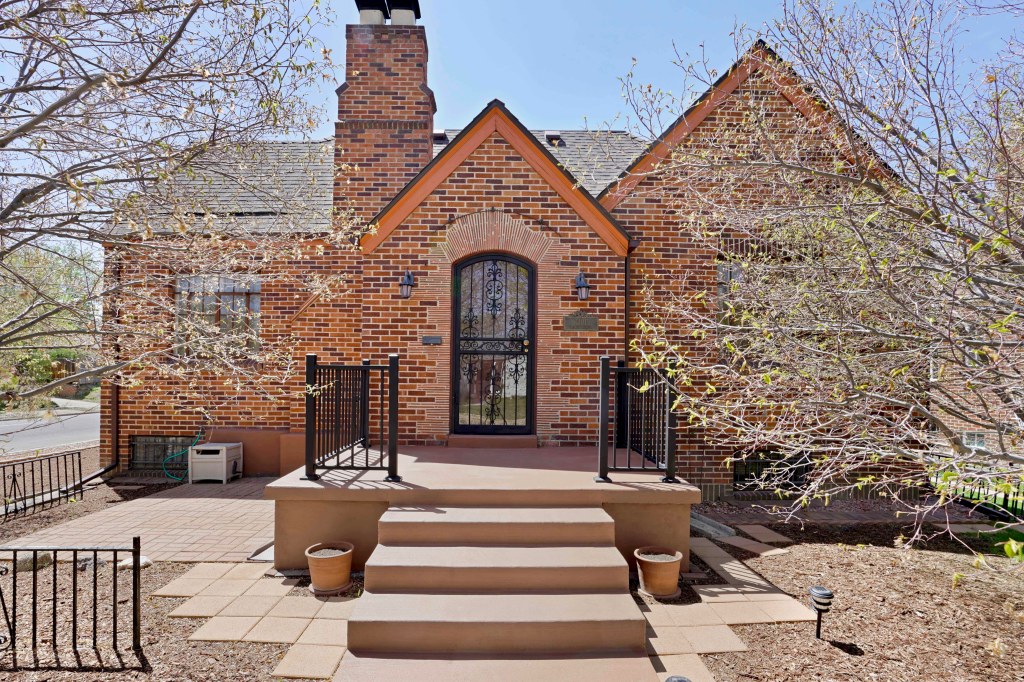
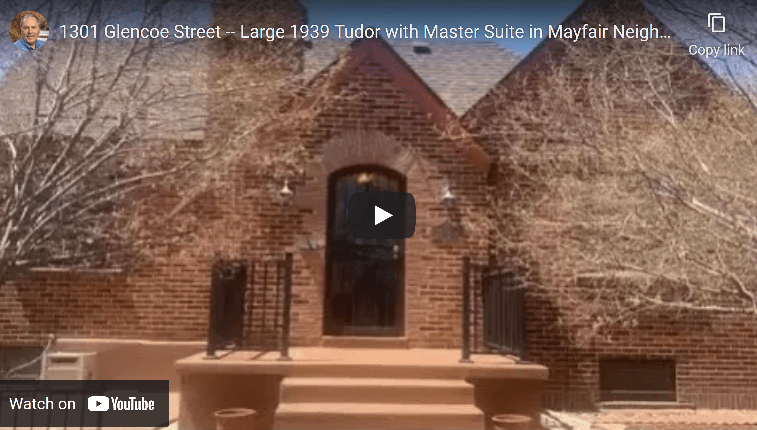
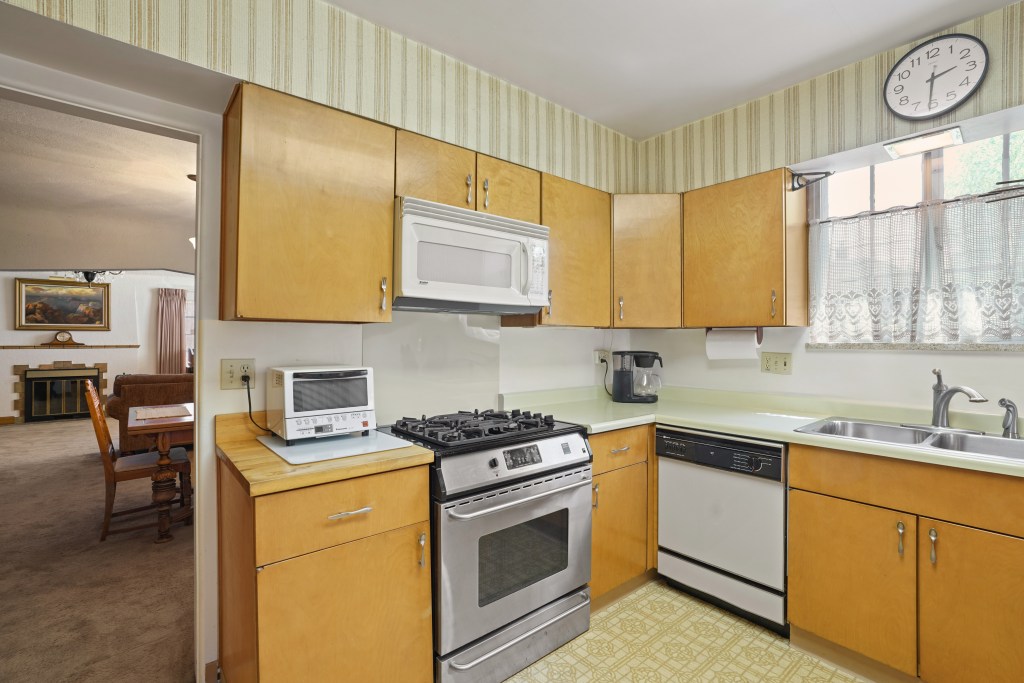
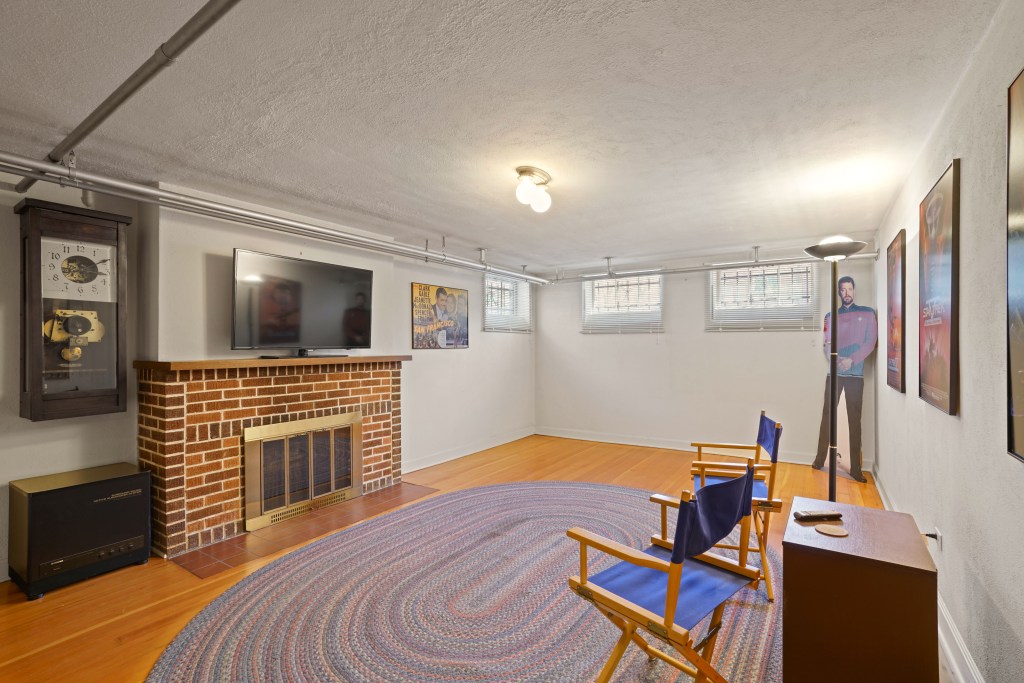
This 1939 brick Tudor at 1301 Glencoe Street was built by a neighborhood builder for his own family and it has many unique features.  You have a rare opportunity to own this very special home since this is only the third time in 65 years that it has been offered for sale.  (I know it well, since I lived two blocks from this house in the 1990s.)  You’ll love the vaulted ceiling in the living room and the beautiful main level hardwood floors.  What sets this home apart from other Tudors in this area is its deceptive size: 4,030 total square feet (3,526 finished).  An extra large master suite with built-ins and private bath, 2 additional bedrooms and a 2nd full bath are on the first floor. Two non-conforming bedrooms, full bath, large family room and a huge workshop are on the lower level.  Flexible room layouts are ideal for a home office (or two) or a hobby room.  A detached garage is accessed from 13th Avenue.  On a price-per-square-foot basis this home comps out well above $1.1 million, but the seller chose to price it to sell quickly.  A broker-only open house will be held on Friday so ask your broker to attend or call Jim Smith to set a private showing.  Also, the narrated video tour (click on thumbnail below) at www.MayfairHome.site is like a showing by Jim Smith.  Click on the thumbnail below to view the video tour. Watch it before calling for an in-person showing.

Are Investors Snapping Up Homes, Squeezing Out Other Buyers?  Yes and No.  

Media reports have created the impression that “Wall Street” interests are dominating the purchase of homes for sale, squeezing out individual buyers and causing the low inventory of homes for sale. That’s not exactly true.

What’s happening is that those purchases are happening through an off-MLS process, with very few on-MLS listings, based on my own observation and experience, being purchased by those large investors.

In fact, I can’t think of even one transaction that involved a large entity purchasing one of Golden Real Estate’s listings. And they certainly did not hire us to buy another brokerage’s listing. All our listings have been purchased either by owner-occupants or by small investors — homeowners themselves, who may have a portfolio of rentable homes or condos.

If you’re a homeowner, you’ve likely received, as Rita and I have, many solicitations to sell your home without putting it on the MLS — a bad idea if you want to get the highest price for your home. Also, brokers like me regularly receive emails and texts asking whether I have a “pre-MLS” listing that they or their client could buy “as is” before it’s put on the MLS. My standard reply to such solicitations is that I would never encourage a seller to sell their home without putting it on the MLS, because that’s a sure way to get less than their home is worth. I consider it my responsibility as their agent to get the highest possible price by exposing their home to the maximum number of buyers. That is not achieved by selling one’s home to an investor without putting it on the MLS.

Media experts and others continue to treat the low active inventory on the MLS as the result of reduced number of homes being entered on the MLS, including by off-MLS sales. In fact, the number of new listings this April was higher than both prior Aprils, but the number of active listings keeps declining because those new listings sell so quickly.

Yes, some of those off-MLS sales might have ended up on the MLS if they had not been solicited, but I think mostly they are homes which the owners had not intended to sell before they got “an offer they couldn’t refuse.”

In researching this topic I found a March 31, 2022, article from The Washington Post which highlighted this very problem of big investors buying up homes and converting them to rentals. Using data from Redfin, it reported on major spikes in such purchases from 2020 to 2021. The Denver market had less such activity than most other major markets, but still the percentage rose from 8.4% in 2020 to 12.4% for 2021.

Above is a chart from The Post’s article, based on the Redfin data. Each of those thin lines represents a different metro area. I inserted a carrot symbol at each end of the line for transactions in the Denver metro area. What’s remarkable is that all but two of the metro areas show a spike in investor purchases in 2021. Those metro areas that didn’t show a spike are New York City and adjoining Nassau & Suffolk Counties.

It’s hard to ignore that the pandemic must have played a role in that abrupt rise in purchases by big investors, defined in that article as entities with 100 or more purchases.

The article confirmed that these transactions typically originated from letters or postcards sent to homeowners offering an off-MLS purchase of their homes “as is.” It also showed that majority non-White suburbs experienced most of this activity, giving the process a racial tinge I didn’t expect to see.

Here’s an excerpt from that March article: “In Charlotte and elsewhere, according to The Post’s analysis, investors have purchased a disproportionate number of homes in neighborhoods where a majority of residents are Black. Last year, 30 percent of home sales in majority Black neighborhoods across the nation were to investors, compared with 12 percent in other ZIP codes.” The article didn’t claim that the letters and postcards targeted such communities, only that most sales occurred there.

‘Community Solar’ Makes Solar Available to Condo Owners and Apartment Dwellers  

Driving around the metro area and elsewhere, you have probably noticed huge installations of solar panels on open land and wondered who built and who benefits from them.

Bigger installations, such as in the Mojave Desert, are utility-scale installations owned by electric utilities to replace fossil-fueled facilities. Smaller installations, such as the one north of 64th Avenue on Highway 93, are owned by community solar companies or non-profits.

The concept of community solar is to rent or sell portions of such installations to individual utility customers. The kilowatt-hours generated by those solar panels are then credited to the usage on subscribers’ electric meters.

It’s a perfect solution for customers like Rita and me, who sold their home and are now living in an apartment or condo building where they can’t install their own solar panels. The really neat thing about community solar is that when you move, your solar generation is merely reassigned to your new electric meter — no need to buy new panels.

Small businesses can also take advantage of community solar. Golden Real Estate, for example, moved last November from its solar-powered office on South Golden Road into a storefront on Washington Avenue in downtown Golden. Community solar is the only way that we can continue to be solar-powered since we can’t install solar panels.

Denver-based SunShare describes itself as the nation’s oldest community solar company with over 10 years’ experience building and maintaining “solar gardens” across the state. Their website says that they have built 116MW of solar panels and have 14,000 subscribers and three utility partners. Learn more at their website, www.MySunShare.com.

Community solar was legalized in Colorado in 2010 with the passage of the Community Solar Gardens Act  (HB 1342). The following year, SunShare opened for business, and in 2015 the Colorado Energy Office partnered with GRID Alternatives to construct a community solar demonstration project to serve low-income Coloradans.

Colorado Springs Utilities was the first utility to create its own solar garden for 278 subscribers in 2011. That 0.5-MW installation has since grown to a 2-MW installation serving 435 customers.

Community solar can be a good deal for rural landowners, providing a predictable revenue stream for otherwise non-producing acreage.

Renting or buying photovoltaic panels in a solar garden costs money, so you’re still paying for electricity, but the rule of thumb is that what you spend on community solar is about 10% cheaper than buying the same amount of electricity from the utility.

Some of us don’t worry about the size of the savings but simply “go solar” because it’s the right thing to do.

To learn more, in addition to visiting SunShare’s website, I suggest Googling “community solar Colorado.” You will find other companies offering community solar, learn the history of it in Colorado, and decide whether it is right for you.

You may find that existing solar gardens are sold out and you’ll be put on a waiting list for a future solar garden.

Whether you are putting solar panels on your own property or subscribing to a solar garden, consider upsizing your investment instead of basing it on your current usage, since the chances are that you’ll be buying an electric vehicle and you’ll want electricity from the sun to power it, too.