The best selling vehicle in America for many years has been the Ford F-150 pick-up, so 2021 is bound to be a watershed year, given the number of electric pick-up trucks expected to hit the market — including, by the way, an electric F-150, which has been teased for at least a year.
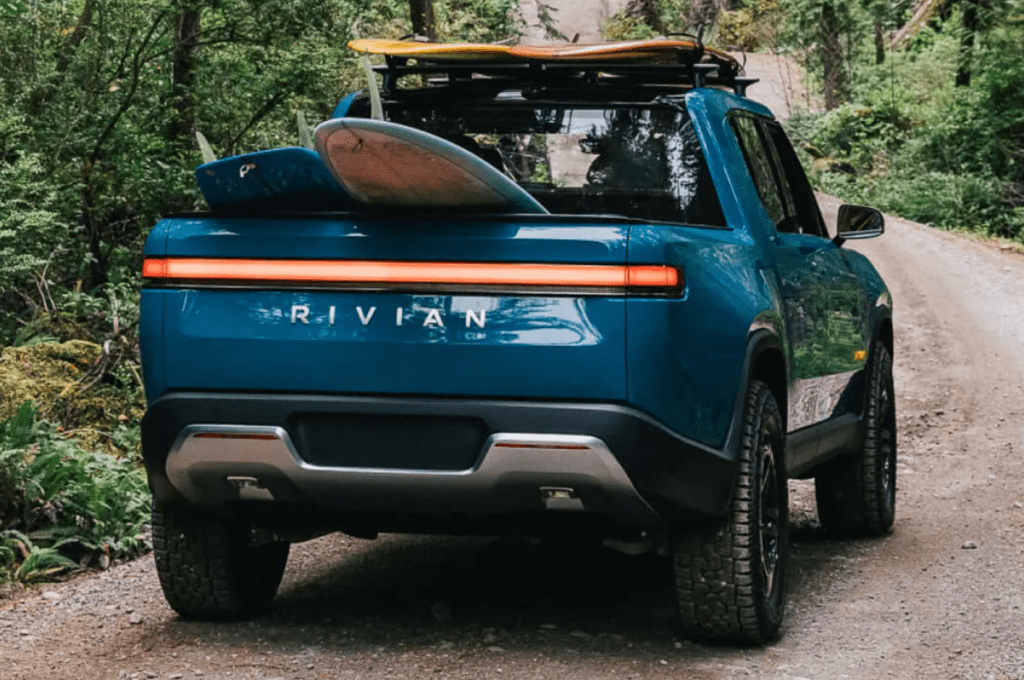
Rivian is furthest along and will beat Tesla’s entry by several months. Rivian is simultaneously releasing an SUV and 4-door pickup, which appeal to the same demographic. The company is backed by Amazon, which has boosted Rivian’s financial situation by ordering 100,000 delivery vehicles to replace the blue Amazon vans we see every day in our neighborhoods. Some of them are already in service, but not in the Denver market. You may have seen an Amazon commercial featuring the new van.
Ford F-150 Electric
The F-150 Electricbegins production this year. Tesla’s Cybertruck may be in production by year’s end but certainly in 2022.
Jim Smith and the broker associates at Golden Real Estate are especially knowledgeable about solar powered and sustainably built homes, so consider us first if you are contemplating buying or selling such a home. Between us, we own every model Tesla vehicle — S, 3, X and Y — so we’re experts in electric vehicles, too. Our solar-powered office is “net zero energy,” with no gas service, and our Xcel Energy bill is $10 per month (the cost of being connected to Xcel’s grid), so we know what we’re talking about. Jim’s home is near-net zero (because he still has natural gas service), and he has a large network of friends with such homes, at least one of whom is planning to sell in 2021. Call Jim at 303-525-1851 if you’d like to talk.
It’s that time of year when I like to remind readers about the advantages of EVs in snow and cold weather. Here’s what you need to know.
1) No warming up is needed. Just put the car in Drive and go! Also, the cabin will be warm within 1/2 mile because it doesn’t require an engine to warm up first. In my Tesla I can turn on the heat with my phone app a few minutes earlier so the cabin, steering wheel and seat are all warm when I get in the car. Also, when I park the car for brief periods (such as when shopping), I can leave the heater on so it’s warm when I return, .
2) Your car will never break down, stranding you in a freezing car on the side of the road. The only time you see an EV on the side of the road is if there’s a flat tire or an accident. Stuck in a snow drift? The heater will keep you warm as long as you need, consuming only 3-5 miles of range per hour — and no carbon monoxide!
3) Because of its low center of gravity and its typical 50/50 front/back weight distribution, an EV handles snow-covered roads really well. My all-wheel-drive Teslas handle much better than my AWD 2009 Lexus RX 400h did in snow, aided by its standard traction control and stability control.
4) Used EVs are your best buy. Older AWD Tesla Model S’s can be bought, undamaged and running like new, starting around $40,000. And older Tesla Models S and X come with transferrable lifetime free supercharging coast-to-coast when purchased privately instead of from Tesla.
Here are the first 3 paragraphs of a story just published on greencarreports.com:
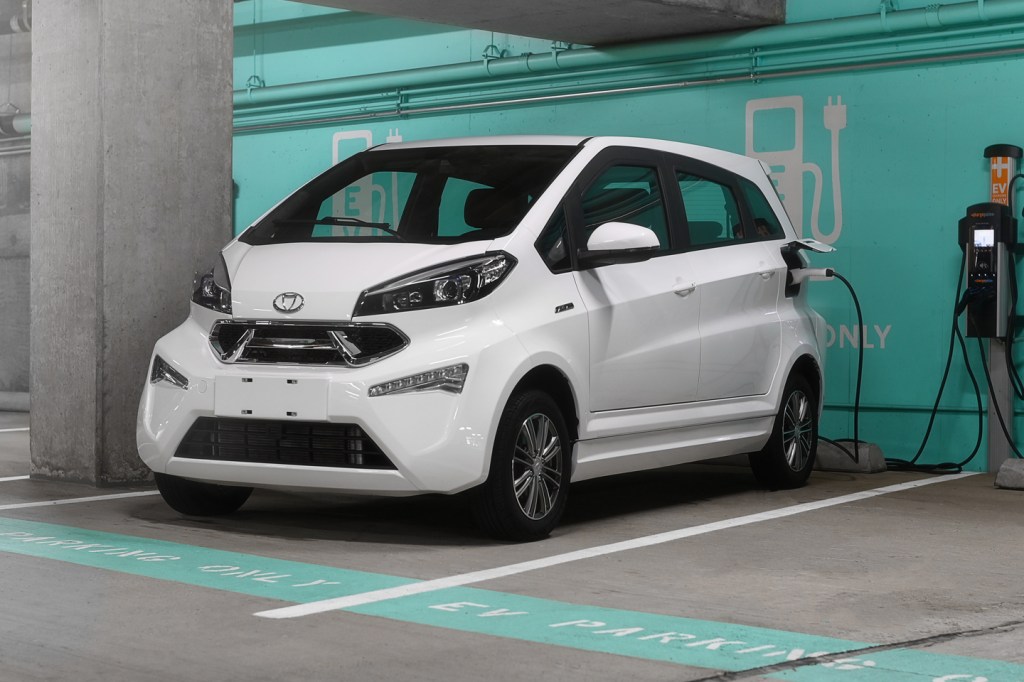
“Kandi America announced Tuesday that the lowest-priced of its two small, Chinese-made electric cars has been EPA certified and cleared for California roads, and the company is preparing to start deliveries in the state.
“Considering both the federal EV tax credit and Kandi’s eligibility for the state’s $2,000 incentive, the Kandi K27 has an effective cost of just $7,999, the company reported.
“In September, Kandi updated its website to include estimated EPA-cycle numbers, with an expected 59-mile range from the 17.7-kwh battery pack. Kandi lists a seven-hour charge time on 240V AC (Level 2). The K27 isn’t for everyone, though. While it appears to be certified as a full-fledged passenger car, it can only reach 63 mph.”
Note: The $7,999 price is computed after including a $2,000 California tax credit. The tax credit Colorado is $4,000, which would bring the effective price to only $5,999 in Colorado.
I have written before about why I think driverless cars should never be allowed, but this time I’m going to suggest why the public — you — would likely reject the idea.
During the transition to a driverless car, you’ll get to experience, as I already do, some of the features required for a car to drive itself. Those features include traffic-aware cruise control and lane management dependent on multiple cameras, radar and numerous sensors. I have been using those features on my Tesla for quite a while.
The first thing to recognize is that a self-driving car will always err on the side of caution. Here are just three examples: Let’s say you’re driving a city street with parked cars but no line between the travel lane and the parking lane. Every now and then your car will mistake a parked car for a stopped car and simply stop.
Or you’ll be driving along and a car coming the other direction with make a left turn in front of you. Erring on the side of caution, your car will abruptly apply the brakes even though it’s clear to you that braking was not needed.
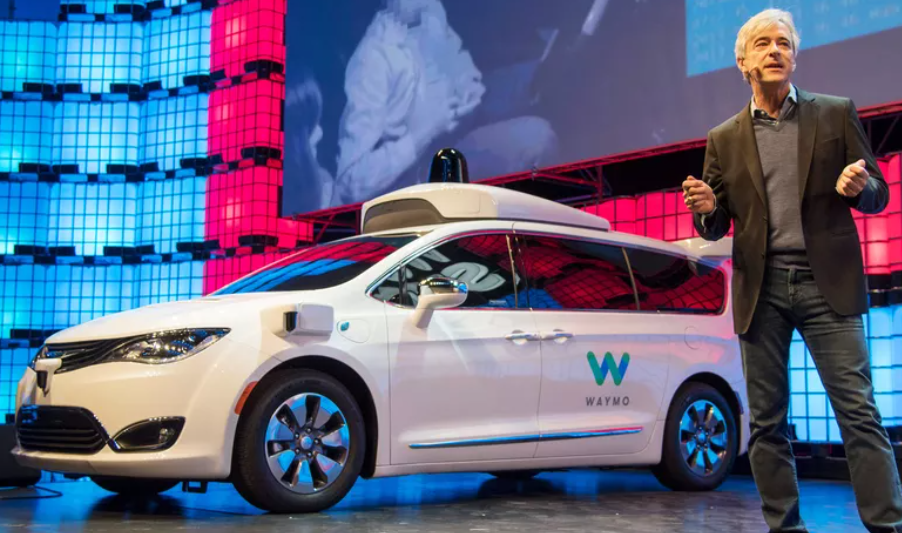
John Krafcik, CEO of Waymo, introduces driverless car
Or you’re driving on a road with no bike lane, but there’s a cyclist cruising along at 10 mph and no room to pass without crossing the yellow line, which your car won’t do. You car slows to 10 mph.
My Tesla knows the speed limit on all roads based on GPS information, but 1) sometimes the GPS information is wrong, and 2) sometimes there’s a lower speed limit in effect for school zones or construction. Your self-driving car will plow through those areas, totally oblivious!
Wildlife poses a special problem. As a human, you know to slow down if an unpredictable deer is next to the roadway. You driverless car doesn’t have that judgment.
Think of all the times you depended on exchanging eye contact or body language with another driver to know whether to yield or not yield. Think about two lanes merging into one, or about another car being driven erratically. Think about going off road. Think about anything other than driving on a dedicated highway with other driverless cars.
Think about seeing someone in distress on the side of the road or within sight of you. Think about witnessing an accident. Your car will want to leave the scene of the accident rather than stop.
Think of when the painted lanes have disappeared due to wear and only a human could figure out where to go. Or lines that have not been removed completely when new lines were painted.
Red light runner hits Waymo van in Arizona (ABC 15 photo)
In Golden, where Hwy 6 crosses Colfax Avenue, it’s not a 90-degree intersection. If I’m in the left lane traveling west through that intersection, my Tesla consistently misinterprets the dashed guide lines for the left-turn lane next to me and swerves into eastbound traffic thinking that it’s a left curve. Fortunately, I have my hand on the wheel and make the immediate correction.
I hope by now you have gotten the impression that self-driving software can not anticipate every conceivable (or inconceivable) situation and could lead a driverless car into desparate situations.
2020 will be a “watershed year” when it comes to the adoption of electric cars and trucks. By the end of this year there will likely be twice as many models of EVs being sold, including by the major automakers.
Mustang Mach E trunk under hood
Ford, for one, is now selling the Mustang Mach E, an electric crossover with up to 300 miles of range, selling for $43-50,000. Tesla is now delivering its Model Y, a crossover built on the same platform as the successful Model 3. It too boasts a range up to 300 miles and sells for $43-56,000. I predict it will be Tesla’s best-selling model so far.
Jaguar I-Pace
Mercedes is bringing its EQC 400 4-matic crossover to market this year, joining the already successful Jaguar I-Pace and Audi e-tron. Volvo is bringing to market the XC40 Recharge SUV, as well as the Polestar 2 sedan, which is marketed in partnership with the Chinese firm Geely.
Rivian platform for both its truck and SUV is cleaner than most because it has four motors, one in each wheel hub.
Rivian is bringing out both an SUV and its electric pickup this year. Instead of one electric motor between the front and rear wheels, it has a motor in each wheel hub, allowing it to do a “tank turn” – literally turn on a dime like a tank! Another electric pickup is coming next year from Bollinger, when the Tesla Cybertruck is also expected.
The Porsche Taycan is already in its second year of production.
Mini Cooper has already started selling its SE Electric. Hyundai is in the second year of selling its Kona electric, which has a 258-mile range and sells for just under $37,000. The latest Nissan Leaf has a range up to 226 miles for $38,200. Chevrolet continues to sell the Bolt.
Kelley Blue Book first drive – click on picture to see 5:26 YouTube video.
The newer brands of electric vehicles still enjoy the $7,500 federal tax credit plus the $4,000 Colorado tax credit, making them less costly than equivalent gas-powered cars.
Personally, I recommend buying used EVs, which are as good as new (because they have so few components that can fail), for under $10,000 to $30,000+. Green Eyed Motors in Boulder specializes in the sale of used EVs and has 15 in stock as I write this, including several under $10,000 and this 2013 Model SPerformance below, which probably sold new for $125,000. Asking price: $35,999.
Perhaps you, like me, have considered investing in a home battery system — not to go “off grid” so much as to survive blackouts. Simply having solar does not give you such protection, because when the grid goes down, your solar panels do not generate electricity. That’s required by power companies, because they don’t want you pumping electricity into downed power lines as their technicians work to repair them.
Personally, I’m holding out for a future in which the energy stored in my EV batteries can be tapped to power my home during a blackout. There’s a term for this called vehicle-to-grid, but a more accurate term would be vehicle-to-home, since it would be done in isolation from the grid.
Because I have two EVs with combined battery capacity of 170 kilowatt-hours, I have a lot of stored power available to me at any time, even if those cars are not fully charged. For example, 100 kilowatt-hours can provide 5,000 watts of household electricity for 20 hours.
There are commercially available inverters for creating a 120-volt outlet in any car, either gas or electric, but inevitably some automaker — probably Tesla — will create an interface that allows for the electricity stored in one’s EV battery to be tapped for household use during a blackout.
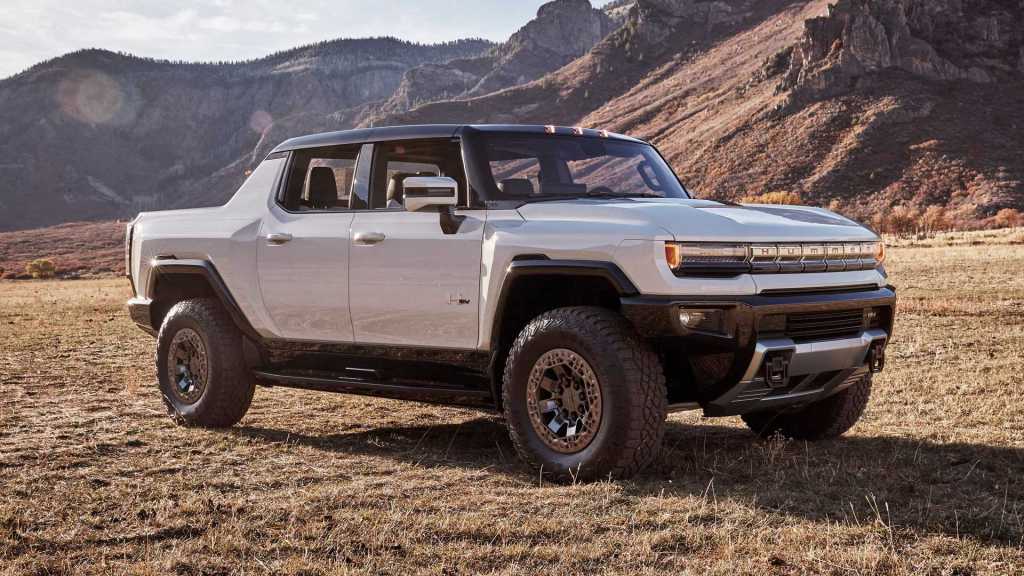
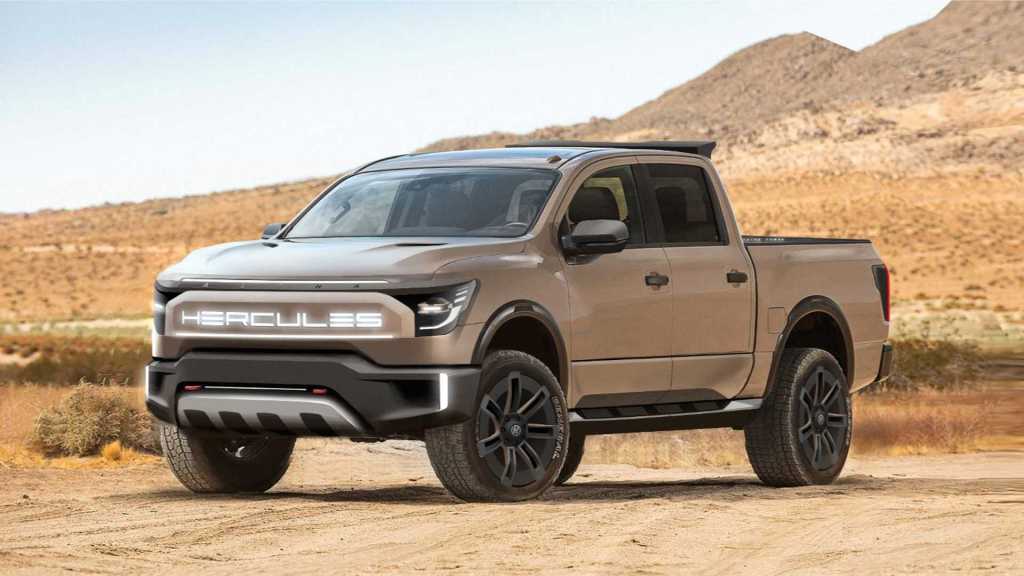
Several electric trucks are going to hit the market in 2020 and beyond, and each will have 120 and possibly 240-volt outlets for field power, which is a good start. You could run an extension cord to power critical home appliances.
You may think this claim is counterintuitive, but consider the following:
Electric cars never need to warm up. Get in, put it in drive and go! (In Teslas, there’s not even a “Start” button.) Moreover, your cabin will be warm in less than 1/2 mile, because it doesn’t depend on an engine warming up.
You’ll never break down. There is hardly anything to fail. Remember, it’s just a battery and a motor (or two). You’ll never stall and you’ll never need a boost. There are only 50 moving parts in an electric car. What can fail? I like to tell people that the only time you’ll see an EV on the side of the road is if there’s an accident or a flat tire or the driver needs to duck behind a bush.
With their low center of gravity and 50/50 front-to-back weight distribution, electric cars handle better and more safely on wet or snow-covered roads. The battery in most EVs is mounted underneath the cabin. My AWD Teslas perform better in snow than my AWD 2009 Lexus RX 400h did. Here’s a 11-minute YouTube video of all three Tesla models being test-driven on Tesla’s Alaska test-track:
Imagine the worst winter scenario, where you get stranded in the snow and need to survive overnight or longer in your car. An EV is perfect for that situation, because you won’t have to stop and start your gas engine to keep warm and worry about carbon monoxide poisoning. The EV will lose less than 5 miles of range per hour to keep you warm. And it won’t matter if your car is upside down. If you charged your car beforehand, you’ll have long-term warmth.
One of my favorite EV features is the ability to leave the climate system on when I go into a store or meeting on a frigid (or super hot) day. When I return to the car, it will be at 70 degrees. If I’m going to be in a long meeting, I can turn on the heat or A/C using my smartphone app as I’m leaving the meeting room and know that the car will be comfortable by the time I get in it.
As I wrote last month, the best deal in electric cars is a used one. According to Kelley Blue Book (www.kbb.com), my good-as-new 2015 Tesla Model S 70D has a private resale value of $33,402. That is crazy. I paid $93,000 for it new.
In the wake of last Saturday’s green homes tour and electric vehicle showcase, I’d like to share the advice I give to people who ask me about investing in solar power and buying an electric car.
As much as I wish it weren’t so, you will not recoup what you spend on solar panels, insulation and other green home improvements for your home when you sell it. As with any improvement, you will receive a percentage of what you spend, but it will not be anywhere near 100%. Only make those investments because you’ll enjoy the comfort and savings for at least a few years — and because it’s the right thing to do.
Regarding electric cars, I recommend buying a used EV. The used car industry has yet to properly value used EVs. Currently electric cars are devalued the same way gas cars are devalued, which doesn’t make sense. Consider a 4-year-old gas-powered car with 100,000 miles on it. You can probably get it for half its original price, because so many components, such as transmission, timing belt or fuel pump, are worn and might fail. But none of those components exist in EVs. There are under 50 moving parts in a Tesla. The same age EV is simply as good as new.
A used Tesla built before mid-2017 is an especially good deal, because lifetime free supercharging transfers to the buyer (unless purchased from Tesla). I’ve seen many Tesla Model S cars for sale online under $40,000, less than half their original price. Here’s one I found just now on autotrader.com….
We all know that a vehicle is “totaled” when the cost of repair is higher than its value after making the repair.
With electric cars such as Rita’s and my Teslas, the math changes rather dramatically. Except for collision damage (which is less likely because of the cars’ advanced driver assistance features), it’s hard to imagine a repair that would not be worth making.
The typical car with an internal combustion engine is often totaled because a new engine or transmission, like many other drive-train related repairs, can easily cost more than the resale value of the car. Not so with an all-electric car such as our Teslas.
Only 3% of the metal in a Tesla is steel — the body and frame are aluminum — so rust is not an issue. The two electric motors, which are not prone to failure anyway, could be replaced in 15 minutes. There is no transmission, timing belt, fuel pump, exhaust system, etc. In fact there are reportedly fewer than 50 moving parts in the entire car.
The battery, which barely degrades at all, can also be replaced in minutes, not hours, and, like the two motors, is warranted for eight years, unlimited miles. For me that equates to a 250,000-mile drive-train warranty. If, say, the battery needs replacing 10 years from now, the cost will probably be $5,000 or less by then — well worth the expense.
As you probably know, the operating system of the car is regularly updated by Tesla “over the air” for free. Our two cars have many features and functions that they didn’t have when they were built years ago and will have even more features in 2047, when I turn 100.
So, whereas one can speculate on the useful life of a traditional gas-powered car with a steel body, you really can’t speculate on the life expectancy of an all-electric car.
If you buy a Tesla, you may want to put it in your will, because it may outlive you.
Would you like to learn more about electric cars? On Sat., Sept. 14, from 10 am to 3pm, we’re hosting an EV round-up in our 17695 South Golden Road parking lot. Get more info at www.DriveElectricWeek.info.











 Jim Smith's Blog