
 It was a good day for Colorado’s 1.9 million HOA members on July 1, 2015, when all HOA managers were required to be fingerprinted, educated about their functions, and licensed by the Division of Real Estate.
However, like all such laws, the Community Association Manager (CAM) program had a 3-year sunset requirement, meaning that it had to be studied by the Department of Regulatory Affairs (DORA) for its effectiveness and renewed (or not) by the General Assembly (Colorado’s legislature).
So, DORA submitted its analysis of the program, recommending that it be renewed and improved, but on April 10, 2018, the Senate Committee on Finance voted 3-2 to “postpone indefinitely” (i.e., kill) HB18-1175, the bill to renew the program for another five years. It was a party-line vote, with all Republicans voting against renewal and both Democrats voting for renewal.
In DORA’s report recommending renewal, it was noted that, because the law was only two years old, “there is little data to rely on in determining how much harm related to management activities exists….”
“However, two Managers and one Management Company have already been disciplined for misconduct related to management activities. All of these cases were related to theft of association funds. Additionally, many of the complaints received by the Division and reported during the sunset review reflect the findings of the 2012 sunrise review [which suggested the law].
“Community Association Managers have access to association funds, which is often in the millions of dollars. An association relies on these funds to ensure the common areas, facilities and, in some cases, buildings are well maintained, and the loss or mismanagement of these funds can be devastating to a community. As a result, the owners may suffer large assessments in order to bring the reserves up to an amount necessary to pay for the daily operation of the community, which may include water bills, trash removal, landscaping and professional services, not to mention necessary upkeep such as repainting buildings, replacing old roofs, repairing driveways and any emergency situations that may arise.
“Ensuring Community Association Managers do not steal or mishandle association funds is an important reason to regulate the industry. The Division has the ability to audit the business records of Community Association Managers, and through these audits, the Division may uncover misconduct….
“In fiscal year 16-17, the Director issued one cease and desist order against a company and 11 cease and desist orders against individuals, and revoked one individual license.”
[End of excerpt from the DORA report.}
Colorado is known as a low-regulation state. In other words, if regulation is not deemed necessary for the public safety, the default is to not regulate an industry.
Mortgage brokers, for example, were not even registered in Colorado until the mid-2000s, and it was another couple years before they were fingerprinted and required to take classes and pass a state exam in order to be licensed. Prior to that, a felon who had studied up on identity crime while in prison could claim to be a mortgage broker as soon as he was released and begin taking financial information and Social Security numbers from unsuspecting homeowners or home buyers!
HOA members were able to breathe a sigh of relief when the state decided to license Community Association Managers in 2013, with full implementation by July 2015, and they should be concerned that a Senate committee killed renewal of it.
The actual end of the program doesn’t happen until July 1, 2019, which means the 2019 session of the General Assembly could pass a renewal of the CAM program in time to avoid a lapse in regulation.
 First, let’s distinguish between “driverless” and “self-driving” cars. My Tesla is self-driving when I employ its autopilot features, but I must keep my hands on the steering wheel. “Driverless” means there’s no driver — also called “autonomous” cars.
 I think it’s just fine that Tesla continues to improve the car’s driver assistance features, but I’m convinced that going full-driverless would be a big mistake. Accidents involving self-driving cars have recently made the news, although it has been reported that in each accident another, human-controlled car was at fault. In one video you can see a car careening diagonally towards you from across the highway.
 I’m not in the heating, ventilating and air conditioning (HVAC) business but I do have a pretty good understanding of the different methods of cooling a home, so I thought I’d review them this week. I welcome input from HVAC experts, so maybe I’ll have an update/correction for you next week.
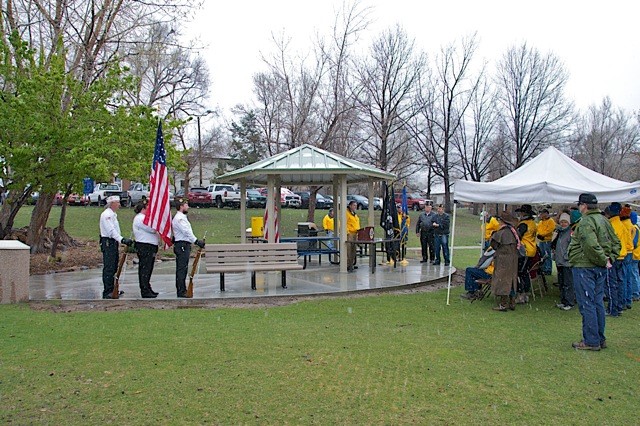 Last Saturday, the Lions Club of Golden dedicated to “All Golden Veterans” a gazebo it funded for the city’s Vanover Park. This is the 5th gazebo that the club has provided for city parks. Visit
  It’s not uncommon for us to get a phone call or drop-in from someone who would like to buy but who might not be in a position do so at this time. They are looking for a rental, and for that we refer them to trusted companies that specialize in rentals. Sometimes the caller or visitor will inquire about rent-to-own, but we explain that it is nearly impossible to find a seller in this market who would consider rent-to-own when they can sell now for top dollar.
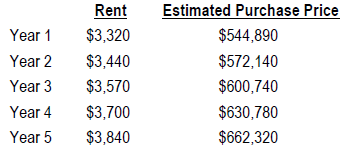 As you might expect, these figures are subject to adjustment, since (1) the listed price may not be the final sale price, (2) the home may need renovation work, and (3) there may be other costs associated with purchasing and owning the property. These and other conditions are spelled out in the lease agreement that is signed by the prospective tenant.
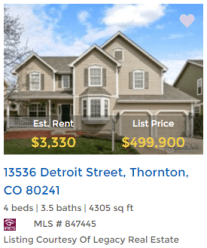 At right is how an MLS listing appears when displayed on the company’s website, showing the listing price on the right and the estimated initial rent on the left.
 This Sunday, April 22nd, is the 48th anniversary of Earth Day. Here are some of the ways you can participate in this annual event and do your part in preserving this planet for future generations.
 As homeowners 65 and over well know, they get a discount on their home’s property taxes once they have lived in their home for at least 10 years. It’s called the “senior property tax exemption.” For those who qualify, 50% of the first $200,000 in actual value of their primary residence is exempted from property taxation. At 100 mills, that’s worth $720. Rita and I have been in our current house for six years, so we can look forward to saving about that much on our property taxes if we stay put for another 4 years – and if the state legislature continues to fund it, as I’ll explain below.
