
 In a real estate transaction, the seller’s biggest single expense after brokers’ commissions is typically the title insurance policy — a little understood cost of selling real estate. What does it cover, and why is it required?
While most insurance protects you from future risks, title insurance protects you from past risks. Title insurance guarantees that you get title to property free and clear of any liens or claims of ownership. Since we consider this the responsibility of the seller, that is who pays for the title insurance, although I understand that in some states it is common for buyers to pay for it.
Another difference between title insurance and other types of insurance is that the premium is paid only once for lifetime coverage.
Although it’s unusual for a claim to be made on a title policy, it does happen. For example, I once had to file a claim regarding a building I purchased in 1991. A year after closing, I received a “lis pendens” (suit pending) notice from a Texas lawyer. I simply forwarded it to Land Title, which had issued the title insurance policy, and they settled the matter at no expense or inconvenience to me.
Unless it’s a cash transaction, there is a “piggy-back” policy issued to protect the mortgage lender. This policy is for the amount of the loan, versus the owner’s policy that protects the buyer up to the full purchase price. Such policies cost less because they require no additional work by the title company, and are typically issued at the buyer’s expense.
There are two kinds of title companies. There are direct underwriters, such as Fidelity National Title or Stewart Title, while other title companies serve as agents for those larger companies. Since the policies are underwritten by those big national companies, you’re not really at risk by using an agent company. However, you could have a problem if the agent company holding part or all of your down payment goes out of business prior to closing. Those funds are supposed to be segregated in escrow accounts, but when commingling or misuse of funds occurs — as it has in the past — it can be a big deal.
Since Colorado has a somewhat antiquated regulatory environment in this arena; it is recommended that buyers and sellers obtain a “Closing Protection Letter” (which typically costs $25) to better protect their monies throughout a real estate closing.
All title insurance rates and closing settlement fees are regulated by the Division of Insurance. However, these filed rates and fees can still vary substantially, because of various discount programs offered by each company. The cost of title policies can vary by $100 to over $1,500, depending on the transaction; and the fee for conducting a closing can range from $100 to $750. Because of these variations, I recommend that sellers visit www.CompareTitleCompanies.com before selecting their title company.
 It was a good day for Colorado’s 1.9 million HOA members on July 1, 2015, when all HOA managers were required to be fingerprinted, educated about their functions, and licensed by the Division of Real Estate.
 First, let’s distinguish between “driverless” and “self-driving” cars. My Tesla is self-driving when I employ its autopilot features, but I must keep my hands on the steering wheel. “Driverless” means there’s no driver — also called “autonomous” cars.
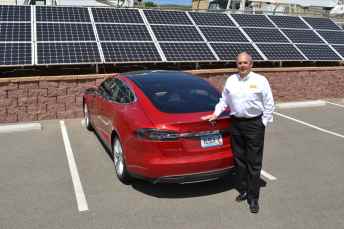 I think it’s just fine that Tesla continues to improve the car’s driver assistance features, but I’m convinced that going full-driverless would be a big mistake. Accidents involving self-driving cars have recently made the news, although it has been reported that in each accident another, human-controlled car was at fault. In one video you can see a car careening diagonally towards you from across the highway.
 I’m not in the heating, ventilating and air conditioning (HVAC) business but I do have a pretty good understanding of the different methods of cooling a home, so I thought I’d review them this week. I welcome input from HVAC experts, so maybe I’ll have an update/correction for you next week.
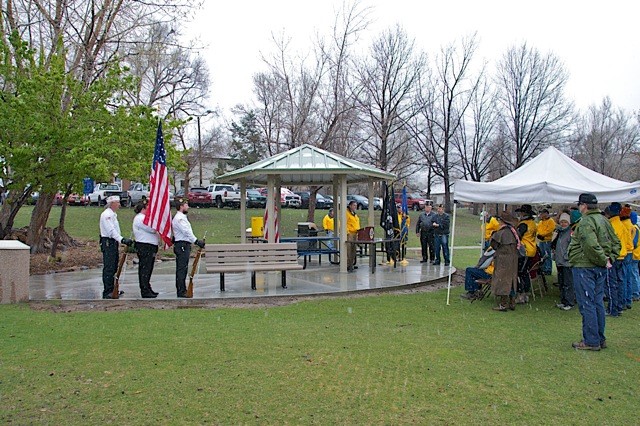 Last Saturday, the Lions Club of Golden dedicated to “All Golden Veterans” a gazebo it funded for the city’s Vanover Park. This is the 5th gazebo that the club has provided for city parks. Visit
  It’s not uncommon for us to get a phone call or drop-in from someone who would like to buy but who might not be in a position do so at this time. They are looking for a rental, and for that we refer them to trusted companies that specialize in rentals. Sometimes the caller or visitor will inquire about rent-to-own, but we explain that it is nearly impossible to find a seller in this market who would consider rent-to-own when they can sell now for top dollar.
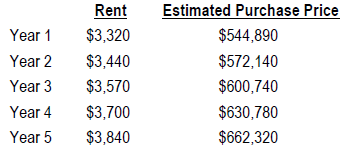 As you might expect, these figures are subject to adjustment, since (1) the listed price may not be the final sale price, (2) the home may need renovation work, and (3) there may be other costs associated with purchasing and owning the property. These and other conditions are spelled out in the lease agreement that is signed by the prospective tenant.
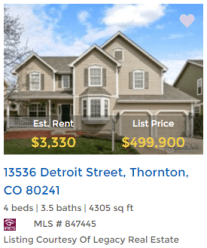 At right is how an MLS listing appears when displayed on the company’s website, showing the listing price on the right and the estimated initial rent on the left.
 This Sunday, April 22nd, is the 48th anniversary of Earth Day. Here are some of the ways you can participate in this annual event and do your part in preserving this planet for future generations.
 Jim Smith's Blog