Lakewood Development Site Just Listed by Austin Pottorff

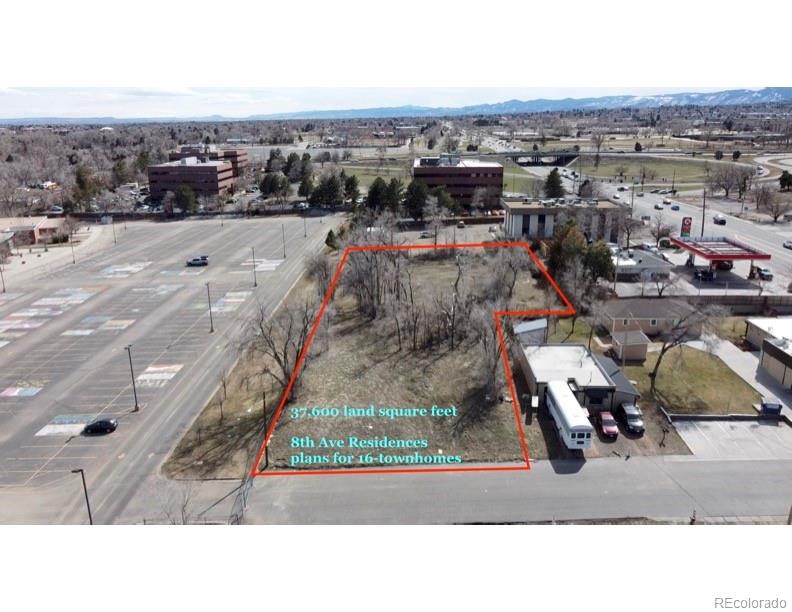
This 0.86-acre parcel at 730 Kipling Street comes with plans for 16 townhome-style units and an open case number with Lakewood Planning & Zoning. It was just listed for $1,600,000. It’s a flat site adjacent to Lakewood High School and near the Kipling/6th Ave. Freeway interchange. That makes it close to both the Denver Federal Center and St. Anthony’s medical campus. Colorado Christian University is also just a few minutes from the site, along with other schools. From this site, you’re only minutes to downtown Denver or downtown Golden, and it’s centrally located in the metro area for ease of travel in all directions. For more details, visit http://www.LakewoodDevelopmentSite.info, or call Austin Pottorff, 970-281-9071,or David Dlugasch, 303-908-4835, for more info or to submit a contract.

What’s the Story With Zillow? Specifically, Why Do Many Real Estate Agents Dislike Zillow?

Zillow is arguably the #1 fixture on the American real estate scene, and it has certainly worked hard to earn your trust and patronage. But many people don’t know how Zillow relates to the rest of our industry and why many real estate brokers/agents don’t trust it the way most homeowners, buyers and sellers do.

When I first entered the business two decades ago, Zillow was already in the business of displaying all real estate listings nationwide, as it does now. Its business model (revenue stream) was to sell agents ZIP codes where they would be displayed next to each listing so that buyers who are interested in that listing would click on one of those “premier” agents to see and possibly buy the house.

The cost of being one of those Premier Agents varied by location, and Zillow would sell each ZIP code to multiple agents, so each agent would get a percentage of those buyer leads based on how much they paid.

Keep in mind that to get those leads had little or nothing to do with how good or knowledgeable that agent was. Their qualification was simply that they paid to be there — as much as $1,000 or more per month for each ZIP code. Many agents have built their entire book of business this way, spending thousands of dollars per month to do so.

It has been a very successful business model, and it antagonized listing agents because their name was not shown next to their listings until recently, as I’ll explain below. That’s the origin of the our community’s discontent with Zillow.

Zillow, as you may know, has experimented — usually with success — in capitalizing on their impressive public awareness. The “Zestimate” has been particularly effective, and Zillow’s computer is good at reminding every homeowner with an email address what the current estimate of their home’s worth is.

One of Zillow’s experiments was to enter the “iBuyer” business where they would actually buy homes and flip them for a profit. Their major competitors, who are still doing that, were OpenDoor and OfferPad. Like those competitors, Zillow started losing money when the market softened, but Zillow was smart to exit that business quickly. They appear to have sold all the Denver area homes that they purchased under that program.

A big change that occurred a few years ago was that Zillow became a brokerage itself, which entitled it to receive a direct feed of listings from every MLS in the country. They don’t have a Denver office, but they do have a few agents with Colorado licenses. As you are likely aware, the member brokerages of every MLS can display on their website all the currently active, coming soon or pending listings of that MLS. That’s true of goldenrealestate.com, and it is also true of zillow.com.

This represented a big change for Zillow, because it now had to abide by the same rules as other brokerages, which included displaying the listing agent’s name, phone number and email address, but when you click on “Contact Agent,” the lead goes to a “Premier Agent” who paid Zillow to get website leads like that.

The fact that listing agents are now listed with contact info next to their listings and Premier Agents are not displayed anymore has softened but not completely overcome the antipathy that Zillow created in the past.

Federal Pacific Electric (FPE) and Zinsco Breaker Panels in Many Older Homes Are Considered a Fire Hazard

A recent email from Alpine Building Performance LLC addressed an issue which is well known to long-time real estate brokers like those of us at Golden Real Estate, and worth sharing with owners of older homes. If your home has a Federal Pacific Electric (FPE) or Zinsco breaker panel, you can expect it to be an expensive inspection issue raised by your buyer’s inspector. Here’s the full email message from Alpine’s owner, Andrew Sams:

What is the cost to replace one of those electrical panels? The blog post suggests a price range of $4,000-$7,000, but my clients have seen much lower prices from the electricians I have recommended. In a typical home, the replacements I have overseen for my clients were in the $2,000 to $3,000 range using my lone eagle electricians.

Follow-up on Last Week’s Post About Potting Soil Being a Fire Hazard

From reader Jim Borland:

Yes, nitrogen fertilizer can be used to make a bomb à la Oklahoma City bombing, though I doubt that the nitrogen fertilizer in Miracle Gro’s potting mix contributed much if anything to the fire that resulted from the insertion of a cigarette butt into the soil. What you missed in taking a picture of the package was the other part of the contents besides the fertilizer. All potting soils these days are made of synthetic products including those made by Miracle Gro. In the case of this particular potting mix it consists of forest products (shredded and chipped wood and bark), coir (shredded coconut husks), composts, peat, sphagnum peat moss, perlite and wetting agent.

All but the perlite and wetting agent are flammable, especially when dry. In this case the soil was undoubtedly not moistened as most soils are that have live plants in them. The nitrogen part of the fertilizer is contained within prills or small plastic coated spheres, here called Osmocote, that release nitrogen with each watering. After a couple of waterings the nitrogen is gone, leaving only the plastic capsule behind. Even with no fertilizer, this and other artificial soils are flammable, and care must be taken when located in a place convenient for snuffing out cigarettes. 

Price Reduced on Downtown Denver Loft!

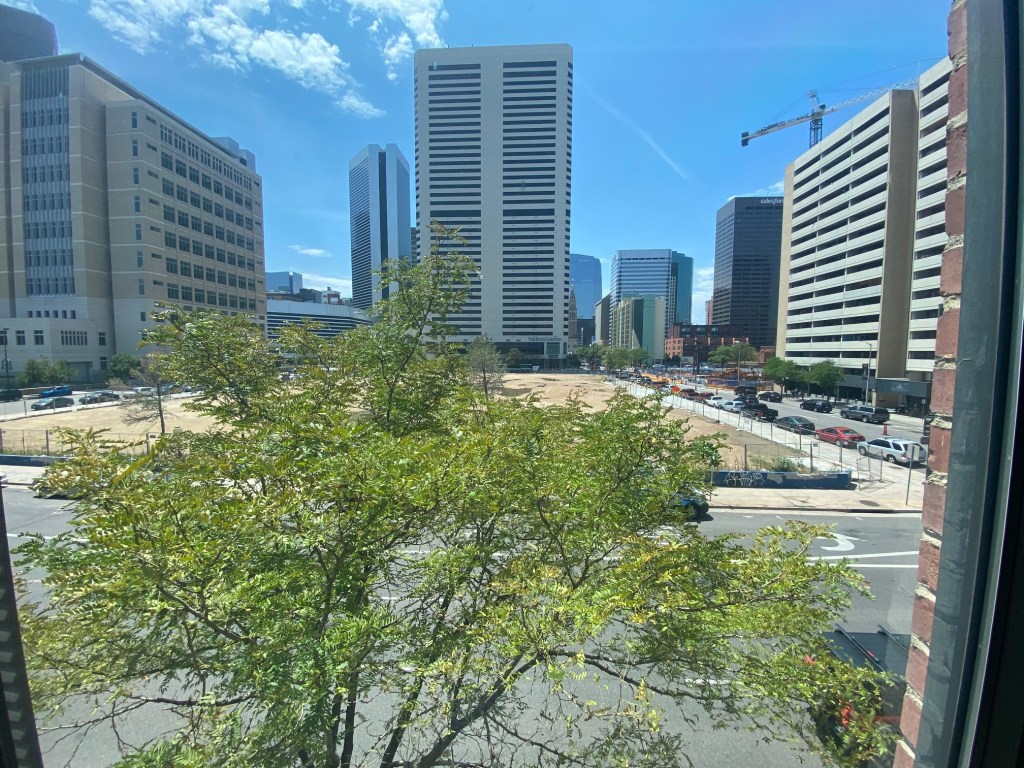
If you’re looking for loft living, this one at 2000 Arapahoe Street #204 is as good as it gets! The listing price has just been reduced to $495,000! Walk to EVERYTHING in Downtown Denver — Coors Field, Performing Arts Complex, 16th Street Mall, Lodo, Union Station, shopping, restaurants, and light rail, including the A-line to DIA. The 12-foot ceiling and massive pillars, plus HUGE windows with views of nearby skyscrapers — this is the loft life you’ve been looking for! You could rent out two of the three included garage spaces for $150-200 each, too! This is a rare opportunity, so act fast. No open houses. Call us or your agent for a private showing! More details and pictures at www.DowntownDenverLoft.info. Here’s a view from one of the loft’s big windows:

Price Reduced on Mountain Ridge Home With Views!

Now Listed for $1,495,000!

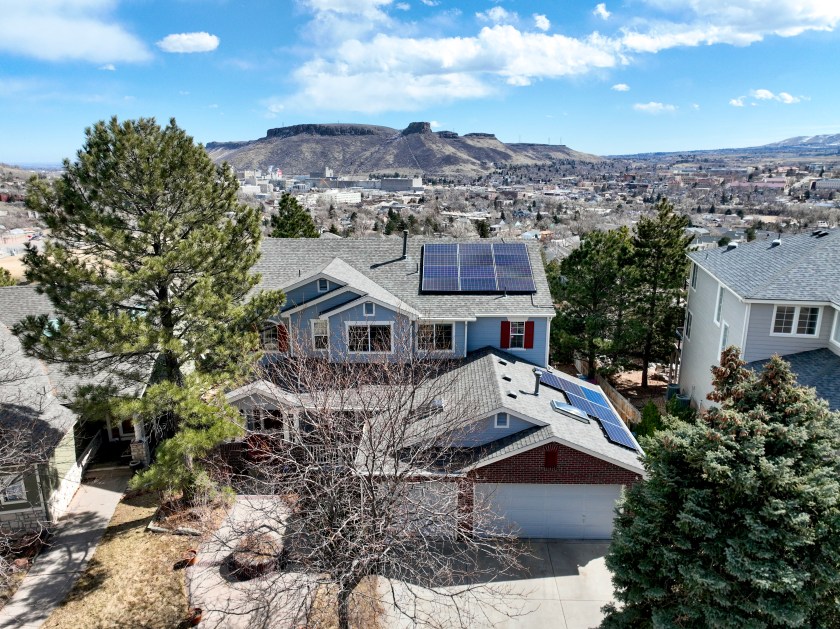
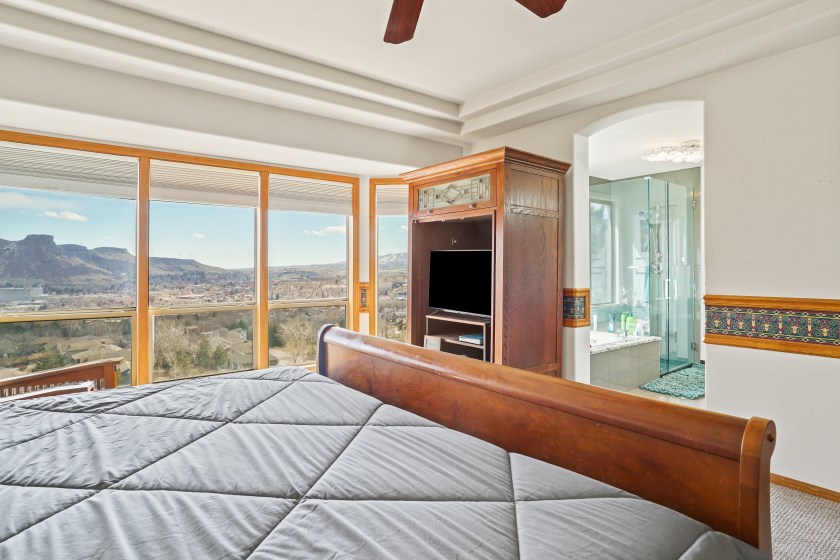
This solar-powered home at 359 Canyon Point Circle was a model home for the Village at Mountain Ridge, the subdivision west of Highway 93 backing to the Mt. Galbraith Park. (There’s a trailhead to the park’s 5 miles of hiking trails within the subdivision.) The seller has made many improvements to the home since buying it in 2002, including a total renovation of the gourmet kitchen and master bathroom, plus adding 11.5 kW of solar panels which meet all the electrical needs of the home. The main-floor deck was also completely rebuilt with composite decking, metal railings and a breakfast bar for enjoying the sunrises over South Table Mountain and the City of Golden, which are visible even from the walk-out basement. A walking path near this home allows children to walk safely to Mitchell Elementary School via a pedestrian bridge that crosses the highway. To appreciate all the features of this 5-BR, 4,106-sq.ft. home, take a video tour at www.MountainRidgeHome.com.

Lakewood Duplex Just Listed by David Dlugasch

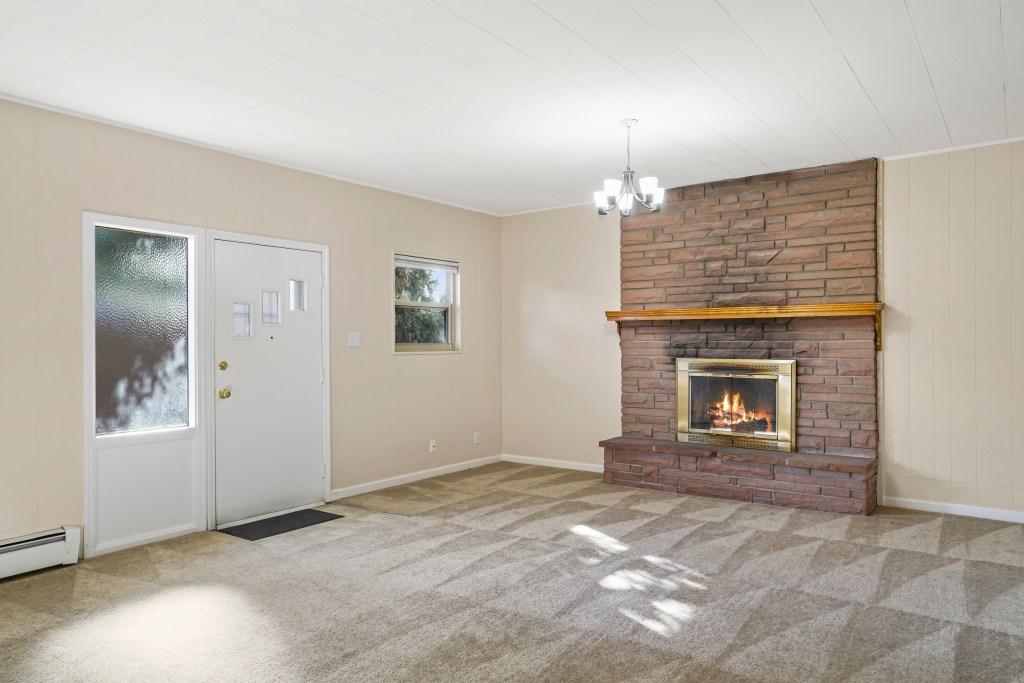
This is a great duplex at 1802-1804 Simms Street! It works for a mother-in-law and family or as a 2-rental unit with great rental income. One unit, 1804 Simms, is 1600 sq. ft. and has 3 large bedrooms with double closets. The primary bedroom has a 3/4 bath. It has a large carpeted living room with a non-functional wood-burning fireplace. The kitchen is open with an eating area and a laundry closet with washer and dryer. 1802 Simms measures 950 sq. ft. Its primary bedroom has new carpeting, new paint, and a double closet. Another room is a non-conforming bedroom and can be used as an office or hobby room.  The entrance has a foyer with slate flooring that leads into a very large and bright living room with hardwood floors. The eat-in kitchen can use some updating and has a newer bay window. Each unit has a well-maintained fenced yard, great for entertaining. The two-car garage is shared, and there is extra parking in the driveway.  There is a basement area under 1802 Simms accessed from the back of the structure. This is a solid brick duplex home with good bones. You can view a narrated video tour below or online at www.LakewoodDuplex.info. Open this Saturday, March 25th, 11am to 2pm.

Golden Development Site Just Listed by Austin Pottorff

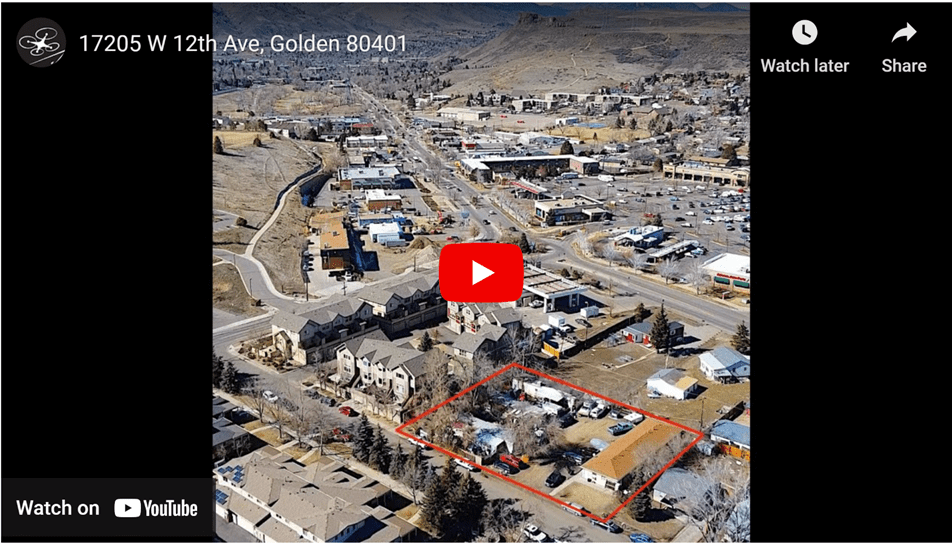
This parcel at 17205 W. 12th Ave. is a multi-family zoned parcel ready for continued rental income, or ripe for redevelopment. Directly adjacent to the city boundary, this 19,300-square-foot parcel could possibly be annexed into the City of Golden. It was just listed at $1.6 million. This land offers proximity to parks, trails, grocery, dining, and public transit. Golden’s King Soopers Marketplace is a couple blocks away, and the Denver West Office Park, Coors Technology Center, Colorado School of Mines, Colorado Mills Shopping area, National Renewable Energy Laboratory (NREL), Jefferson County Government Center, schools and downtown Golden are all within a few minutes of the site. Bell Middle School and Golden High School are a short distance away. Located within an Opportunity Zone, this parcel is a prime redevelopment option. Take a narrated aerial video tour at www.GoldenDevelopmentSite.info. Then call Austin Pottorff at 970-281-9071 for more information or to arrange a showing.

Geothermal Heating and Cooling Can Be Practical and Affordable When Done on a Community Scale

When it comes to “kicking natural gas” and reducing a home’s carbon footprint, geothermal heating & cooling is the “gold standard.” But it’s extremely expensive to implement as a retrofit and still quite expensive on new construction.

My friend, Martin Voelker, a leader with the Colorado Renewable Energy Society, recently replaced his gas forced air heating system with geothermal, and the cost for drilling the 300-foot-deep wells in his backyard was $18,000, which included running the pipes into his house but didn’t include the heat pump itself. Even though such a project would garner a 30% rebate under the Inflation Reduction Act, that’s still a heavy lift for any homeowner.

I know of another home which installed geothermal pipes horizontally in their large backyard at far less cost.

New construction is more affordable, because you can have the wells drilled within the footprint of the future home while it’s still open ground. And if it’s an entire subdivision, such as the Geos Community in Arvada, the cost is reduced because all the wells can be drilled one after the other.

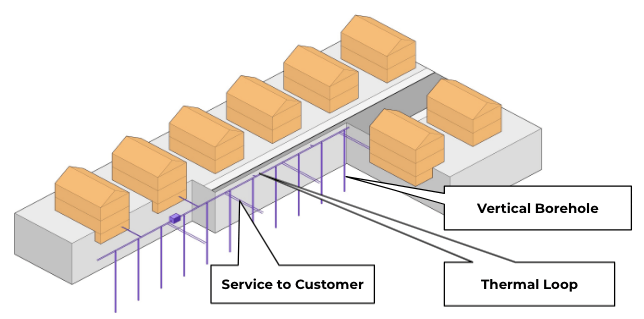
In that scenario, each home still has its own geothermal well, but what if you could drill a geothermal well that was extensive enough to feed multiple heat pumps in multiple buildings?

That was the concept proposed by a group of Harvard students in Ivory Innovation’s annual Hack-A-House competition, for which they won first place in the “Environmental Solutions and Construction Technology” category.

Those Harvard students may have known something the judges didn’t — that Eversource Gas, a Massachusetts utility, had already begun a “networked geothermal” demonstration project 17 miles west in Framingham. That project is featured at www.HEET.org, short for Home Energy Efficiency Team, which in 2017 started promoting the concept of gas utilities delivering 55º water instead of gas to multiple buildings from a grid of geothermal wells. (The above graphic is from their website.) Think of it as a 21st Century version of what Con Edison still does in NYC, which is to deliver steam from its central boilers to local buildings through pipes under Manhattan’s streets. But steam, unlike water, can’t be used in the summer for air conditioning.

A local vendor that I recommend for both geothermal and air source heat pumps is Sensible Heating and Cooling, (720) 876-7166.

How Does Geothermal Work?

Geothermal heating does not require the presence of a thermal feature such as a hot spring. In fact, if you dig down about 10 feet anywhere at our latitude, you’ll find that the soil temperature is about 55ºF year-round. Circulating a fluid through underground piping heats that liquid to 55º so a heat pump can then raise its temperature to 100º or so for heating purposes utilizing either radiant floor heating, baseboards or forced air.

Geothermal is far more efficient than an air-source heat pump system which takes in outdoor air as cold at 10 degrees below zero and works much harder to achieve the desired temperature for heating.

In the summer the 55º fluid from geothermal requires far less energy to be cooled further for air conditioning your home.

Did You Know? Potting Soil Presents a Fire Hazard

Earlier this month, a Jefferson County home almost burned down. Thanks to a quick response by the local fire department, damage was contained and is estimated at $30-50,000.

Here’s what happened, as documented by surveillance cameras: A person tried to put out a cigarette by sticking it in the soil of an indoor potted plant. Unfortunately, the plant was in potting soil that contained nitrogen, and within a few hours the soil started smoking and quite suddenly burst into flames.

When told of this, David Dlugasch, one of our broker associates, told me that the exact same scenario caused his own house which he had sold in Gunnison to be burned to the ground the day after he sold it.

This issue was new to me, so I wanted to share it with readers. Below is a picture I took of the ingredients in a commonly available potting soil. Nowhere on the package does it mention that it is flammable and could cause a house fire.

The “helpful hardware man” at Ace told me he was aware of the danger and reminded me that nitrogen fertilizer can be used to create a bomb, as in the Oklahoma City bombing.