 Today’s “sellers market” can prove challenging for almost any home buyer – including those who have a home to sell. Here are some examples of buyers and sellers and the challenges they face:
►Homeowners who would like to sell but are worried they won’t be able to find a replacement home.
►Homeowners who don’t feel they can compete as a buyer because they must make any purchase contingent on selling their current one.
►Home buyers relocating to Colorado who would prefer to rent for a while before buying.
►Tenants whose landlord is selling the home they’re renting, and would like to buy it but need time to qualify for a loan.
►Tenants who see a home for sale on the MLS and wish they could rent it instead.
Golden Real Estate can now meet the needs of such would-be home buyers. Under our innovative program, you need only be pre-approved as a tenant, not as a home buyer. Once approved as a tenant, you let us show you homes (except condos) that are for sale up to $550,000, knowing that we have a cash buyer ready to purchase the home and rent it to you.
Our cash buyer is Home Partners of America. Every agent at Golden Real Estate is an approved agent for them. The process is quick and painless. Here’s how it works. We submit your name and contact information to the buyer. They interview you to determine whether they would accept you as a tenant. Once approved, you visit their website, where all qualifying homes from the Denver MLS are listed, with one important difference – each home displays a rental price in addition to its sale price. Once we’ve helped you find a home you’d like to rent, you are presented with a rent-with-right-to-purchase contract. That contract will contain a grid of rental and purchase prices spanning the next five years. You never have to purchase and you don’t have to rent beyond year one.
Below is an example of that grid for a current MLS listing we found with a purchase price of $475,000.
These figures are only estimates because they assume the home is purchased for its listing price. It could be purchased for more or for less, and there could be other costs, such as repairs, associated with making the home ready for you to move in.
As long as you remain within the terms of your agreement, you will never be asked to leave during those five years. Move, rent or buy – it’s entirely up to you.
The rent is deemed to be at market rate, so none of your rent is applied to the purchase price. You don’t have to wait until the end of your lease to purchase. You can purchase for the designated price at any time during your lease term, as shown in the grid.
Revisiting those examples of challenged buyers above, this program has the potential to meet all of their different challenges.
The homeowner who wants to sell can now do so without worrying about finding a replacement home or submitting an offer contingent on the sale of their current home. They can sign a rental agreement with Home Partners on a house that they might ultimately want to buy, but don’t have to buy. This allows the homeowner to put their home on the market using Golden Real Estate without worrying about making themselves homeless. The program gets them into an interim home, whether or not it’s one they ultimately choose to buy. They sell their home, get their cash and become a stronger non-contingent buyer with a big down payment, who can then take as long as they need to find their new home.
What about the person relocating to Colorado? This program is perfect for them, because it allows them to “test drive” a home and neighborhood they think they might like without having to fully commit to it until they have familiarized themselves with the metro area. They have the luxury of time that they might not otherwise enjoy.
What about the tenant whose house is being sold and they have to move? Home Partners might be able to purchase that house and keep them as a tenant – a tenant who now has the security of a guaranteed right to stay for 5 years, plus the right to purchase the home if they later qualify.
People often walk into our office and ask if we handle rentals – we don’t. This program provides an opportunity to many of these walk-ins, who would really prefer to buy but aren’t yet ready for one reason or another. Also, the inventory of homes for rent is even smaller than that of homes for sale. Wouldn’t it be great if nearly every home (except condos) priced up to $550,000 on the MLS was also available to rent? With this program, that opportunity is yours.
You can’t contact Home Partners directly. If you think the program might be for you, you apply for it through me or one of my broker associates at Golden Real Estate. You are under no obligation to follow through, even after you are approved as a tenant. But if you like what you see, we’ll start showing you homes for sale which Home Partners is willing to purchase for you to rent.
There are other brokerages who participate with Home Partners in this program, but you’ll benefit from using Golden Real Estate, because we offer free moving into your rental — and into your ultimate purchase, if different. Conditions apply, but at the very least you have free use of our moving trucks, boxes and packing materials. Call or email me for details. (See below.)
You’re also welcome to call our office at 303-302-3636 and speak to the agent on duty. We’re happy to answer all your questions.

 This beautifully finished ranch home at 20062 W. 95th Place has 3 bedrooms and 2 full baths. The master suite has a spacious 5-piece bath with a very large walk-in closet. It has a 3-car garage pro-viding added storage space. The house is loaded with upgraded features. The kitchen has an oversized granite island, double ovens, stainless appliances, and full cut-glass backsplash. The large foyer, great room and kitchen area have hardwood flooring. The home comes with a solar plan which keeps the costs of maintaining this home very low. The back yard has a covered deck and a large paver stone patio. Candelas features miles of trails, nearby lakes and ponds, two fitness centers with outdoor swimming pools and a newly opened King Soopers. See video tour at
 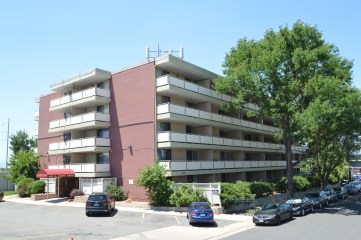 Welcome to Centre Pointe Station, 4600 E. Asbury Circle, and this updated 2-bedroom, 1-bath condominium (Unit 301), which is centrally located just across the pedestrian bridge from the light rail station just east of Colorado Blvd. Hardwood floors greet you as you enter this bright unit with large covered balconies and mountain views! This condo features granite countertops, stainless steel appliances, newer sliding glass doors, room air conditioning, included washer/dryer unit, updated lighting, fans and fixtures. The building features reserved parking, a secured entry, fitness room, and owner’s storage. See more exterior and interior pictures at
 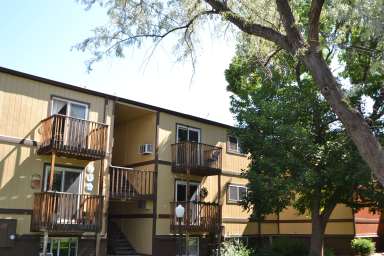 Golden Pines is a complex of 3-story condo buildings, with six units in each of 28 entries. It is located in the Pleasant View community about 3 miles east of downtown Golden. The address is 16529 W. 10th Ave. #E-6. Enjoy the warmth and light of this south facing top floor unit. The private balcony looks over a grassy courtyard which is adjacent to an assigned parking space. It has 2 bedrooms and 1 bath and measures 773 sq. ft. This property needs work. It was a long-term rental with smokers but is now vacant. Great potential and priced accordingly. Needs carpet and paint. Kitchen and bathroom cabinets are original and in poor shape. Flooring, furnace and fixtures all could use some improvement. Has newer appliances and the windows and sliding door were replaced several years ago. More info at
 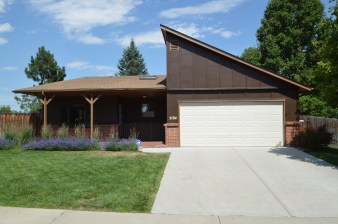 This ranch-style home at 5194 Bristol Street is in the Blue Hills Estates subdivision west of Drake Middle School. Built in 1979, the seller is the original owner, and the pride of ownership is evident throughout. The original cedar siding has been replaced with fiber cement siding and freshly painted. Five large skylights bring sunlight into the family room, kitchen and the interior bathroom. The large family room has a vaulted ceiling with 3 skylights and a wood-burning fireplace with brick hearth and chimney. The covered front porch has a rich brick floor. The backyard features mature blue spruce, ponderosa pine and other evergreens. The high-efficiency furnace has both an electronic air filter and high-end Aprilaire steam humidifier. See more photographs and take a narrated video tour at
  Imagine the heartbreak. You’ve been waiting for a home in a particular neighborhood that backs to open space. There are very few of them. Your agent has set up an MLS alert so you’ll be notified the minute such a home goes on the market.
 I have long wanted to write about gentrification but only if I could contribute meaningfully to the conversation. Now, after attending a recent panel discussion on the topic hosted by the Denver Metro Association of Realtors (DMAR), I’m ready to give it a go.
 Jim Smith's Blog